Become a supporter of this podcast: https://www.spreaker.com/podcast/prepper-broadcasting-network--3295097/support.
Head to https://bepreparedsolutions.co/go/pbn, or use code PBN20 when you sign up to get 20% off their incredible preparedness tools, custom plans, and LOCAL INTELLIGENCE.
STOP THE ADS! Become a PBN Supporter for just $5 a month and get exclusive podcasts just for supporters. BECOME A SUPPORTER
The Prepper's Medical Handbook Build Your Medical Cache – Welcome PBN Family
Join the Prepper Broadcasting Network for expert insights on #Survival, #Prepping, #SelfReliance, #OffGridLiving, #Homesteading, #SelfSufficiency, #Permaculture, #OffGrid solutions, and #SHTF preparedness. With diverse hosts and shows, get practical tips to thrive independently – subscribe now!
Newsletter – Welcome PBN Family
Get Your Free Copy of 50 MUST READ BOOKS TO SURVIVE DOOMSDAY
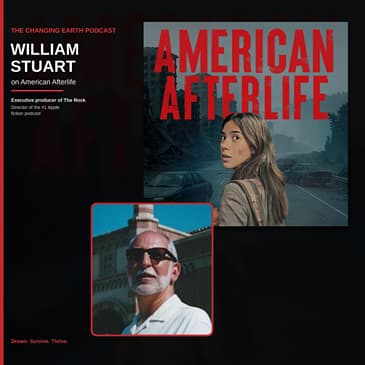
Welcome back to the Changing Earth Podcast with author Sarah F. Hathaway and co-host Chen Gibson. Blending survival fiction and fact to bring you entertaining education that will help you dream, survive, and thrive. And now, here's your hosts, Sarah F. Hathaway and Chen Gibson. Welcome back to the Changing Earth podcast. We do not have Chin with us tonight. He's taking the night off because I have a very special guest to introduce to you. Today, we are welcoming William Stewart. He's the president and CEO of Aurora Productions. He's spent more than 50 years in the business from studio jobs at Columbia, MGM, and Fox to running production and distribution across Europe, the Middle East, and Australia. He developed and executively produced The Rock for Disney and Jerry Bruckheimer. For more than 15 years, he's been the U.S. representative for Barandov Studios in Prague, which is where a lot of the international films actually get made these days. Right now, he's the executive producer and director of American Afterlife, a scripted podcast adapted from Pedro Hoffmeister's novel. It stars Scarlett Estevez. It hit number one in fiction on Apple Podcasts and is being developed as a TV series. I listened to it this week. The sound is clean. The story is really good. It's about a 15-year-old girl named Cielo. She's alone in a flooded Oregon city after the 9.2 Cascadia earthquake. So she can fit right in the changing earth world. Her mother is missing, pulled. Well, I don't want to give out too much information there. But that is Cielo's mission is she is looking for mama amongst all this chaos. So let's go ahead and welcome Bill. Bill, thanks so much for joining us today. Sarah, pleasure to be here. Matt, I'm telling you, I am super excited. When I heard you produce the rock, I was like, it's one of my favorite movies. Honestly, I'm like, always like, welcome to the rock. Yeah. Right. Oh, so what, you know, we're outside a lot. We're out in the woods a lot. And whenever you're up on a big rock, that is what comes out. So my question for you is, did you get to meet Sean Connery in person? Oh yeah, of course. Uh, I didn't spend 100% of my time on the set, but I had partners with Jerry Bruckheimer. But I spent some time on Alcatraz itself we shot, which was very interesting. I was going to ask, did you get access to the back areas and all that kind of thing? Yes, we got access to the entire place. They do... uh, a tour of Alcatraz. I think they still do it. I haven't been in a while, but, uh, one of the things which you saw in the film is they put everybody in a cell and close the cells and just say, this is what it feels like to be on Alcatraz. Oh, use that and incorporate it into the movie. But yeah, no, I spent some time both with Nick, uh, and, um, Sean Connery. He was a real gentleman. Nick, uh, was wonderful, but a little crazy. And then Michael Bay, the director, you know, one of his first big ones, he came out of the commercial world and it was a wild ride, but, but it turned out to be a fantastic movie and it still holds up today. It sure does. One of my favorite scenes is when they do the infiltration and they're all coming up from into the shower area and that, which is just amazing. That's an incredible scene. Welcome to the rock. Yes, yes. Still one of my favorite things to say. That was shot at Sony Studios in Los Angeles. Okay, that was actually off set. We built that whole thing at Sony. We didn't build much at Alcatraz because it was so wonderful anyway. And Alcatraz played Alcatraz as it is, sort of a tourist attraction. Right. If you remember those scenes in the movie. Yeah, when they do the sheets to pull open the door and all that. Exactly. Yeah, that's good stuff. Yeah, that was fun and luckily a very successful movie. People still come up to me and congratulate me, I guess is the word. Yeah, it's one of those classics that you're never going to forget. That's one, like you say, that still has wings today. So they're like, bring my kids over. This is one you've got to see. It was really well done. So you've been in the industry for a long time. Is there still somebody in the industry that you would like to meet that would make your heart pitter-patter? Oh, wow. Interesting. One of the people I really look up to in this joyous work is Aaron Sorkin, the writer. Okay. Yeah. a lot of TV, but some great movies too. And I just love, he has such a way with words, you know, West Wing and all this stuff. And I love those kinds of shows. And I almost met him once at an airport where I was standing in line. I was standing in line to get on the plane and he was ushered by some VIP person. And I went, oh. I'd love to meet him. Oh, man. Yeah. Very excellent. That's sort of one of the creatives I'd really like to meet. Yeah, I always wonder, you know, mentors, mentors. That's the name of the game for me. Right. Yeah. I sort of want to find out his process. And I've seen, because I followed him, I've seen a few interviews he's done about his process. And, you know. He's a writer's writer. I mean, he locks himself in the room, so to speak, and writes, especially when you're on TV, when you're pushing out a script every week. Yeah, yeah. Producing the Change in Earth audio drama gets that way. I'm like, okay, I've got to just get scripts done so I can get it out to performers and that. It's quite a process of getting all that done. converted over from book to script. And those are unique, unique scripts, you know, when you're doing it for sound rather than for visual or writing a novel. Yeah. It's, it's tough. I mean, I think that's one of the things that we wanted to talk about was how the soundscape influences the listener and, and takes you into that world. Right. And, and that's one of the things I concentrated on is you can't just, I'll go back a second. There were a couple of podcasts I heard. What was the one? Homecoming? Oh, yeah. Remember that? That was in the early days, but it really didn't have much of a soundscape. It was more like an old-time radio. Like an audio book. More like an audio book, yeah. I mean, there was a door closing or something like that, but Also, too, if you remember the story, they were mostly confined to a building doing an interview with the soldier who came home and that. So I had to find a way with the technicians to open it up. And we decided to push the sound a bit. And I think that's where it helped us create that world. I mean, people are you know, listening to it on earbuds or headphones. So I can basically close their eyes and say, wow, I'm really, I'm really there. So that was an advantage. Yeah. I like to do a lot of the left to right travel with the feet. And that way, you know, when it is in stereo, you can hear them actually walking by that kind of thing. That's really brings it to life. Yeah. Um, when I first did, uh, the changer with audio drum, I did it like the same way, just with the voices and a few sounds. And it fell really, really kind of flat. And I was like, okay, this just needs more texture. You know? Um, I was able to find like through the music, you make it into such a listening experience that, that now people can jam along plus they're hearing the story. And, uh, so there's things I took away. It was really, really clean the way you guys did the sounds. Um, I heard on another interview, the glug, glug, glug sound when she was drinking something, that is the hardest thing to do. A few people commented on that and I said, eh, you know, but You know, I got a few comments out of the many thousands, so I'm okay with that. Right, yeah. But you mentioned music, too, and that's another one of the things that I was really pushing on because that gets me as close as possible to a film. Right. You know how music can change the scene drastically, you know, depending on on what the composer does and he can scare you he can let you know something funny is going to happen etc etc so music is almost as important or as important as the sound. I agree i agree 100 and like in visual you can tell like somebody's starting to look concerned Somebody, you know, the temper just changed. The atmosphere just changed. But like an audio, the rule, only way to really do that is through the music of that moment. Yes. It really brings the tonal. Okay. So for everyone who just jumped on a live, I am interviewing Bill Stewart and we're talking about American afterlife. It's a really cool podcast based off the book, American afterlife by Pedro Hoffmeister. Okay. So I, I really, um, man, I'm telling you, I was so, um, I identified a lot with this story because I was like, this could just be up north from where the changing earth is happening. Honestly, it could be like the combo. Cause I was like, this is her story of just being out there, being stuck in it. And ironically enough, my character also in the beginning crosses this flood water. That's very, very toxic, right? She's actually trapped under the city and escapes into that water and mine's a little bit more toxic than the water that is in Pedro's book. But what a cool dynamic to bring in, because I'm always looking for the fact behind fictions when we're in these types of stories. That's what I was going to say. Pedro, you know, Pedro actually lives in Eugene, Oregon. So he's sitting on the fault there. And he did, like writers do all this research about What would it look like? And, you know, it's not only the earth moving, but up there, especially in Eugene and nearby, the dam breaking. Right. And that pushes one catastrophe on top of another. The houses falling down, electrical wires going down. Into the water, into the system. Into the water, yeah. Yeah, and all of our wonderful chemicals. Yeah, and the chemicals that we use for everyday life. You know, that's one of the big lessons that I bring to people on flooding is like just you need waders or something. You got to stay out of that stuff. I'll give you a personal side story. I'm down in San Diego now. We're just moving down to San Diego. My wife and I lived in Altadena where the fires were, Eden Fire. Okay. In Los Angeles. And strangely, although about 7,000 homes were burned all around us, our house survived basically untouched. But the aftermath of that, all these houses burning with all the chemicals inside them and all that, it went number one up into the air and number two down into the ground. So after the fires, we had to have the Army Corps of Engineers, come in and dig up every one of these empty lots. I think it was down about 12 or 18 inches and take that dirt away. Right. So that the ground was, again, as much as possible livable and wouldn't, you know, contaminate like Like we have with lead paint and things like that. Right. When you're growing stuff in the future and any of that activity that you're doing on top of it. Yeah. There's quite a big cleanup. I work actually insurance during the day. And so. Oh no. Yeah. So we're always involved and I'm working out in California insurance. So yeah, we're, we've gone through a lot of fires and that's one of the big deals is we have to tell people, you know, the hazmat has to come in afterwards to, Because there's just so much stuff we use as humans we don't even think about when it just gets all mixed together. So my book is up in Sacramento area, since you know California, right? And they were going to put an Auburn dam up there, right up in the foothills. And they never built that one, but it would have hit Sacramento with like a hundred foot wave if it went down the dam. And so it was like, I was researching it, trying to tell people like, no, no, no, you should never build this. And it's right on a fault line. And, you know, there's things called reservoir induced earthquakes. So you can just the weight of the water can cause that earthquake to happen. And Sacramento would be in big trouble. All that grow land would just be flooded with chemical contamination, like a nuclear catastrophe happened in there. Yeah. And Sacramento is right on the river, too. Right. So that'll then go down to, I think it goes where, to San Francisco? I don't know. Yeah, I think it goes down all the way to the Delta. Oh, wow. Yeah, but it's major systems coming out of the mountains. And I was like, that's just not smart business at all. True, true, true, true. So when I record, I'm recording everybody separately. You got the opportunity to have them. Did you do both, or how did you do that with the performers? Yes, we did both. So, you know, even though all of our actors were in Los Angeles area, it's still hard to get around. The studio, our studio, the Benstown studio is in Glendale. So what we did is we just grabbed the actors when we could to do the recording. So the first one we did was Scarlet. And we basically spent two and a half days with her going through all the scripts alone. Then we did Charles, Ted Evans. We did some of him remotely and some of him in the studio. Okay. Josh Mesnick came into the studio, but at a different time. And once we had them all sort of mixed together and, and, I noticed, obviously, there were things that could be better. No, we had the opportunity to bring them all into the studio. And that helped a lot. Yeah, the dynamics. Yes, because then Scarlett and Josh, Cielo and Lucas, are actually sitting opposite each other as if it were the interrogation. So it became better. It became more real. Yeah, to be able to get that interplay. Yes. Yeah. So my family plays like the main family, and so we all will sit around in the office and record together. And I am telling you, we've made some really great blooper reels. We have those too. Right? Yeah. That's funny. You know, there are things that were very easy for Scarlett to do, and then some of the dialogue– You know, when it doesn't come off the tongue the way you want it, you know, the way I want to hear it, then we also have to go in and change the dialogue and move that around so that it sounds more realistic. There's some words that the writers have put in the script, which I don't think a 15-year-old girl would be using. Yeah, so we softened those and made her a little hipper. Yeah, I did notice there was quite a few F-bombs in there. I was like, whoa. Oh, yeah. I try to limit out, you know, keep it to just a few. But I was like, okay. We have another version, but it's not as good. And I think it relates. So we were going after two audiences. One is the sci-fi audience. Pedro's book had a great following. He's writing a second book and a third book already. They had a really good following. But also with Scarlett, who is such an icon, a social icon, with her followers and her TV work and her movie work and all that. We wanted to make sure that they, you know, the young, I guess I'll say young girls, even young guys could identify with Scarlett. Her character. Her character, exactly. Yeah, and her interplay and everything, for sure. Yeah. For sure. And she's done a lot of animation work, too, in the past, right? So she's not unfamiliar with just bringing the attitude to the mic. Exactly. We did have a couple of people that cheated interviews and asked that question. And it's slightly different because in animation, as you know, you are looking at the animation on screen and trying to match your performance to that. Scarlett had to just close her eyes and go into the world. And we spent a lot of time before we recorded sort of talking about it, trying a few lines and saying, you know, what do you feel if you were out there alone and your mother... was out there lost also, how would you feel about this? And she's a very, very good actress, I've got to say. And sort of gave us the changes we needed almost instantly. And also gave us two or three different versions. You know, the important lines. Yes, that's helpful. I have some performers that'll do it like three times in different ways because they don't know which one, you know, you're looking for. Yeah, more like a movie. You know, they'll do three, four, five. Sometimes some directors do 20 takes. And they keep them all and you have to choose through all of those on like which one you're actually going to use? You do, but generally, I mean, on movies... there's a process of selection which now comes pretty much right there on the set. Okay. Video playback. Right. So the director can play back two or three and everyone's looking around and they'll choose three of them to give to the editor. And we had something the same thing, is that once it got to the sound mixers and the editors, they would also have the opportunity to make a choice or even to um to make changes to it and put pauses in there where they're going to put a sound effect. Right yeah yeah that makes sense. The production was a was very i said short of being a movie it was pretty yeah pretty complicated. Yeah, I was going to ask you about that. Like if the sound design is pretty similar to, you know, what they would be doing sound design wise to go with the film process. 50-50. So in the scripts, there were sound indications and, you know, glug, glug, glug stuff. That was indications to the actors of, There was going to be a sound there they have to react to. Or, you know, Scarlett had a few times she was screaming. She wasn't able in the first pass to hear the sounds. So she was going naked into these recordings. And then when she heard it back, she went, oh, wow, I didn't know I said that. I didn't know. I didn't know it sounded like that. So she was very happy with the way it came off too. After the first time together. Yeah. Yeah. That you're making me feel sorry for my performers now. Cause they're just like. Oh, the story. Um, what I've found is, uh, in like my parentheticals, I do a lot of like tone. I tried to address them with, um, what type of tone how they're supposed to feel at this moment right because the first time i was just giving them a raw script and they were just like um okay i don't know and then i would get it in and be like oh can you change this or that so i found that you know i know it's not like proper script writing but including that information in the parentheticals just gives them way more like direction on how it's supposed to be through that conversation. Yeah um The other part of it, like with your friends and neighbors, we had a lot of one-liners. Right. You know? Yep. So half of it was actors who contracted to work for half an hour and give us three or four takes on a script, like in the supermarket and stuff like that. Mm-hmm. And then other times it was guys in the office who do a lot of voiceover stuff for the Benstown, for the radio stations. So they were pretty adept at giving us a couple of lines that work. Yeah, I've had some characters that it's like, some of my performers that are really good at vocal work, that's like, they're in there, they're all over the place doing different voices. Doing different voices, exactly. So I don't want you to think that Your process is so much different than ours. Right. A ton more money. But we were able to approach it. From my point of view, like like a movie. Yeah. Yeah. Which I'm totally naive on. You know, I come out of novel land. So that's OK, too. Yeah. How about the fight scenes? How how I you know, I struggle with the fight scenes a little bit trying to like show people what's actually going on. Yeah, it is tough. Those we worked on a lot because it can sound hokey. Yes. It's the same problem you have with a play, a theatrical play, is if there's a murder mystery, and I've talked to some actors who said it's the biggest problem, the gun sounds. It always sounds fake. Even if they have a blank pistol and shoot it off, it always sounds fake in the theater, but people have come to accept that no one's going to shoot a gun in a theater. Right. Right? But I was surprised to hear from the actors that, you know, that's what they do. I mean, they make it the best they can, but still it's a theater gunshot, and I think that's what we had is we had an audio– gunshot or an audio fight or whatever it is. I think the hardest one for me, you can tell me if it came across, was the two repo guys trying to drown the woman. Yeah. That's one I've struggled with because you really have. Oh, like her being thrown over. I think it did come across well. I think it played well. The problem we had there is that we found out later on, that her voice was similar to Scarlett's. Yes, it was. So there was a time when we had to try and fix so that you know who was talking. Yeah. I've had a similar, I had two guys that were brothers and their voices sounded so much the same. I was like, oh, okay. So I was, sometimes I would lift one or lower one just to make, like show a little bit of that differentiation. Yeah. Of like who it is. Um, I have one guy who plays my two Russian brothers and, And I wanted one to be more serious, you know, kind of more stern and one to be more jovial. So I sped up his audio just a little bit on the guy that's more jovial. Interesting. Yeah. And then took the volume down just a touch on the dude that was more serious just to give them. And they're literally twins, you know, so it's okay. But you want to know who's talking and who's doing what, you know? Yeah. Yeah. Yeah. The same problem my wife and I have when we're watching TV and you're watching a series and suddenly all the women are brunettes. Yeah. Which one is this? Wait a minute. Is this the mother? Yeah. So I just do that. I'm actually writing a Christmas dinner right now where like so many of my characters are back in the same room. And I didn't want to be like, hi, I'm so-and-so, their granddaughter, you know? So I had to figure out how to bring that through the dialogue of, I know you're my granddaughter, but you should da-da-da-da-da, right? And bring that in so people can feel who those characters are without being told. So we'll see how that goes over there. So one thing that I did notice was the narrator and Scarlett's narrating, which is cool, you know, that she's more telling her story. But then we jumped into her story sometimes and it was a little repetitive, which might be good for audio. I did a narrator on my first season and then was like, you know what? I think I can pull this off without the narrator and did it through scripts. And so I was interested to know, like when you bring it in the future, what was kind of your thought on that? Just as a way to present the world. No, the intentions in the beginning is that in the beginning of it, she's all alone. So we're hearing her thoughts basically. And then, I don't remember what point it was, but maybe halfway through it, then we meet Lucas and realize, oh, maybe she's being interrogated by this guy. Right. And then it is, it was tough because we do jump back and forth. And one of the things that helped us do that is the sound effect. Yes. When she was talking to herself, it would be one thing. And when she was in the room with Lucas, it would be something else. So you could always, hopefully, there'd be audio cues. Like the scene change. Yeah. Yep. There was only one scene change, like where the helicopter came in, that I was like, oh, is that helicopter there with Scarlett? And then it was a new scene. And as you listen on, you get that point. Right? Yeah. Like, oh, okay. But you quickly catch on, you know, so I don't think that's a. Yeah, that's the idea, the attempt, I'll say, to broaden the podcast, you know, and put this... Other characters, the pilots and the helicopters and all that sort of keeps you in the world. Rather than just hearing what's going on with Cielo, you're hearing from Charles, you're hearing from Lucas. Yeah. Other characters that come in and out that sort of keep you in the story, I guess I'd say it. Yeah, that's one thing that I come up with. Keep the story alive. A little broader because, you know, as you said, we're developing it now for television. So we hope someone will bite on that idea. Yeah. Yeah. Me as well. Yeah, that's one of the things. The narrator was something that was like, okay, how do I navigate this? Because there's so much narration in the novel that really brings you in. And I think that it's really important to have that kind of texture in an audio world. So yeah, bringing in the other characters is essential to really paint what else is going on besides just with your one character, right? What else is going on in this world? Certainly she's driving the story, but It would be, you know, it would take me back, I thought, when I listened to Homecoming, that it was just, and they had some great actors in it. I think Laura Linney and a few others. They spent some money on the actors, but then it was all very quiet. You know, there was no action per se. They had the same thing set up as us. They had Laura Linney. was being pushed by some army guy or whatever he was. And she was trying to save this young soldier. And there was another one, too, that I listened to in research, which was set in outer space. Okay. And I thought, well, what do you do up there? There's no sound up there. Right. How many whooshes could you do? Yeah, laser cannons. Oh, that kind of thing. Yeah. Yeah. Yeah. Just to hear the same, same sounds over and over. The music is where it's at, honestly. And now that, uh, you know, AI is give us the tools. I can literally make the songs to fit the audio drama, which is phenomenal. We had to, uh, we had to, uh, tell ourselves not to use AI. Uh-huh. Yeah. Yeah. I just did a, I also finished a documentary a couple of months ago. And the easy way out, we needed some new dialogue and no one was available. Right. AI is pretty good. Yep. So we got permission from the people in the movie. Hey, there's these two lines. You know, do you want to come into the studio? Do you want to go? And they said, no, use the AI. Mm-hmm. And it wasn't critical lines. It was just something that we had that they didn't do a very good job on. So we wanted to fix it. But it's too easy to go that route. Yeah. It is a tool, that's for sure. Yeah. It's not going to replace the texture of people. It's not there yet. That's for sure. But I am excited about being able to make a song. That's like, boom. Now it tells you exactly what's going on. Right. With that, with that scene, instead of just trying to find something generic, because I'll do that a lot between scene changes, actually play the music out. Right. So that there's a good, you're, you're like, Oh, that scene is ending a new one's beginning. Right. And it helps bring that texture. So I was curious, in Pedro's book, because I've never read the actual book. I've only listened to the audio drama. Is this a regional, just a regional disaster? Or is this something that's farther? He only deals with it. I'm not remembering everything about it. I mean, I believe in his book, there are some radio broadcasts and things like that. Or Cielo hearing about things going on. Yeah, and he talks about, like, I'm supposed to go to Cabo this weekend or something like that. Yeah, stuff like that. Oh, okay, so it's just this area. But no, I think he kept it pretty honest. I mean, when you're following Cielo, you know you're not going to Cabo. Right, exactly. I was like, whoa, we're talking about, like, I need to go to Cabo, you got to get this wrapped up. So I was like, okay, well, maybe it is just like a regional thing then. Yeah, we did, if you ever get to read the book, We took a lot of poetic license because we were limited. You know, the book is, I don't know, 250 pages or something, and he's able to describe, you know, every little detail he wants to. Right. And we had 22 minutes each week to tell our story. Yeah. Do you like that time frame? Does that. First season is like a half hour, but I expand on mine to hour-long shows. Over the next season. We spend a lot of time talking about that because the attention span of our audience tends to be short. We have committed, I don't know if Marlee told you, to a second season. So what we've decided to do in the second season is do 12 episodes. instead of six. And we are still talking about, should they be 25 minutes each? Do we have enough material? You know, I don't want to be boring at any time. Right. And I don't know, do you find your listeners are willing to sit down and say, I'm taking an hour to listen to this? Or do they. Break it up? They break it up. They chunk through it. So I've been thinking about taking it to like, even my shows that are an hour long, take them to like, and most are 45. It's only when I was deep, deep into the season and I'm trying to, there's a lot that's going on that I could expand it because I'm the only one that I'm beholden to, right? So 45 to max an hour. um, for them. Uh, but most of my, a lot, well, a lot, they like to wait for it to all be done and that way they can binge the whole thing. And, uh, you know, so if they're binging hours and hours of it, I mean. Yeah, we, we had that conversation too. Um, and finally we decided we were going to go weekly, but we did the first week release two episodes. Yeah. And then we, I don't know if you got to hear the little interstitials, I call them. Yeah. I didn't listen to them. Yeah. Yeah. So that was an attempt to give the listener something between the two series. And also, in some of them, you're meeting people who are not prominent in it. I think we had the helicopter pilots in there. Okay. That's fun. You know, we had... There was a scene, I don't know, now I don't remember if we used that one. There was a scene, you know, so they're all, the National Guard is all bunkered up in a Hyatt Hotel, I think it was, or a Motel 6 in Eugene, right? And that's where Scarlett is, that's where Lucas is, Charles, everyone's bivouacked there. And there was one scene where we had Charles accidentally opened a door to one of the rooms, and Cielo was there. And so there's a very awkward moment because he doesn't want to be with her. She's not sure who he is, but then she realizes who it is. Oh, I recognize the voice, you know. It's just a minute, you know, but it's an awkward moment, and people like that one. Yeah. No, it's fun. I'm, I'm definitely for, um, the audio. What, so what do you feel the future of like bringing productions in the audio format? I mean, it's very free. You can be free, you know, you're, you're not beholden, which, which is kind of cool. Yeah. Um, you talk about the future audio. Of audio productions, audio drama. Yep. Yeah. I see. That's one thing that, that, For me, people keep confusing. I mean, you do a podcast, but you also do an audio drama. Right. I'm not the guy who's going to sit in a room with someone and talk for an hour. I mean, produce a show about sitting in a room and talking for an hour, like you or Joe Rogan or anything. those things. That's a different kind of podcast for me. Right. I'm more interested in the creative and the dramatic of it. Right. But, I mean, even the audio dramas are really making a resurgence. They had kind of radio killed the TV, or how does that go? TV killed the radio star? Yeah. But there's a reason for it, and conversations I've had. So it's very difficult. I'm an independent producer. Right. And talking about film. So... The business has changed a lot and it's become very difficult for independents to get movies made. Yes. Even movies, huh? Sorry? Even movies. Definitely movies. I mean, I went off and did a documentary just to keep working. Interesting. But, you know, like everyone, I have, I don't know, 15 to 20 projects at any time. Five of them are at studios. A couple of them are independent. But you have no control over whether they make it or not. I worked as a producer for a year on a project that happened to me at Universal. And then one day I got a call that the executive was going to another company. I said, okay, what's with the project? Well, we'll see with the new executive if they want to do it or not. So you spend a year of your life and then It's like nobody ever heard of the project there. Yeah, and nothing... Even though. The studio spent a ton of money developing it. Very weird. Yeah. And do you think that's because of the consolidation of the industry? This came before the consolidation, but that's not helping. It's not helping at all. I was talking to someone the other day. He says, I don't understand why Ellison... having just bought Paramount, wants to buy Warner Brothers. Right. Why not take Paramount and make it great? Paramount was not doing well. Right. For many years. Why not take Paramount and make it great? And now he's going to get Warner Brothers with it. And it means just really. Now you've got more of that. Just an ego thing that I'm going to have the biggest company around. Oh, gotcha. But you can't, especially Ellison. I mean, he's not a seasoned movie guy. I met him once. Very nice. No problems. But the guys running these companies are communications executives. They're entertainment people. They're They're very, very savvy businessmen. And it's enough to run a company like Paramount, but to suddenly take on Warner Brothers and make yourself chairman, what are you going to do, say, I'm chairman? He won't have any control over it. These companies have very seasoned executives who do what they think is best and report to the top. Uh, and then if their performance isn't there, then you get the next one. Yeah. It seems like a lot of professionals, especially after like the writer's strike and all that, um, all, you know, we're trying to find a home, a new home, a new home. It just seems like it got a lot more, um, closed up and consolidated and, and kind of controlled as to what was going to be allowed, you know, what, who was going to even be allowed through that door to produce anything. Yeah, absolutely right. And I forgot what I was going to say there. But personally, I said, you know, I have in my company a number of books that I've optioned that I'm trying to develop into movies or TV shows. And then I said at some point, well, why don't I do a podcast? I talked to, again, Dave Deans from Benstown. We became friends. He said, I'd love to do a podcast. And we said, okay, I'll find a property, like Pedro's book, that makes sense to do a podcast from. Right. And then we'll develop it like a movie. And, you know, I think, you know, the fact that we went to number one on Apple was fantastic. And it took a lot of work. And Benstown, again, did their job promoting it. So that was, I don't know if they told you, we were nominated for the Best Ensemble Voice for a podcast. Nice. Very good. It's clean audio. It's really good audio as far as it goes. Yeah. So we're excited about that. Now we're waiting. We're getting all our friends to vote for the most popular podcast. There you go. Yeah. People's choice. Love that. No, it was good. It was good. Like I said, good, clean audio. Pedro's book is published with a national publisher. Do you ever look at indie work? Ever look at what? At indie work, indie authors, because I'm like completely self-published. Yeah, I mean, he's with Crooked Lane, which is an imprint of one of the bigger companies. Right. But no, I mean, I, I have a certain genre I like, uh, and what will happen? Not anymore. It's getting difficult, but it used to be, I'd go into a studio or have lunch with a studio exec and it's not so much. Here's a project. I'm saying, what is it you're looking for to fill up your slate? Cause there's a slate of 10, 12, 15 pictures. You personally, what do you like? And that way I can either pitch them something they might be ready to listen to. Got you. Say, okay, I get it. Let me see if I can find something. I don't have it today, but we're developing a lot of stuff. Yeah. So you have your eyes on all of these projects. So you have a plethora to bring to the table of whatever they're kind of looking for. Yeah. hopefully it's just instead of a plethora, it's just one thing they, they say. Right. That would be nice. The, the one. So what do you think, what, where was like the biggest emotional feedback from your audience as far as the journey of Cielo's journey? Well, emotionally we did get a lot of comments about young girls identifying with her. Not so much on the disaster level. But yeah, I'm having trouble at school. Yeah, I wish I were alone. I love that. Emotionally, I think it was the reviews we got. We're very positive. I don't think emotionally is probably the wrong word. It was very satisfying to get these reviews from listeners out there. Yeah, of how the world came together. Yeah, yeah. You know, the listenership built over the five, six weeks that we were out there, seven weeks. Now we've plateaued because we have nothing new. Right. That's one thing I struggle with, um, as well as keeping the content going. So I do like 16 episodes and then publish them in four week blocks. So that way I go for the four weeks and then pause, pause, pause, get ready, go, you know, four shows. Pause, pause, hour long shows. 16 hour long shows. Yep. Yeah. What is it called? Is it called changing earth? It's the changing earth audio drama. Yeah. Yep. And who is your star? Me. Oh, yeah. I do. Main character. Yep. Story forward. Right. And then my main villain, villain, TJ Swenson, everybody loves to hate him. He's played by L Douglas Hogan, who's an also post-apocalyptic author. Who's been one of my friends for a long time. And so he really brings that element of this guy is not cool. He's a bounty hunter. Yeah. And it's the whole, you know, we have the whole world created. So, yeah, because it was mass destruction across the whole country. um yeah so. Then was yours mass destruction caused by earthquake. Yes yeah so it's a climate shift that happened and like the poles melted more because of the climate shift as the earthquakes happened that fell off so ocean level came up and it's their survival story of like how did we how do we do it with all these refugees and all these people that didn't lose their land basically how do we save our country and what does that country look like later on and so. The world looked like did you watch the last of us. Yes yep yeah i played the video game. First what was the apocalyptic event I don't know. That one is like a fungus that grows. Oh, right. And yeah. And the fungus, they can't stop the fungus and it turns it into zombies. I'm not really a zombie girl. I think. No, I'm not really. I think that the earth has enough coming down the pipeline for us to be able to deal with in the future that it's going to be no problem to. You don't believe in zombies? No, I'm good. Yeah. I'm surprised. I'm always surprised by the zombie thing because I don't get it. That show is doing very well. What's it called? Walking Dead. Walking Dead. Yeah. So in like the survival community, most people really like The Walking Dead because of the survival aspect of it. I think you could have pretty much taken the zombies out of it most of the time, and it still would have had the same kind of draw. Well, you have to have something that's pushing the story forward. Right. Like the fungus. Yes. And I remember sort of in Last of Us, it was a video game, I believe. Yeah, I played that. Oh, that she was trying to get somewhere, right? Right. She is the cure, right? So she has like a blood that she can't get the fungus. So they're trying to like dissect her basically to figure out how can we create a cure for humanity? And yeah, and the guy is taking care of her. He lost his daughter in the initial everything collapsing. So he he really takes her under the wing. Yeah, and that was interestingly done. I liked how they kind of minimized the zombie aspect of that one. And the Changing Earth series, it's just constantly the planet. We're going into planetary change, and so we have the continuing earthquakes. We have unrest. I don't want to give away the end of the story, but it's going very far. Grab a listen. Yeah, that'd be awesome. That'd be awesome. Mm-hmm. So yeah, I was just curious about where you thought like the future of, of audio dramas is going because of kind of the tight controls over the film industry right now, as well as like TV series and things like that. They're kind of doing like a stamped blueprint of, you know, we want NCIS. We're going to turn every show into that. Or, you know, I really liked Yellowstone, but yeah, There's, you know, the stamp format that's kind of coming along. And I just think that. That's always been, you know, when something, I mean, Westerns were out for a long time. Right. Someone did a great Western and suddenly all the studios want a Western. Yeah. They're not creative. They're like sheep. I think it's the sales number right because they saw the sales number so then the next one that's pitched the accountants go yeah yeah yeah we see the sales numbers and they're not willing to take a risk I. Had a friend at Disney an executive who did Crimson. Tide yeah I don't know it as well. But yeah no but it was a submarine movie and I said oh how did that was it a book and he said no I just thought we hadn't seen a submarine movie in a while. So I got a waiter, and I told him to look at all the great submarine movies and take all those scenes that we need and put it in a story. And he did that. He did it very well, and they made a movie. But if you look at it, all the standard scenes from submarine movies is in it. It's just a repeat. Yeah. Yeah, well, it's a carefully crafted rehash. Got you. But it's like, okay, I don't remember what the danger was. There are the captain on the sub and some other guy are at each other's throats. Like always. They're hit by something and the aft storage room is flooded. And there's guys in there, but they can't open the door. Yeah, all the classics. Right, yeah. All the scenes, right? Uh-huh. All those scenes. Yeah, just bring them together. They did a good job, but that's the studio life. It's like someone quoted it once, the studios are looking for something that is uniquely familiar. Yeah, I really love that. You know what the story is, you know what type of movie it is, but it's different. Right. And it's very rare. I mean, the movies just go out of the box and do well. One of my favorite movies of all time is Slumdog Millionaire. What is it? Slumdog Millionaire. Okay. Never heard of it. Have you ever seen that? No. I would highly suggest you see that. Okay. I won't tell you anything about it. Okay, what makes it like your personal. It's just an amazing narrative. Okay. Characters and pacing and drama. I went to see it with my wife. We were invited to a screening at Fox. And she said, where are we going? I said, a movie called Slumdog Moody or something. And she went, oh. And then We watched it with the rest of the audience. I think there were only like 50 of us there. But everyone came out talking. It was like, oh, my God. Just inspired by it. Nice. Yeah, I mean, it was just great storytelling. Outside of the box of the norm of like what you expected it to go. Yeah, I mean, if someone would have pitched, I don't know how they did it, would have pitched the script. It was, I think it was Danny Boyle, so. The director who had probably the wherewithal to get a studio to give him, I don't know what it cost, five, six million dollars at the time. All shot in India. Okay. Oh, I was going to ask you about that. How was it working over in Prague? It's still great. I still work with the studio. I've done one movie there myself. The short story is that my grandfather ran the studio's Before World War II in the 30s. Very cool. And then he and the family escaped. And then when the walls came down and Czechoslovakia opened up again. Right. They wanted someone to help get American business there. And my uncle, who was also in the business, went back to Prague and said, I don't want to do it. I'm too old. Talk to Bill. And I went over there and actually sat at the desk where my grandfather sat. That's cool. Yeah. I've been working with them for 20 years. We started off where nobody knew Prague or wanted to go. And I started arranging these fam trips where we went with about eight to ten studio executives. And I got Delta, Lufthansa, contributed the flights. And then Hilton or Mandarin gave us rooms. And we had four days in Prague, seeing the studio, seeing the town. And we did about three of them. And then it started and we couldn't stop it. Now everybody shoots there. That's very cool. Yeah, they've been doing a lot more international shooting. It's a lot of Netflix and Amazon. Uh-huh. And then also Australia and New Zealand. Australia, yes, they have great tax incentives, but depending on what it is, it's a great place to shoot. New Zealand, not so much because they don't have the infrastructure. Oh, okay, to support the crews and whatnot. Yeah. I mean, when they did the Lord of the Rings, they did build some stages and stuff, but it's a long way to go. Yeah. I wouldn't go out there. I study the planet too much. I'm not. It's fabulous. New Zealand is fabulous. Yeah, I'm sure it's gorgeous. It's gorgeous, fabulous, nice. Yeah. And Australia, I think people feel a little more comfortable. It's a bigger city. And, you know, when you talk to the actors, you know, it used to be, I don't want to go to Prague for three months. Right. And then now it's like, oh, Prague, I'll do that. Oh. I'll go on a vacation. Yeah. I don't mind. An hour and a bit from London. If you have a week down or something. Yes. Yeah. That's the difference there. You can easily travel about, you know, so yeah. Get from one country to the other. Well, Bill, it has been absolutely fabulous to have you on guys. The show is American afterlife. You can find it. on everywhere where you listen to a podcast. Apple, Spotify. Yes, Spotify. It's all out there. Yeah. And then it's AmericanAfterlife.com as well for the website. So yeah, check it out. Let Bill know what you think. I think it's a great production. I'm really, really was really impressed by it. Yeah. Thank you. And I've been at it for a while now. So I was like, okay, this is legit. Yeah. Yeah. That'd be great. All right, Bill. Well, you have a great one. And for everybody else, you guys until next month, remember dream, survive, thrive. Thank you for listening to the Changing Earth Podcast. Please take a moment to like, subscribe, and leave a comment or review. Help make the Changing Earth world go around by purchasing. The Changing Earth Novel Series at Amazon.com or get your signed copies at ChangingEarthSeries.com. Get your Changing Earth gear and become a paid subscriber for extra goodies at ChangingEarthSeries.com. All right.