Church and State is brought to you by, YOU!
Visit us at: https://churchandstate.media where you can support us by donating directly and find links to shop with our affiliates.
Get our merch at https://standupnowapparel.com/partner-church-and-state/
Support Church and State today by shopping at www.MyPillow.com using our coupon code: “CHURCHANDSTATE”.
Our links are on link tree: https://linktr.ee/churchandstate
Subscribe to our Locals Community (churchandstate1.locals.com)
Follow us on Rumble (@ChurchandState1776) https://rumble.com/user/ChurchandState1776
X(twitter) (@1churchandstate) https://x.com/1churchandstate
facebook (churchandstate1776) https://www.facebook.com/ChurchandState1776
SubStack (churchandstate.substack.com) https://churchandstate.substack.com/
*Help fund our fight against tyranny: Buy from our affiliates and tell them Church and State sent you.
*Tune in on NRBTV Tue-Fri 1:30 PM Pacific!
Become a supporter of this podcast: https://www.spreaker.com/podcast/prepper-broadcasting-network--3295097/support.
Head to https://bepreparedsolutions.co/go/pbn, or use code PBN20 when you sign up to get 20% off their incredible preparedness tools, custom plans, and LOCAL INTELLIGENCE.
STOP THE ADS! Become a PBN Supporter for just $5 a month and get exclusive podcasts just for supporters. BECOME A SUPPORTER
The Prepper's Medical Handbook Build Your Medical Cache – Welcome PBN Family
Join the Prepper Broadcasting Network for expert insights on #Survival, #Prepping, #SelfReliance, #OffGridLiving, #Homesteading, #SelfSufficiency, #Permaculture, #OffGrid solutions, and #SHTF preparedness. With diverse hosts and shows, get practical tips to thrive independently – subscribe now!
Newsletter – Welcome PBN Family
Get Your Free Copy of 50 MUST READ BOOKS TO SURVIVE DOOMSDAY
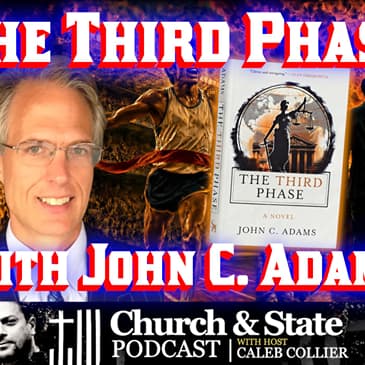
Spokane Valley could become a sanctuary city of a different kind. Councilman Caleb Collier says that this proposal... I'm proposing that the city of Spokane Valley issue a proclamation stating that our city is a Second Amendment sanctuary. Welcome to the fire. Welcome to the fire. Today on the Caleb Collier Show, the third phase with John C. Adams. Hello, Christian Patriots, and welcome to the Caleb Collier Show of Church and State Media, where we drive morality and religion over tolerance and apathy. And I'm your host, Caleb Collier. Once again, your favorite far-right shock jock. And the show that talks about politics and religion. Jesus Christ is our referee, so it's always nice and clean. Real quick, go to the website, churchandstate.media. Fill out the form for us. Get our newsletter, bypass the censorship. And of course, I personally call every single one of you who fills this out. Also, check out our most recent episodes. We continue to bring in very, very interesting guests. That's a great one that I want you to share with friends, family, and neighbors. Mark McCloskey's got an incredible story that definitely would benefit you to hear. Also, check out the featured guest page. Over the years, we've been joined by a lot of really incredible people. That's not a full list. Chris will flash on where you can see everybody else listed. But if a name tickles your fancy, you'd like to hear the interview, just click on the name. It'll take you directly to the episode. Also, I'd love for you to do a little bit of shopping with us. Christmas season is upon us. Men like great gifts, and there's a lot of great companies here that are part of our affiliate program. They're all Christian, patriotic. Use the promo code CHURCHANDSTATE for a discount on many of them, but all of them help support us. And speaking of support, please hit the donate button for us, ladies and gentlemen. This keeps us alive on NRB TV, Prepper Broadcasting Network, OBBM, newscasters, Faith and Freedom Television, Patriot Prayer Network, and also that national syndication on AM FM radio. It's getting pitched all over the place. Obviously, that takes a lot of money to do. And so we're hoping that you like the show enough to donate even in something as small as $ 5 a month. That does help us keep the lights on. Lastly, if you want to get a hold of us, churchandstate1776 at proton.me. And with that, let's go ahead and bring on our guest. I'm thrilled to bring to you John C. Adams. He's an investment banker whose spiritual awakening at age 29 led him to intensive study of philosophy and history. He devoted himself to understanding Plato's Republic, Augustine's Confessions, and translating their timeless wisdom into contemporary novel, which I'm looking forward to getting my hands on. The third phase is his debut novel, We'll be showcasing that in just a little bit. He lives in Florida partially and Greece as well. So he's a well-traveled man. John, it is a pleasure to have you on the program. Thank you. Wonderful to be here. Yeah, absolutely. So I love the idea of devoting yourself to this study. But before I get there, let me ask you about your spiritual awakening at the age of 29. What brought that on? I was an investment banker. I was working for Morgan Stanley in their M & A department. By that time, I was living in London. And I was working the 80 to 100-hour weeks for all of my 20s for the most part. And that was fun and interesting. But I finally got to a point, I think I was walking home from work. I think it was a Saturday night about 1030 and I'm going home from the office. And that was typical as bizarre as that. And I asked this question, why, you know, what, what is all this for? And I, I, I got home and in my nightstand was a Bible that my sister had given me two years earlier because she was kind of worried that I was going astray. And I just started reading it and I, You know, a few hours later in the middle of the night in London on a Saturday night, I gave my life to Christ. And I never looked back. And so that really put me on this hunger to learn. Everything I had done to that point had been about finance and economics and for the job. It was all-encompassing, my whole education. And so I was... I didn't have much breadth. I really didn't know much history or philosophy or theology. And I knew who C.S. Lewis was. So the first thing I did was I bought Mere Christianity and Screwtape Letters. And I read everything C.S. Lewis said. And that just kind of triggered this journey. Well, I've got to understand what Augustine said and what Aquinas said. And I've got to read my Plato. And I've got to understand history. And I've got to understand why the what the influence the Greeks had on the Romans. And, and that's, that just has been going on for, you know, a long time now. That was, that was, that was quite a while ago that I was 29. It doesn't seem that long ago, does it? Yeah. So I love you sharing the story with us. And so, is there anything specifically that really stood out to you as, as you're, you know, you're in your hotel room, you're, you're reading through the scripture, taking about a couple hours. Was there anything that you can point specifically to that was just kind of that light bulb moment for you? Well, yes. In the book, I have my main character have a conversion experience actually much later in life. A lot of the book is him struggling with a lot of these questions as he's out having all these adventures. We'll come back to that. But one of the things that struck me was how this book was about me. you know, I realized I'm reading through Romans, right? And I'm reading the Gospels and I'm, you know, the Sermon on the Mount and I'm saying, oh my gosh, I do all these things. This is about me. And I realized this is a letter from God to me that I just got out of my mailbox. And then it just struck me that it's true, you know, that this isn't good advice. This is. The truth of how reality actually is. And, you know, I, I, I just never looked back from that moment. You know, I love that answer. Uh, this is the truth. And when you come to that realization, um, You can't look away. You can't turn back from it. There is no other direction but pursuing this because it is the truth. So great answer, sir. Let's get into your book here because I love the idea behind this. I love the characters that are in this. But you have a main character, and I want you to describe him, and then we'll go into the four kind of extraordinary people that are also part of his life. So Carlos is, his name is Carlos Smith. That's my main character. He's a Bolivian soccer star. He grows up in Latin America. His parents are missionaries. And so he kind of rebels against the values that they try to instill in him. That's an important part of kind of the spiritual arc of the story. But But his last name is Smith, and that's on purpose because he's designed to symbolize. Humanity or every man, every person. And he's also multi-ethnic. His four grandparents are from different parts of the world, one from the Middle East, one from Latin America, one from China, one from the U.S. That's also not an accident. Again, he's supposed to be this kind of kaleidoscope of ethnicity all in one person. And, you know, he ends up. kind of out of obscurity becoming a a soccer star and a track and field star and so he's got this world recognition and because he's multi-ethnic he's kind of trusted by everybody and so that leads him to he gathers this group of people around him that all that are also from all over the world uh and they they try to change things they try to change how the world works and that leads to, um, stepping on a lot of toes of the powers that be again, all over the world. And that's what leads to assassination attempts and spies and chase scenes and explosions. So at the surface, there's a lot of action, but underneath it, there's a, there's a political arc and then there's a more important spiritual arc. Yeah. Now I noticed that, uh, every single one of these characters has a degree of trauma around them, including Carlos, uh, the, the main character, he, he sacrifices himself. It says here that, uh, to save his best friend. And, And kind of spends a lifetime paying that price. I want to go into that trauma, but also the other four characters and why you specifically had traumatic events surrounding them. Well, so the book is a modern day version of Plato's Republic. And in the early parts of the Republic, Socrates is with his interlocutors talking about justice and he asked them to define justice. Turns out that's very difficult to do. And they do a terrible job, right? One of them says, well, you know, the strong make the rules, and that's so what they say is justice, right? That's the might makes right guy. And so in the early part of the book, as I'm introducing the characters, I have them face, or in some cases, if it's one of the antagonists, to cause an injustice and try to understand it or justify it. So I have, like in Mirroring the Republic, I have these different discussions of justice in the form of the trauma that these characters go through. Yeah, that makes a lot of sense. So the other four characters are Rosie, Gabriella, Anwar, and Azadi. I might be mispronouncing that one, but. um three three women three young women here and then uh one boy uh the boys from palestine uh the the um let's see rosie's from miami gabriella's um well it doesn't actually say where she's from but they've all like i said they've all experienced trauma and they all band together and you say they're they're trying to correct what's going on in the world. Yeah well let me um Let me step back and tell you how I got the idea for the book, because that gets to this question of, you know, fixing the world. So I have an annual Broadway show weekend with my three daughters who are grown. I've got five kids, two sons and three daughters. I go to New York. And so in the fall of 24, so two years ago, I was with my daughters and they were They were kind. Of down on America, down on the world. The election was coming up, and they kind of have not been satisfied with the candidates. The whole time they've been voting, let's just say. Well, me neither, but yeah, I get it. Yeah. They came to this conclusion that we all do, probably when we start to focus on how the world works, that it doesn't work the way it should. So what we did over dinner was I said, let me ask you some questions, and you guys work in a team to create how you think the world ought to be. It's fine to say the world doesn't work how it should, but you've got to have some vision for how it should work to know what's wrong. So we did that, and along the way, they realized that we've kind of done our own version of Plato's Republic over dinner. So my daughters, who grew up with me as their youth pastor, and what I used to do is I would come up with stories and games and puzzles to take the wisdom of the ages and translate it into something teenagers could understand. So they said, hey, Dad, you should. Write a book about Plato's Republic, but have it be an adventure novel. Do that thing you used to do in the youth group, but for a whole book. And I was kind of taken aback, but then I thought, gosh, that's a pretty good idea. So. I spent two years doing that. So that's the background of the book. Okay. So the team, so this team of people that Carlos is with, getting back to your question, they bring their own perspective to try to together fix the world, to decide how the world ought to be and fix it. For example, one of the characters, her name is, it's pronounced Azadi, which is the Persian word for freedom. So she's somebody who is from Iran. She escapes when she's because her grandfather is Mossad. He's executed in Iran because he's Mossad. And so she, you know, there's a lot of intrigue around her growing up in the intelligence community, but she ends up being part of Carlos's team. But she is the personification of freedom, okay? And so everything she says is about trying to bring more freedom to the world. So each of the characters on this core team, as Carlos calls it, bring some kind of perspective like that, and they work together to create what they think is the ideal world. Again, stepping on a lot of toes along the way. I love this. I love this idea of each character representing specifically a moral virtue. I suppose would be the best way of saying that. I believe freedom is a moral virtue here. So getting into the world, obviously there's a lot to say about why the world runs the way it does and that the system is pretty broken. So I imagine that you didn't have to look very far to find antagonists, to find issues that you could write about in this book. Yes, that's right. I mean, there's an underlying philosophical arc in the book, which is this tension between Platonism and nihilism, which has been playing out for two and a half millennia. And so one of the characters is named Hector Ramirez, and he kind of represents the Nietzschean Uberman. She's a drug lord in Latin America. Rosie Hernandez is a black Latina birthright citizen in the U.S. She ends up being president of the U.S. in the book, but she represents Platonism. And so the conflict between the two of them is symbolic of this tension between Platonism and nihilism, which essentially is, People who think there's a higher truth and people who think there's no higher truth, there's nothing really going on here other. Than quarks bouncing off each other. Just getting back to exactly what you said, if you read the newspaper, almost every story underneath it is this tension between nihilism and Platonism. It just keeps happening over and over again. So we address that in the book, too. I think that's wonderful. You know, side note, I describe myself as a Christian absurdist. I can't go fully on absurd because I do believe that there's a point and that point is Christ Jesus. But I do tend to see things as rather absurd. Yeah, well, one of the things I say in the author's note at the end is that I think the existentialists raise really good questions and they have terrible answers, right? And existentialists believe that, you know, you go to Sartre or Nietzsche, they think that, yes, the world is absurd. And their answer is, you know, so deal with it, right? Figure out for yourself what that means for you. Since there is no absolute truth, you figure out what your truth is. And what my team says is, no. No. That's not right. You look inside yourself to see what the truth is. You don't you don't find your truth. So, yes, you know, the world seems absurd, just like you said. But then you either have to decide, therefore, I think it is or maybe there's more going on here that meets the eye. Right. And that's nihilism and Platonism. And that's what I realized, you know, when I was on my knees in London that night all those years ago. There is a truth, and there is more going on here. Absolutely. Christ is the answer to the existentialist questions. I would 100% agree with that. Yeah, the idea of Christianity and absurd, you know, doesn't really mesh up very well. But, you know, it's just kind of my perspective on things. I want to go over towards correcting what's wrong. Because you brought up that there's freedom as one of the elements, but as they're all put into positions, you brought up Rosie who becomes the president of the United States, so clearly they have some power behind them. But how do they go about fixing what ails the world? Well, politically, what they do, and this really comes from this Azadi character, the Persian woman who stands for freedom. Because she says the problem with the world is the few ruling the many. And you can tie that into Nietzsche and the will to power, right? So some of our bad guys are people that are seeking power. And I have them in Latin America and in Africa and in China and very much in the U.S. in different subplots. But that's really the core issue. And so she says that's the problem in Iran. In my country, we have a small group of people that are tyrants, right? And that's what Socrates says in the Republic is ultimately people. Are either tyrants or philosophers. And in my group, in my book, I have those same groupings, but I call them criminals and saints. Okay. And so the problem is the few ruling the many. And that might be in Iran. It's certainly true in my book. I deal with Palestine and Israel. That's the problem in Palestine. There's a few ruling the many. It's a problem in Latin America, drug lords and corrupt politicians, a small group ruling the many. In China, the Communist Party, the people at the top of the Communist Party, the few ruling the many. And the dirty little secret in my book is it's true in the U.S. too. I was about to ask that question. Political parties. And the lobbying industrial complex, they are the most subtle and diabolical. Version of the few ruling the many. And so what happens in the book is they go around the world through their different contacts and adventures and happenstance, and they clean up the few ruling the. Many around the world. And they end up in America, where, you know, now they're in the big leagues trying to unseat the few ruling the many. That's... That's kind of the political arc. Of the book. I got to tell you, I love that you include the United States in this, because if you listen to the talking heads, you're going to hear, the same type of verbiage of, we live in the freest country in the world, and we got our democracy, which I'm sure you would have a lot of comments on democracy versus a republic. But I want people to be exposed to the truth. And the truth is, is that we are run by an oligarchy. And so in the book, As they're traveling from country to country to country and fixing what ails it, is there a specific type of government that is instituted to correct all of this? Well, yes. So they actually start out in Palestine. In the book, they form a new country in Palestine. And because Carlos's grandfather is from there, he becomes the first president of a new state of Palestine. And there's a lot of. Drama that goes into that coming about, as you can imagine. But the point is to try to use technology to lean into democracy, right? And this is where I part company with Plato, right? Plato was against democracy because he saw that democracy led to in his mind, poor decision-making, which caused them to lose the Peloponnesian War, and then they executed Socrates, and he blamed the democratic system for that. And so his idea was the philosopher king, you know, we need people with true wisdom to be running the government. And what I'm saying is, well, now with technology, we're finally at a point where we can get information in people's hands very quickly. You know, even our founding fathers, they had to, you know, my namesake, John Adams, had to get on a horse and carriage and go, I don't know how long it took, 10, what, 10 days, two weeks to go to Washington and then drive all the way back. So everything happened at a snail's pace. Now it's, we can get information in people's hands instantaneously. And I think that allows us to lean into more democracy. But the problem we have right now is we have uninformed voters who, responding to sound bites, putting relatively uninformed and often people with questionable integrity in office who make decisions in the back door being paid by lobbyists. So everything you said about our country is true. We're the best country ever. We're the most free country on earth. But we could be so much better. so much better. And so what we need to do is, the punchline of the political arc of my book is, we're now at a point where everyone can be a philosopher king. Let's not pick experts to run everything. Let's educate everybody on the issues and give people incentive. In my heart, I'm an economist, so it's all about incentives. And right now, people don't have incentive to do their homework. They just don't. And we could change that. We could give people incentive to do their homework and lean in, and then a combination of referendums or referenda, or just much more informed polling that we can get informed people telling their representatives what they need to do. So that's kind of the system that we put in place in the book, and it works like a charm, and the political parties hate it, hate it. Hate it, right? Because it takes away their power. Precious power. Yeah. I have so many questions on your statements there. Number one, I mean, the real problem I see here is that who controls the information? And when I look around and I'm constantly examining the public before me, I see a lot of people that have access to all information, but they're not using it appropriately. They're distracted. They're watching TikTok reels and Instagram reels on stuff that just does not matter whatsoever. So while, yes, we have the technology to educate people, to reveal the truth to them, most of them are just using it as a simple distraction. How do we get beyond that? Yeah, well, so in the book, and this is just one proposal, I think I have identified the core problem. And my solution in the book is one of several. But what I say is, that if something gets through, goes through the legislature and has more than 60% approval, it's a law. If it has less than 40%, it's rejected. But if it's between 40 and 60, and I picked that because to kind of match the filibuster. So basically I'm saying we should. Replace the filibuster by having another step where we take things to the people, right? And, you know, you just look at. Whether it's, boys and girls sports, or whether it's voter ID, or some of these issues that are really 80-20 issues that can't get through Congress, right? That should never, ever happen. So what I say in the book is. That anything that's a contested issue, that's a close call, we take it to the people, and the proponents have to come up with an official 45-minute video defending their position, and the opponents do too, And everybody has to watch those 90 minute videos and you use facial recognition and, you know, reading your iris or, you know, the technology can tell if you've paid attention and you've focused. And then, and then, you know, if you've done your homework, then you get. To vote on the referendum, or at least you can respond to the survey, you know, whatever it may, you know, there's details I don't need to go into about. How it might work. But, but the point is, you're giving people incentive to do their homework, and they will if they feel like they really have a say and can contribute. Again, that's going to take things out of the back room and into the front room. Think of the transparency if we're making decisions by anybody who takes the time to inform themselves on an issue by following this official pathway and seeing both sides and then you can really participate. And we do that instead of the filibuster. That's my idea in a nutshell. It's a fascinating idea. Now, this would assume that there's a baseline style of government that's already in place here. So in the United States, that baseline would be the Constitution. But in other countries that maybe have communism or theocracy or a monarchy, how would that kind of a system work? Or is that those systems just removed? Yeah. In the book, I have it evolve in different ways in different locations. Part of the pitch when Carlos is creating this new state of Palestine is, hey, I'm a person with a clean track record. Israel leadership can trust me and we'll never have a two-state solution until the Palestinians are led by somebody that Israel trusts and they can trust me. And so So the book isn't at all about the Israel-Palestine issue. It's just that I said, where's a place I can start a new country that's really small and have that be this experiment in this true democracy, as I call it? And I said, well, I'm going to pick Palestine, even though that's a whole. Can of worms. But it led to some interesting drama. I have terrorist explosions and assassinations and all that going on at the plot level. But underlying it, so they launched this effort. So the Palestinian constitution that I have them set up has a judicial branch, an executive branch, a legislative branch. Just like ours. The only difference is how close calls are determined. And I have them determined with this, you know, let's take it to the people and, you know, anybody who's done their homework can vote thing. So again, the idea is, you know, we've got informed voters who have incentive to really understand the issues. Yeah, I mean, I like the direction. Like I said, there's a lot of questions that come to mind here, but I definitely like the question. We're coming up on a hard break. I want to talk a whole lot more about this, but let's go ahead and pitch the website here, Chris, if you can bring that up, thethirdphasenovel.com. Chris is bringing that up right now. This is where you can order the book. There's a whole lot more on here as well, reviews and essays. You can read about the author. There's media. There's a book club as well. So I do want the audience to go check this out. And we'll obviously talk a whole lot more about this after we come back from the break. Hey, this is Caleb Collier with Church and State. I'm here to tell you about Hunter's Blend Coffee. I got to tell you, I absolutely love this stuff. I'm all about the dark roast. Hunter's Blend Coffee, black powder. Doesn't that just sound like deliciousness and rebellion? I got to tell you, in America, we don't drink tea. No, we drink coffee. It's the food of the gods. And I endorse and support that. Hunter's Blend Coffee. I've got to tell you, it tastes like freedom. So I need you to go over to churchandstate.media, scroll to Hunter's Blend Coffee, and use the promo code CHURCHANDSTATE to help support us. When you go to huntersblendcoffee.com, not only will you be getting a great cup of coffee, but you also, if you use the promo code CHURCHANDSTATE, be supporting Church and State in our dogged pursuit of truth. And we are back. Thank you for staying with us. You're over at churchandstate.media. We're going to go right back to our guests. But real quick, I do have to plug one of our amazing affiliates. And as I'm so enjoying this interview and just these types of conversations where we're talking politics, how to fix the world, I'm reminded of some of the greatest conversations that I've ever had in my life, and they all seem to center around a cigar. So if you like a cigar as much as I do, go check out Liberty Cigars. This is a way for you to almost slow down time. And I got to tell you guys, men love cigars. We love to get around and just have conversations, political conversations, theological conversations. and enjoy that sweet tobacco. So go check them out. They've got great things. In fact, every single cigar is actually a history lesson. Chris is kind of showing you some of those. They've got the Washington Commander Series, the Founder Series. So you can read about some of your heroes, even discover some new heroes as well. Go check them out, Liberty Cigars. Use the promo code CHURCHANDSTATE for a discount, and you'll get a great cigar and help support us. And just as a reminder, once again, to please... Hit the donate button for us to keep us alive so that I can continue to have conversations like this and bring them to you. With that, let's go back to our guest, John C. Adams, author of The Third Phase. And I'm really enjoying our conversation so far. And I like the ideas. You know, I like looking outside of the box because we are politically beating our heads against the wall and we're expecting different results. And so going back to the conversation, John, You know, bringing about a true democracy. Now, our founding fathers and everybody knows they can they can read this. It's a matter of fact, they did not like democracy. And Benjamin Franklin famously described it as a wolf and two wolves and a sheep voting on what's for dinner. So when you're talking about a democracy, are you more talking of like a democratic republic? Is that kind of more the direction? Well, I was on a podcast last week, and one of the hosts was pushing back on me saying, well, we need experts to be making decisions. And I said, well, I think we need experts to be the chief persuading officers. Let's not have experts making decisions directly. you know, from behind a dark wall that we can't see, right? That's when you get, you know, Anthony Fauci, right? Instead, let's have the experts persuade us what's best. And again, if it's a close call, you know, if we're voting on whether, if we're trying to decide whether to have voter ID or not, Let's not let an expert in voter IDs make that decision in some smoke-filled room in Washington. Let's have them come out and say, here are the reasons that we should not have voter ID, and then have other people say, here are the reasons we should, and here are the reasons why theirs are wrong. And then let's all take all that in, and then let's decide. It would be much better that way. I would certainly agree with you there. Now, are there specific rights, God-given rights that are universally protected in this system? The right to life, for example. Can you vote your way in your scenario here? Can you vote your way to where we have like a maid program in Canada where they're literally killing people because they don't contribute to society? Yeah. Well, you know, again, in the structure that I propose, anything that's a close call is put out to, you know, again, either an outright referendum or at least a very detailed survey that's carefully crafted where the point is making informed decisions. So on any particular topic, people could vote on it. You know, people in Canada might would maybe go through this process and they'd hear their 45-minute videos and they'd invite, they'd say, we're all for euthanasia. Let's do it. Okay. Wild. That may be kind of scary. Maybe what's going on is you've got, you know, a bunch of radicals in Ottawa that are calling all these shots and the people, once they really figured out what's going on, they wouldn't be so happy about it. That's what this would sort of smoke out, right? You're bringing the power back to the people and you're counting on the fact that humanity has decency behind it and that they wouldn't vote to make rape legal or abortion legal or whatever it may look like, some of these more terrible aspects of humanity. Uh, that's, that's my assumption. Yeah. I mean, I mean, you know, I, I can't imagine that any society that put it out to vote would make rape legal. Abortion obviously is a, is a different, difficult topic, but it would, it would be pretty interesting to, to have a referendum on abortion where both sides have to put 45 minutes of arguments together and counter arguments. Okay. I mean, it'd be interesting, be interesting to see how it came out, wouldn't it? I would definitely agree. It would be very interesting. And, you know, I don't want to focus entirely on the political aspects of this because there is a lot more towards correcting what ails the world. We can certainly pick a number of different topics. But let me go, being the name, you know, church and state. Is there a specific religion that is primarily focused on or promoted within the book? No, the book, I mean, Carlos grows up as the son of Christian missionaries, and so he ultimately becomes a Christian. Azadi is a Muslim. You know, she's from Iran, and there's talk about how they interact and how they. Think about all of that. But there's not much in the book on religion specifically. There's a great deal. I mean, look, the little secret is the book isn't, even though it says that on the website, the book isn't. a modern remake of Plato's Republic, it's really a modern remake of Augustine's Confessions. You know, and like we were talking about earlier with questions and answers, you know, this book is Augustine's answer, at its core, this book is Augustine's answers to Plato's questions, right? Augustine was writing in 400 AD, Plato was writing in 400 BC. Augustine knew something really important that Plato didn't, which is he knew Christ, right? And so it's really, in the core, the book is about Augustine's answers to Plato's questions. Okay. I think the whole thing hinges on education, educating the population, the entire population of the world, because otherwise this type of a system doesn't work. If you have, as you said, a bunch of uninformed voters voting on something, obviously this could really escalate very quickly into something that would be quite tyrannical, quite terrible. And so when you're addressing the education in your book, how do we go about universally changing the education system to where these individuals, once again, aren't using their phones to just watch cat videos or something? Well, in the book, you know, actually one of the things Carlos and so, so, so Carlos becomes very rich and famous because of his chakra skills. He's starting, you know, around it, you know, in his late teens, actually. And so what his mother does is she's founds an education company and that basically uses all the tools of technology to allow for more choice and allow for individual tutoring. I mean, there are a zillion problems with our education system, but one of them is using manufacturing parlance. We're doing batch processing of what should be a job shop, right? We're at a point now where everybody can be educated, can have private tutoring, and be educated to exactly what their needs are. So as soon as you own a concept, you move on. So our kids spend so much time either bored going over material they know or lost because we're going over what they don't know because, you know, we're still in the industrial age of educating people in factories, right? That's where our schools are. They're education factories. They're assembly lines. And that's crazy. And, you know, we can get into. Unions and all of what's behind that, but we need choice, we need competition, and we need to maximizing the use of technology so that people can get an education. That's what they do in the book, which again leads to this idea that we can all be philosopher kings. Dismantling the Prussian education system. Here in the United States. Would be so beneficial. This is why my kids go to private school because I'm not going to put them into that system because I know what it produces. And you're absolutely right. It's a factory system. a lineup system that just builds industrial workers that don't ask questions and really just kind of exist and rely on the government from cradle to grave. So I am all for that. And I love exploring a new way, a different way. Clearly, we can see that the system is broken. So let's explore a different way. And your ideas here in this book, I would say, certainly have a lot of merit here. to where we can focus on what interests a child. If you're stuck on a subject that doesn't interest you, maybe that's not the subject for you. Maybe when you grow up, and this is typically what happens, I'll throw myself under the bus, I lick windows when it comes to math. It does not make sense. It does not compute. So I'm not in a field that requires a whole lot of math. Maybe we should educate our children to what interests them. Yes. Yes. And there's much more room to do that. I mean, you know, that was the big issue in Plato's Republic for Socrates was education. We need to educate everybody. And he also pointed out that even the lowest of the low in terms of the societal hierarchy that existed at the time, is capable of education. There's a scene in Plato's Mino where he takes a slave boy and just by asking him a couple questions, the slave boy figures out the Pythagorean theorem. And Socrates' point is, well, he's just. Remembering something that he already knew, which is kind of an interesting way to think about epistemology. But the point is, everybody can be educated on the issues And everybody has the right to participate, but you've got to do your homework. That's the key difference in my book is you've got to do your homework to have the right to have a say. I mean, I agree. I tell people all the time on the program, do your own homework. Don't trust me. Don't trust my guests. Do your own homework. And I'm hopeful that enough will do exactly that within the system that you've created in this novel. You know, there's definitely always people that don't want to be part of the system. You know, you brought up, for example, that in order to prove that you've done the homework here, that the computer is monitoring your face, the facial recognition or monitoring your iris. Obviously, there are people that have privacy concerns that would not want to be a part of that system, or there's just people that are lazy and apathetic that would not be a part of that system. I would assume in your book you allow for those types, but they're just not. they're not really calling the shots, I guess is really what it comes down to. Well, not on, not on the close calls. I mean, you know, everybody in my, in my little system that I've created in the novel, everybody has the same rights they do in the U S right now. You vote for president, you vote for your Senate and your Congress people. I don't really get into, you know, state level organization, but at the federal level, everybody votes on that. So the really, the only difference in my system is how the close calls are handled. And right now, instead of, backroom, backscratching negotiations in Washington and maybe using the filibuster, maybe not. If it's a close call, let's inform the people and let them decide. It's just so much more transparent. I am all for the transparency. And what I like about this and this conversation, obviously, I haven't read the book yet, but I look forward to reading this, is that it's a new way of looking at it. It's transparent. It's fixing the problems and it's bringing the power back to the people, which I think is is absolutely necessary. We've only got a few minutes left here, so I want to make sure that we bring up the website again as well, thethirdphasenovel.com. I'm going to recommend to my audience that they buy this book for you and leave reviews. I know that's a big thing that definitely helps the author. But tell us just a little bit more, I mean, kind of a closing statement, but pitch the book. Tell us about the website and why people should get involved with this. Yeah, thank you. Well, I would like people to go to the website. Obviously, they can go to Amazon or bookstores. But the special thing about the website is I've done a companion guide, which is a free download, but it's quite extensive. It's 130 pages. It's really kind of a textbook. It has games and puzzles and multiple choice questions, but it's really a guide through all the symbolism and everything in the book. And the final chapters are on how this book really relates to Plato and relates to Augustine. So For those that want to go a level deeper, there's a great opportunity that only comes from the website. What I'd say to sum up is the book is about how the world could be different, but again, if you peel the onion back further, it's more about the kind of people we need to be to bring an ideal world together. Those are the kind of people that understand that The essence of being human is choosing what to love the right way. That's what it boils down to. I think that's, I mean, that's phenomenal. What to love. And I think you and I, as fellow believers, we could point to Christ as the primary thing. But beyond that, everything else is an extension. Loving your wife, your family, your kids. And, you know, even loving your education, loving your political system. I think most of us would say we do not love the current systems that have been established in this country or even throughout the world. So loving it properly means that asking the hard questions and asking what needs to be changed. And that's what you've done in your book. So I thank you for writing this. Thank you. Like I said, I'm really looking forward to getting my hands on this and reading through this. It seems right up my alley. And I'm sure after reading it, I might have more questions and would love to have you back again. Oh, I'd love to come back. Absolutely. Okay. Well, I want to thank you again for coming on the program. I've got to go ahead and close this out. If you hold on one more minute post-production to say goodbyes, I'd appreciate it. But again, thank you for your time and for writing this novel. Thank you. Absolutely. All right, ladies and gentlemen, there you go. Phenomenal conversation with John C. Adams on the third phase book here. I'm going to recommend it to you to read through it because we should never be afraid of questions and we should never be afraid of trying something new. And this is a novel that explores both of those things. So go check it out. The Caleb Collier Show of Church and State Media is brought to you in part by Colonial Life Spokane, Independent Agents, Finders Insurance and Mark37. com. I'm Caleb Collier. I was born for a storm. Welcome to the fire. Hey, this is Caleb Collier with Church and State, and I want to tell you about Methylene Blue. For a long time now, you've seen the Maha people using Methylene Blue. I thought I'd give it a try. You know what? It helped me considerably, not only with mental clarity, but also with insomnia. Now, you got to be careful with Methylene Blue because the market is filled with with counterfeit products. But Best 365 Labs is the greatest methylene blue on the market. Telling you, take this stuff, enjoy the benefits, and also have a little bit of fun when going to the bathroom. I need you to go to best365labs. com and use that promo code CHURCHANDSTATE. You're going to get a discount. You'll also be helping to support Church and State and our pursuit of truth. This is Caleb Collier with Church and State. Are you tired of your device spying on you? Ladies and gentlemen, we live in 1984. Your phones, your tablets, your smart televisions, they all are spying on you. And this is why I heavily endorse mark37. com. This is everything you need for your digital privacy. Phones, tablets, laptops, all of them are ghost protocoled. So that means that you are in charge of your own data. Just go to churchandstate.media, scroll over to shop and hit mark37. com for all of your privacy needs. Make sure to use that promo code church and state. Ladies and gentlemen, I want all of you to be a walking billboard. Some of us don't have platforms such as church and state, but you know what? We can wear t-shirts and engage in great conversations with Christians and patriots all across the country. Stand Up Now apparel is the best t-shirts out there. These are American-made, owned by a Christian and a patriot, and the material, it's like getting a warm hug from yours truly. One of the better things as well is there's no tags. I hate tags, I know you do as well. I don't know how many times I've cut off a tag and ended up with a hole in my shirt. You never have to worry about that with Stand Up Now apparel. These are the best shirts out there with the greatest messages. Let me give you a few examples. But there's a t-shirt out there that says armed with Ephesians 6 on it. I gotta tell you, when I wear this in town, I get a lot of comments and a lot of eyebrow raises. There's other shirts that include pure blood in Hebrew, obviously in reference to the vaccines. And also, you can get Church and State merch there as well. We've got our flagship shirt. I was born for a storm with Church and State right on it. You gotta order this shirt. Go to Stand Up Now Apparel for t-shirts and hats. All of this great merch with great Christian and patriotic messages. Remember to use that promo code church and state.