Become a supporter of this podcast: https://www.spreaker.com/podcast/prepper-broadcasting-network--3295097/support.
Head to https://bepreparedsolutions.co/go/pbn, or use code PBN20 when you sign up to get 20% off their incredible preparedness tools, custom plans, and LOCAL INTELLIGENCE.
STOP THE ADS! Become a PBN Supporter for just $5 a month and get exclusive podcasts just for supporters. BECOME A SUPPORTER
The Prepper's Medical Handbook Build Your Medical Cache – Welcome PBN Family
Join the Prepper Broadcasting Network for expert insights on #Survival, #Prepping, #SelfReliance, #OffGridLiving, #Homesteading, #SelfSufficiency, #Permaculture, #OffGrid solutions, and #SHTF preparedness. With diverse hosts and shows, get practical tips to thrive independently – subscribe now!
Newsletter – Welcome PBN Family
Get Your Free Copy of 50 MUST READ BOOKS TO SURVIVE DOOMSDAY
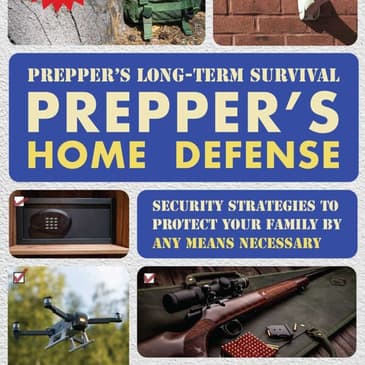
But I've got the old addition, I've got the new edition, and uh yeah, man, this your book has always been on the tip of my tongue when it comes to talking, you know, prepper home Defense. I think it's Yeah, I think it's kind of a cornerstone if you ask me, and in all honesty it is. Let me not be a liar, but I'm pretty sure it's the only home defense book in hardback or in paperback that I have and referred to. Okay, very cool, thank you. Yeah, I mean it's you know, when I first got it, I first looked it over and I said, you know, if I get all this done, then I'll get another or look for something better. Right. Sure, sure, I get so many great recommendations and stuff in't it. So I guess just the ever changing world gave you the motivation to create Edition two or how'd that come up? Pretty much? Yeah, I mean, there were there were things that I wanted to change, there were things I wanted to update. This was the third third updated book I did With Ulysses. We basically took the top three most popular titles. Okay, you know, let's go ahead and review them or you know, revamp them. Put up revised editions and see what happens. Makes sense. When did this thing come out? Anyway, guys, you know how it goes exactly. I think the original came out in twenty twelve. I think, yeah, you're right. Text copyright twenty twelve. So, lady and gentlemen, we're here with Jim Cobb. For those of you who don't know, he is a man of many talents, writer in the prepping and survival world. For I guess at least since twenty twelve, right, editor in chief over at Backwoods Magazine. That's probably a good time, huh. Yeap, yep. We've been doing Backwards Survival Guide since twenty eighteen, I. Think, really, yeah, thought it was older than that. Even that's interesting now. We started out doing Preper Survival Guide and then kind of pivoted over to more of a self reliance mindset rather than preparedness and did Backward Survival Guide. For a while. We were doing both titles, and then a couple of years ago the publisher decided just to do Backwards. Yeah. I ain't nothing wrong with that, man. Everybody seems to have Backwoods dreams these days. Anyway, everybody was to run to the backwoods early. Who could blame him with the state of things on the globe, But what's your favorite what's your favorite I know you have a substack as well. What's your favorite kind of writing to do in there? I've been doing a lot of short work lately. I write a lot for a blog called gat Daily. I also write for Skill Set and Tactical Knives and a bunch of other places online. Those are fun because they're they're quick, punchy pieces where I can just focus on, you know, a singular topic and just you know, expand on it, but not too in depth where reader is going to get lost in in the in the woods, you know that said. I just recently finished writing my most recent book, which will be out in August this year, called Common Sense, every Day Carrie. And that's the first new book that I've written in a few years. We did the revised edition of Preppers Home Defense, revised edition for count Down to Preparedness, and our revised edition of Preppers Long Term Survival Guide. Those are the three book projects that I had done prior. I'm not writing a brand new book. When I do those, I'm going through the manuscript and updating deleting, adding things like that. This Everyday Carry book was the first book length project I've done in a few years, and I really enjoyed kind of the space that that allowed. You know, when you're writing a magazine article or a blog post or whatever, you do have to be conscious of the length. You know, you don't want to lose the reader because you're turning in something that's several hundred words and they're only looking for one hundred and fifty years, you know something like that. With the book, you really kind of you can you got a lot more elbow room, and you can you can dig more into some of these topics. And I really enjoyed doing that because I haven't done it in so long, so that was kind of a nice change of pays. Yeah, it's cool. It's a good idea. The DC thing kind of cuts across a lot of communities, a lot of different a lot of different grains, so that's yeah, that's uh. And the deteck man I was just talking to a company that they're doing like a little micro drill bit DC piece that I thought was pretty cool, interchangeable drill, and you know, it just seems like it's one of those things nowadays that there's so much innovation in it, and you know, when there's so much innovation, it's good to have a resource like that from a you know, a point of experience like yours, to say, you know, what do you really need to carry well? And that was the approach I took with the book. You Know like you mind DC is part and parcel of the preparedness mindset. It really is. It's what you carry with you to be prepared for whatever life rows your way throughout your normal day to day operation. And one of the things I tried to stress in that book is, you know, it's as it stands right now. I think the book runs sixteen or seventeen chapters, and each chapter is a category of gear, you know, whether it's nives, slashlights, whatever. And one of the things that I really tried to stress throughout is don't look at EDC as a checklist. Look at it as a menu. It can choose what makes sense for you, because I can easily see somebody picking up this book and going, my god, this guy expects me to carry all this stuff. That's not the point in sixteen chapters, right. You know, something I've done tried to do with all of my books is I'm not giving you a list of things to go buy or a list of things you need to carry. I'm presenting you with as many options as I can come up with, and explain the pros and cons of all those different options, and then let you make an informed decision as to what makes the most sense for you and your situation. I mean, let's face it, there is no one size fits all solution in the preper world. Everybody's situation is unique. You have to take into account everything from the climate where you live, your family makeup where you live, the crime rate. You know, all of these things are all factors to decide. You know, for example, what you should carry with you on a day to day basis, or how much food and water you should have stored, or what kind of security protocols you want to implement at home. You know, everybody's different. That's the toughest thing right now, right is like, yeah, I feel like in the early days of prepping it was checklist heavy, put this, this, and this in your bug out bag. And you know, as things have gone on, at least as a writer content creator myself, it's like you want to give people actionable information, but you also want to drive home the fact that you know it is completely your situation. Is one of those things, right, It's like I gotta have a flashlight, I gotta have a blade, I gotta have a whatever. It's hard to walk that line of you should have what you want, to have what you need, but also listen to me because I have some good ideas. Exactly exactly, And you know, with a lot of this stuff, you know, whether we're talking about DC or propping or whatever, there's always little tips and shortcuts and hints and things like that that come, whether it's from experience or education or a little bit of both. You know, not one of us was born with the knowledge we have today. We all learned from other people. We all stand on the shoulders of others. And you know that that's another thing that I really tried to be cognizant of, particularly in my more books, is giving credit where it's due, you know where you know, I learned this tip from this instructor, this educator. Ye you know, not only to you know, give proper credit, but also to illustrate that, you know, I'm not the only voice out there. You should be listening to. You know, I don't consider myself to be the end all be all by any means. I'm a student just like everybody else. And I want some of my followers, my readers, to expand their horizons and look at other people like you know, Craig Caudle or Kevin Estella, you know John McCann, These people who I've learned from from years and years and years. You should be learning from them too, you know. Yeah, that's a great That is definitely a great thing to do because then you can expand expand people's horizons a bit and they may find someone who really clicks with them, just like you know, you pick with them, can you know? Yeah? Make life worth living sometimes in some sort of situations, you know what I mean. You can't wait to see what he's gonna write or post or put up there next. That's very important. So I noticed that the drone on the front of this one, and I thought that was very telling, because when you're doing an update to a twenty twelve book, makes sense to include some information in there about things like drones. Was that was probably low hanging fruit in your mind? Right? Oh? Absolutely? You know, when when you listen pressed my publisher. When we started talking about doing some of these updated editions, we were kind of chatting right at the beginning. There were three we took the top three most popular books Prepper Home Defense, Preppers Countdown of Preparedness or it's not Preppers Count Out of Preparedness, but Preppers Home Defense, Countdown of Preparedness, and Preppers Long Term Survival Guy. Those are the three that seem to have resonated the most with readers. And Home Defense was the first book I ever wrote. It was also the last one in the list that we updated, and as I sat down and started sketching out notes, drones were at the top of the list because they weren't a thing, you know, fourteen years ago, at least not anywhere near what they are today. So I wanted to make sure that we addressed, you know, not only you know, in the prepper world, there's the mindset of, you know, people are going to use drones against us, okay, and that that's certainly, you know, that could be a thing, But we also want to talk about how you can use a drone to your benefit, you know, and use it for surveillance, use it for checking out an area, you know, things of that nature. And you know, one of the challenges when you write a book like this is the technology changes so rapidly that you know, by the time the book is published, some of the information is probably going to be out of date or obsolete, you know, when it comes to technology in particular. So there's probably information about drones in this book that just came out a few months ago. That's already kind of we're beyond that, but the general concept is still sound. Where we could use drones to see an area that we can't get into ourselves. Sure, you know, we can use it to scope out an area. We can use it to surveil a situation in a safe manner, you know, and then make an educated and informed decision on what we want to do next. Yeah, you can even use them in communications nowadays, fantastic tech. I mean even running a wire antenna. High you know. But yeah, to your point, a lot of different stuff in terms of technology. I'm going to take a risk here and asking you this question, but it might I think it's going to pan out the way I want it to. You write for a bunch of different publications. You write books. As a writer, you have to see and have seen sort of the I want to say it's the horizon of AI, but it really is kind of fully upon us. Now, what are your thoughts when you say, well, I'm Jim Cobb, the writer, and AI is coming eating up. Land around me a little bit. I mean, I know you felt that, I've felt it as right in this world. What are your thoughts on that? What are your thoughts on the future of writing the Lance books, you know, under your own name, that kind of thing. I think there's some things that people are worried about, and there's some things that people shouldn't be worried about. But I'd like to get your take on it. I think there is always going to be a home for the human right, Okay. I don't think AI can fully replace what a human being is capable of doing it. God, I hope they can't, you know. I I'm very particularly in the preparedness area. I'm very anti AI because there's no checks and balances. Okay, And you know as well as I do. You can go on Amazon right now and you can find dozens of prepper books. They're obviously AI written, Okay. I bought several of them, some of them knowingly, some unknowingly and they're crap, they're junk, they're they're horrible. But if you are a brand new person to prepping and you pick up one of these twenty seven and one books, okay, and it is if it tells you on the cover it's twenty seven books in one and the book itself is only ninety five pages, I mean, come on, do the math. And you know you're brand new to it, and you pick this book up and you start reading through it, you might not recognize how much of it is bad information. Yeah, and you're acting on it. You're taking steps in your preparedness plan based on this junk that you read, and you could be doing a real disservice to yourself and your family. Adding into the injury. There's at least one guy out there, I think it was last year, who was advertising a class where he was going to teach you how to use AI to generate preparedness books for profit. Oh and this is the guy who's active in the prepper world. Really, you know, that just really turned my stomach. And I saw that, so, you know, I recognize that we're never going to put that genie back in the bottle when it comes to AI. We're never going to be able to get away from it completely, but we can take steps to educate ourselves on how to recognize it and how to treat it properly. You know, there's another writer I know I'm good friends with, and we were just talking about AI a few weeks ago and how it could have some use for a writer in terms of helping you collate data, help the organize information and kind of you know, let's say, make a spreadsheet or you know, make a timeline of events, things like that. In those circumstances, I don't necessarily see it as a bad thing. I see it as a tool, okay. You know, just like how we've gone from using a handsaw to now we have chop saws, and we have skill saws, and we have you know, these power tools, right, but it's still a human being operating the tool. And that's the key element here and where we're running into problems in the prepper world is you have human beings who are not educated, who are using these AI tools to generate content that they don't bother to check whether it's accurate or not. They're just looking for the paycheck, and at the end of the day they're done. Yeah, that's there's a few things you get wrong that could be deadly, you know what I mean. And that's kind of it's a different beast and writing a steamy romance via AI, you know what. I mean, exactly exactly a. Different genre than that. Yeah, yeah, I feel the same way. I think, you know, I think for people with platforms and people with audiences and if you you know, if you are a writer out there, probably pretty good idea to build an all audience and build you know, some kind of a platform so people know to come to you for your style of writing. And another tip, man is stay away from the what is it the grammarly? Grammarly has changed dramatically. I mean it used to be I felt like grammarly used to be worried about grammar, and now anymore, it feels like grammarly wants to change your entire writing style and some conformist thing, you know what I mean. It's really interesting to see the evolution of it, you know. And see I'm multiple. I just used Microsoft work for everything. That's a good idea. I've turned it on and have never turned it off, and I should have turned it off. But it's just one of those things. I'm kind of glad I didn't now because I've watched it change over the years so much. Sure it really is. I mean, if I sat down and wrote out a list of the things it wants me to say the way it wants me to say. Them, it's pretty pretty long list. You know. It's really not a fan of any personality whatsoever, you know what I mean. The reason I bring it up is because I think there are a lot of writers probably coming up with it as like a necessary tool in the toolkit, like I do what grammarly says. And things look better rightly. Says because it's grammarly, man, I've been using it forever, you know. B that's like this this weird little manipulation thing that's happening to writing. And if you're not sure of it, yeah, that's going. As an editor, Okay, put on the editor hat for a minute. When I'm editing submissions for Back with Survival Guide, one of the things that I really try to preserve is the writer's voice, you know, And I think it's really important that a reader can see the difference between this writer, this writer, this writer, because we all approach topics in our own unique way, and we explain them in a unique way. And you know, you don't have to be a student of literature to see the difference between an article written by me, an article written by Craig Caudle, an article written by Carly Fairchild. Okay, we could all write the same topic, but they're going to be vastly different articles. And it's important that that personality, that that voice comes out because that's what really helps the reader connect with the writer and the information that's being presented. And when you have these hyper sanitized versions that come out from a Grammarly or you know, another similar software, it doesn't help. It really hurts the end product. Sure, yeah, yeah, And I have to imagine of those books that you're talking about on Amazon, a lot of them probably we were whitewashed by Grammarly. Yeah for sure. Yeah, that's it's a thing. Unfortunately that short form content and probably short form blog stuff has hurt in a lot of ways, which is really getting to know an author in their kind of style, you know what I mean, in sort of the mad dash to give me my answer and give it to me. Now, you know, we've lost that kind of read the article read the newspaper and enjoy not just your you know, your search for what the article has to say it it's hard, but also kind of. How it's delivered to you. Cool yep, man, And. That's everything in life now everybody wonders why they're depressed. But well, back to the book, man, some really cool resources in there that I couldn't actually remember if the original had that in there or not, and I didn't go back to verify, so just you know, yell at me if I'm wrong, but I you did have the police codes in there in the last one. I think that's such a cool resource. You know, it really is a great resource. To have in there. The whole communication section in Prepper's Home Defense, particularly the second edition, really surprised me. Not surprised me, like, oh, because it's in there's some of it in the first edition anyway, but just it's something that even I don't really think about a lot, you know what I mean, when it comes to Home Defense, I don't go, oh, yeah, my comms. Right, it's the cool inclusion And what kind of spurred you on that. I've always learned that I've always been really big on communication in general. Okay, and when I say that, I don't mean necessarily the technology behind it, but just the notion of being in form being aware, and being able to communicate with other people around you in an intelligent manner. You know. That's one of the things that frequent readers of mine know that. I that's one of the hallmarks is having good communication skills, and it's something that's often very overlooked in today's world. You know, you were just talking about how people just want it faster, faster, faster. They want just the bullet points. They don't want to you know, and social media isn't helping things either. So whenever I have an opportunity to talk about how we can better communicate with one another, I seese it, you know. And in Preppers Home Defense, when we talk about communication, pull out my copy talk about the right thing. You know. We talk about the different technology the radio, shortwave and ham radio on that, but it's a communicating within a group that's really important, you know. Just as a kind of a silly example, for a period of about fifteen years, I used to have a side gig every summer. I worked security at my local county fair. It was just something fun to do for a week in the summer, I knew the guy who ran the security department is a good friend of mine, and it was just it was a good time. It was a dry fair, so we really didn't have a whole lot to do as security personnel. Okay, but on any given day we had anywhere from probably fifty to seventy five security people on the grounds, okay, roaming around doing various things, and each one of them had a radio, and very few of them had security experience. I mean, we had, you know, part time, we had law enforcement who would come in on their off hours pick up some extra cash. But by and large, these are not law enforcement, they're not s personal they're just you know, friends people. And throughout the day you would have individuals who would keep up their radio and say things like the driver that just pulled in just gave me a high five. Did you see that blue cart's got a funny bumper sticker on it. They're broadcasting this to every single security person. Who's worked, so only none of them need to hear this, okay, But with some people, when you hand them a radio, they are. Compelled to use it no matter what you know exactly you know, and it's that type of thing that you know we talk about in preppers Home defense. You know, I've talked about in other places where there's a time and place for communication. There's a time and place for what you need to say and how you need to say it. And communicating within a group, particularly from a security stand point, you need to have that conversation with people that no, we're not going to just key up this radio every ten minutes so you can get an update on the weather. Okay, we're using this for proper information transmission back and forth. But we do this in our personal lives too. You know, we all know people who we work with or we recreate with who never shut up work just constantly every thought that comes into their head, they need to spill out their mouth. And from a community standpoint, you need to figure out a way on how to deal with that. Right you know, at work, you might not be able to say the things to them that you might if you were out of the bar, but you still need to have that conversation at some point or just accept that this is what your reality is going to be. Also, be careful at how much you tell them about you your life, because you know it's going to come right out the other side of their mouth the moment you walk away, not your friend and operational. Security for sure, not at all. Yeah, well it's a good it's a good thing to clew up in a good thing. I thought to wrap up in that book from a number of you know aspects, one of the one of the craziest moments. And I haven't had many crazy home security moments in my life, but one of the craziest ones is we had. We've got some people in our neighborhood who are heavy into mechanic you know, work and cars and bikes and that kind of stuff. And this is probably eight years ago now, but at one I don't know what they were thinking, but they decided to bring all their motorcycle people into the neighborhood at about one o'clock in the morning. And you can imagine what, you know, a guy like me here and all that going on is thinking in his head. Sure. And I always tell this story as like, how important is just to have the ear of even just one neighbor, right, because my ability to then send communication to that one neighbor and say, hey, you saw that, do you see them? Where are they? Who are they? They just came by, you know, flying by, and uh. It's a it's a It's a completely different world when you have that one person as a reference or two three people in your neighborhood as a reference that you can text call whatever and say, you know, do you have eyes on whatever just came into the neighborhood compared to standing there in the bedroom dark looking out the window, going what psychic psycho situation do I want to build up in my head right now and absolutely know that thing, Because when you're alone and you can think up anything. Oh yeahh be nice to have a drone to fly up over a group like that? Would it would that would definitely be helpful in a situation like that. Yeah, no doubt about it. So well, congratulations Jim, thank you. You know, I didn't realize that Preppers Home Defense was your first book because it was the first book I ever got of yours, and i've, you know, over the years on PBN, I've always mentioned it as the top of the heap in terms of home defense resources because I believe it and like I said, it is it's the premiere book that I have and recommend. I was really excited when Ulyssies reached out and told me you were doing second edition, revised and updated and PBN Family get you get your If you never got the Preppers Home Defense book, even though I've told you to for years, this one is kind of a little prettier. I mean, it's bigger. It's it's prettier, it's bigger. The one of the things that they did with Preppers Home Defense counted out of Preparedness and Preppers Long Term Survival Guide is the covers all kind of match of the styling. And you'll notice, I mean the original was just titled Preppers Home Defense. This is Preppers Long Term Survival Preppers Home Defense. Because they're trying to titles together as a set. Oh yeah, that's a great move. It makes it kind of a clumsy title is you know, from a writer's standpoint, But it's more of the branding that they're. Real titles though, you know, oh yeah, definitely sort of that seo kind of. Hey, people who do it right do well. Trust me. I don't know any clumsy titles, and my books don't sell that good. But uh, I appreciate you coming on today, Sarah. All the best men in all your endeavors. I hope the Backwoods, treat you well and looking forward to the EDC book. I'm sure that'll be great. You got to release date on that or. It'll be out as it stands right now, it's scheduled for August. Where in August, I don't know exactly, but we are on track, you know, so you should see it this year. And I'm really really excited to see how this one comes out. I haven't seen any of the layouts yet, they haven't done them, but this is going to be a full color, heavily illustrated book. I don't do a lot of photos in my books. This one it's going to read like a catalog and it's going to be a lot of fun. Yeah. I mean, if you're going to do it, an EDC book is the book for it, right, Absolutely absolutely awesome stuff. Well I'm not sure if you're aware, but Prepper can't move to August mid August this year, so okay. I don't know if you could hitch the wagon too that somehow it's probably a perfect audience for that. But it would be definitely I'll see what I can do. All right, man, Well, thanks so much for coming on. I appreciate you, sir. And all that you do. I'll talk to you. Thanks for having me, I appreciate it No problem, see you