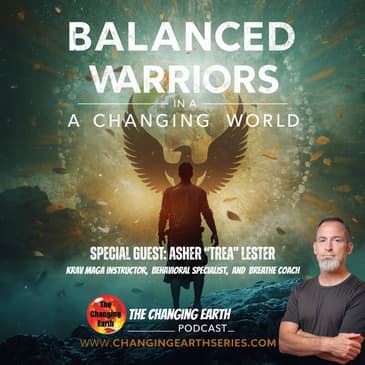
Learn why breath control can be more valuable than another piece of gear when adrenaline hits, how to de-escalate or act decisively in the first critical seconds, and simple daily practices that turn reactivity into resilience. Asher also shares challenge-round insights perfect for Changing Earth scenarios and everyday survival.
Plus: Sara and Chin will both be at Prepper Camp 2026, August 14–16 at the Tryon International Equestrian Center. Get tickets and book lodging now at preppercamp.com!
Tune in for entertaining education that helps you dream, survive, and thrive. Prepare for the worst and pray for the best — but train your body and mind so you’re ready either way.
Become a supporter of this podcast: https://www.spreaker.com/podcast/prepper-broadcasting-network--3295097/support.
Head to https://bepreparedsolutions.co/go/pbn, or use code PBN20 when you sign up to get 20% off their incredible preparedness tools, custom plans, and LOCAL INTELLIGENCE.
STOP THE ADS! Become a PBN Supporter for just $5 a month and get exclusive podcasts just for supporters. BECOME A SUPPORTER
The Prepper's Medical Handbook Build Your Medical Cache – Welcome PBN Family
Join the Prepper Broadcasting Network for expert insights on #Survival, #Prepping, #SelfReliance, #OffGridLiving, #Homesteading, #SelfSufficiency, #Permaculture, #OffGrid solutions, and #SHTF preparedness. With diverse hosts and shows, get practical tips to thrive independently – subscribe now!
Newsletter – Welcome PBN Family
Get Your Free Copy of 50 MUST READ BOOKS TO SURVIVE DOOMSDAY
Welcome back to the Changing Earth Podcast with author Sarah F. Hathaway and co host Chen Gibson, lending survival fiction and fact to bring you entertaining education that will help you dream, survive and thrive. And now here's your host, Sarah F. Hathaway and Chen Gibson. Hello, and welcome back to the Changing Earth Podcast. This is episode number four hundred and ninety one. We're just about five hundred and we've got a super special guest today with us, my coach. Coach Esher Hello, Esher Hello, and also as always Chins with us. Hey Chim, what's up? Chins up? Y'all. Well, we just got absolutely annihilated by the intro music, like we can't hear you. That's why we're just absolutely taken back by that music there. So hopefully it wasn't that loud for the audience and I'll try and figure that one out in the future. So I got sad news. My peach tree sadly. Has died and it just the Texas Win finally took its last blow at it, and. So there we no peaches this year. But the Lord is good. At the same time. As it took down the peach tree, it was providing us with all these brand new shoots so in. Like, you know, five years Well no, no, it doesn't really, you know, but. It's Ragnar's favorite tree to chew on for real, is that peach tree? So he's he's excited about that. Chickens are doing great the new setup. I'm gonna do a show on just the new setup because it is phenomenal. H It's the best chicken bild I've ever done, and so. Uh, I'm going to share that one pretty widely. It's a very cool setup and they're laying like little crazy girls. So love that. New gardens just got finished. They look gorgeous. Great. Yeah, so hopefully. We're gonna we're up against Texas and we're going strong this year. So we're gonna put. Shade sales or shading up so that everything's nice protected from the insane sun here, which is a nice I. Don't want anybody to be fooled. You're really building a tiki hut. I saw pictures. I know what's going on down there. We would need like a gazebo top for it, right, like I thought about, it'd be a great space to work out in. I love love that for sure. So, yeah, so that's what's going on in my end of the world. What you got going on? Chin, not much? Oh, yes, it always does, all. Kinds of no bird fun warnings. So that's good too. So it's exciting all that downwards from the hurricane. Still the challenge, right, Yeah, it's crazy. He's in the area where Hurricane Helen was and we were also there during Hurricane Heleen. So it's a great time. And yeah, yeah, so they're still on clean up mission. So coach, we brought you on today. Why don't you tell me a little bit about yourself, tell the audience a little bit about yourself, so I know, like, why would Sarah bring you on? And then we're going. To show how this really relates to being prepared, the preparedness mindset, and how beneficial just your body and your spirit is before you worry about guns and gear and garbage. Well, it's kind of a very long winding story that got me to this point. I went to school for college and it took me a long time to figure out what I wanted to do. I just knew that I wanted to serve people in some way, wasn't sure what that was going to look like, and I happened upon a research project. It was a replication site for a study that had been conducted at UCLA, and as an undergrad, I ran into this project and to get course credit and to get a letter recommendation for graduate school, I decided to join that project for a year. And that was providing intensive early treatment for children on the autism spectrum. And I figured I would do my one year stint and then move on with life. Yeah, and then that turned into an eighteen and a half year career working in a pediatric psychology clinic and we treated kids with autism, but we also treated every childhood behavioral disorder that you could possibly imagine. While I was doing that, I started training in krad Maga. I didn't start training until I was thirty. I always wanted to train in martial arts. I did the obligatory six months in taekwondo hopkey dough. I moved on from that. I had a hard time really seeing for myself how it would apply in the street. So much yep, And so it took, you know, another fifteen to twenty years until I ran across Kramega and I just happened to be watching TV one day and I was flipping through the channels. This was when we had Big Box TV still, and I ended up on this channel and it was a making of Yon Flux with Charlie's Thearren never saw the movie, but I turned it on during a fight scene, and there was something different about that fight scene than anything I had ever seen in a movie or a televison show. There was no flashiness, there was no art. It was just straight down to business, and it just looked brutal. And so I was curious what that was because I had never seen it, and so I watched the whole thing in hopes that they would say in the credits what she had been trained in. We didn't have smartphones. I couldn't just look it up, and so when it got to the credits, the credits were so small, I had to put my face on the TV. And she was training multiple things. No, couldn't pause it. She was training multiple things, and Kramagah was one of them. I had heard of all the other ones. Wasn't interested in those, said kramaga and I had never heard of that. So I looked it up and I was in class that weekend and have been there now for twenty years. Yeah, love that. Yeah. So you know, over the course of time, what I realized is that, you know, you first and foremost, you have to have a foundation of physical skills in order to protect yourself, but also just to be a healthy human being. And it took me much longer to figure out that breathing was super important. What I realized was that my coaches when I was in elementary school, middle school, high school, they never talked about breathing. It was never discussed, right, And so everybody's doing all of the physical activities that they do, mouth breathing, mouth open really fast, right, And come to find out, that's a really bad idea. And we can get into that at some point. And it took COVID happening for me to really realize the synergistic effect of meditation and breathing, combining the two of them together. I had engaged in meditation since I was eighteen, but you know, again, back then, we didn't have smartphones. You know, I was reading books and trying to figure everything out by reading books. Didn't have a coach, and so I kind of fumbled around in the dark for fifteen years or so. What that really looks like right, yeah, I mean just watch like the gurus on YouTube and go, oh yeah, that's how it's. Yeah. Even then, we didn't have YouTube, you know, we had we just got really computers. You know. There wasn't even video conferencing, you know, that was that was something that was way in the future. Something it was just hard to even fathom that could happen. So I got into meditation because I wanted to be less of an asshole, right, That's what That's really what it came down to. I wanted to be a better human being. And so I was using those books trying to understand it the best I could, and a lot of it just went way over my head. But what I did understand, I would I would attempt sitting on a cushion for various times, ten minutes, an hour, whatever. And what I was noticing is that I would I would sit for however long, and then I would get off the cushion and walk into life. And it's as if I never meditated. I was still an asshole, same level asshole, you know, nothing changed. And it was about fifteen years later when I started really getting into some coaching with some people and started to really figure out how to take the skills that you're learning on the cushion into everyday life. And it was then much later after that that I got into breathing. In fact, I was listening to a podcast. It was a it was Mark Devine's podcast, who was a Navy seal and what he's got an organization called Seal Fit and Unbeatable Mind. And what he does is he trains people who are aspiring seals that are preparing themselves for BUDS training, and so he helps prepare them a variety of techniques. And one of the things he does he has a weekend where it's basically a short BUDS right where you go to California. You're on the beach, you're getting in the water, and you have to You're up for three days during all kinds of physical activities that are terrible. I got involved in his organization, went to a conference that he did. It was really fantastic, got a lot of stuff from his work. But on that podcast, he had a certain person named doctor Blissa Ranach who was a psychologist, and she got into breathing because she had some of her own issues. She started having panic attacks. Someone recommended a breathing class, so she did that, she had great benefit from it. So she started using those techniques with some of her clients, her psychology clients for counseling counseling clients, and they started to have benefit from it, and so on that podcast, she started to list all of these issues that arise in human beings that would be considered dysfunctional breathing. So she had this long list, and I realized that I displayed all of them all right, every one of them. And so that set me on a path to try to figure out how to fix those issues in myself. And when I did that, I received such great benefit from it that I wanted to teach other people. I had already been teaching meditation to the kids at Krama God that I was teaching. I was head of a special program at KROMEGD Houston, is called the Master Program. It's for kids who want to earn a junior black belt in Chrome God before they graduate high school. So some of the kids started five years old and you know, they get they're eighteen, they leave high school with a junior. Black and it's legit like a program. You know, I've seen black belts, some speak and all their disciplines and you're like really. Earned, these kids are really good. And what ends up happening almost invariably part of the requirement is that in order to be selected to try to go for your junior black belt, you actually have to take an adult test, like a level one, level two test, whatever it is, whatever's appropriate for that particular age and skill level. And those tests are hard, and I think only one time the kids that took the adult test didn't beat the adults. They always beat the adults, they always get high score. In fact, one of them got high score on her first four adult tests, right, which really says a lot about what they're learning in that program and the. Efforts that they put in mind and body. I was going to say, I've been training for like twenty five years, and I could probably count on one hand the amount of times we've worked with like breath work to bring to regulate the system out right, besides like breathe in, breathe out when you punch, you know, and that's it, and. It's all that was really talked about. So I kind of went on the journey as far as like anger went, and my friend Brian Duff, he struggles a lot with PTSD from being a medic ranger and things like that, and so for him to talk about his PTSD, I really started applying those principles to my anger and how to get a grip on that and be able to like go through a situation without If you're in a survival situation, you cannot just go to freak out mode and not be able to cope with that. You have to be able to bring yourself back to a regulated place to be able to handle whatever comes. And you're just a nicer, more balanced human being. As far as your capability of handle bumps in the road, they're going to be there. So that's why I really was like, Okay, there's something behind what it's about, and a lot of my self studies you mirror the same information. So how about like two, let's let's try to talk about kind of a scenario where somebody would be in maybe you're at. A Walmart something like that. Walking out of the walmart, somebody's there, Hey, you know, you got a nail on your tire. You decide or don't decide, You know, you have that convertation to get out of the car or not. And how is this like skill really going to be able to help you through those moments, whether it's getting hit by Hurricane Helen, right, or those personal moments that you have. Yeah. Well, the first thing I'll say about that is it's really best to have a regular practice that you're doing when times are good. You know, it's almost like, you know, there's a lot of people who they don't ever pray until time and then they start praying at it, right. Yeah, Yeah, this is very much the same way. What you want to do is have a regular practice and have momentum of practice so that when situations arise. There's all the statistics too about Houston, and there are people actually training as far as like you're right next to. The police station. Yeah, and you don't have them in their training. No, police are very difficult to get to train. And in fact, police trainers, yeah, police trainers will tell you that police officers are the most difficult to train period. They just don't want to train for whatever reason. Yeah. But what I was saying is if you have a momentum of practice, because you're practicing on a regular basis, daily basis, multiple times a week, whatever it is, you get momentum of practice, and so when something does arise where there's emotional reactivity, then that reactivity will probably not be as high as it normally would have been. So it doesn't, it doesn't peak as high. It doesn't and it metabolizes much faster. And I'll share one practice that I love to do on a daily basis that I think has been a huge game changer for me. This came about because I felt like there were so many areas of my life where meditation and breathing had already helped me, and so I was kind of scrolling through just trying to figure out, well, where's an area that I really need to focus. And it came about because I went to the gas station and I was paying at the pump and I put all my information and put the card in, put my information in, and it said please see cashier on the screen on the pump, and I was. Like, all right, I don't want to go. If I wanted to see that person, I would have walked in right. So if you were there to witness it, you wouldn't have noticed that I was frustrated, But internally I had an outsize, a magnified reactivity to that too much anger for the situation that was going on, and so that I started to target that what are all the small little frustrations that we encounter throughout the day that we have an oversized reaction to, And for me, there was a lot of them. You know. I felt like I could interface with people in a skillful manner and keep my calm even in frustrating situations with other people, even very heated conversations. But then these small things were making me more angry than you know, a person would. That was insulting me, and I just thought that was ridiculous. So I started engaging in this practice called background rest. So the idea is, you and I are sitting here talking and I'm fully aware of the conversation. I can see you, i can hear you, I can notice the emotions in my body if an emotion arises, but I'm constantly splitting my attention between those things and maintaining rest in my body in the background. And what I found is if I do that from the moment I wake up in the morning until I go to sleep at night, if I encounter something that results in emotional reactivity, like I said before, that reactivity isn't near as high as it otherwise would have been, it doesn't stay high very long, and it metabolizes so much faster. And that is meditation throughout the day. That is a form of meditation on the move. Which like, so, the most impressive thing about trying to psychologically actually change yourself where you're at into somebody new is the amount of self discipline that it takes. Like you think it's hard to go work out for. An hour each day, you're already having a hard time handling that. Well when you start applying these practices, Like you're talking about the amount of psychological energy that it takes to maintain that is absorbing it. It's really impressive. It is, though, like the practice, it becomes a habit. Yeah, so these these days, I don't have to so much consciously when I wake up, say oh do background practice instead, it just becomes part of who you are. I've done like grounding, applying grounding moments like okay, whoa, whoa, that's too I feel it. I'm getting too elevated now I need a ground Yeah. And another way of thinking of this is the difference between a state versus a trait. So if you meditate, you're trying to put yourself in a different state, right, and you once you're done meditating. This is what was happening to me all the time in those first fifteen years. I would get in a great state, but then get off the cushion and it's gone. If you practice over a long period of time, especially if you bring the practice into everyday life, then what ends up happening is instead of it just being a state, it becomes a more durable trait of who you are. And that's that's the grind, that's the grind applied. But it doesn't it's amazing how it does take effort up front, but it's amazing how quickly it can become more of who you are as a person. And it's amazing how free, oh, because you can walk through life and not be like, oh, I would need to react to every situation. My little ego is in the way all the time. It's it's incredible how overrun our egos are. Well. And I'll give you an example that happened to me recently. I had I had a friend with me and in my truck and we were going to a store and we had to make a U turn at a light. We make this U turn and there's there's plenty of room for us to make this U turn. The other the cars that are coming the other way are not going very fast. There's enough distance for us to make that U turn, and so we make the U turn. We pull into the parking lot of the store that we're going to, and I see a truck pull in behind me really fast. And then I go down a couple of lanes start to find a parking spot, and I see him speed up. I can see him to my left speeding up and then making a right and then he cuts us off before we could park with his truck, okay, and he rolls down his window. And at this point, the person with me already has her hand on a handgun because she could tell what's going on. So this is a this is a high risk situation. This could become something terrible really fast, right, right, So, And stupidly on that guy's part, he rolled down his window and his teenage son was in the passenger seat, and so if gunfire occurred, there's a good chance his son would have been hit in this process. Right, So, I recognize how intense this could become. There was a time in place in my ass life where I probably would not have reacted the way I did this day. But he rolls his window down. I rolled mine down, and I immediately put my hand up and very calmly say, sir, I'm sorry. Whatever I did, I'm sorry. And he proceeded to tell me, you know, I was in a car accident a few days ago, and what you did startled me, right, But you could tell when I when I rolled the window down and I put my hand up and I said, sir, I'm sorry. You could tell it kind of deflated him, right. He was anticipating a fight. He was anticipating an argument and it wasn't there. And you could see him just kind of take a breath and calm down, and he calmly told me what he said about being in the previous. You weren't like, oh what are you doing? Yeah, yeah, I didn't feed the flames, and you know, I didn't do anything wrong, but I still said I'm sorry to deflate the situation. And it worked beautifully. It was a perfect example, and it was a It was a great example for me. It reinforced everything that I'm trying to do as a meditator, a breather, and a person who teaches self defense, right so. I think the work that you've done with kids is incredible. Let me just say, because it's a place I never thought I would see myself as well. And like tutoring, experiencing coaching kids was amazing. But it takes a serious commitment of Like again, you've got some perseverance and dedication as a person. How does that how Because that amount of patience, that amount of learning about individuals at such a young age, really gives you, I believe, psychological insight to human beings in general, How does that work into like what you do coaching people, when you're working with breathing. Techniques, that kind of stuff, how does that play in do you think? Well? As far as crop my god, coaching, what I would say what the kids have taught me more than anything is that you have to approach everyone as individuals. So when I'm walking around the room, whether it's with kids or adults, I have to figure out what makes each person tick. So how do I reinforce this person? What type of reinforcement's going to work best for them? And also if I have to tell them, hey, you're not doing that correctly, I don't say that the same way to every person, right, I have to vary that because people are sensitive to different things, and so I would say it's made me better at understanding individuals as individuals and not teaching everyone the same way. Instead of I'm teaching my class, I'm doing it this way and that's how it's going to work. That's right. I think that's an amazing leadership skill that is really important if we will find ourselves in survival situation, because you can't. There's definitely the different you know, personality types, and if you don't bring if you don't interact with people in the way that's going to make sense of them, especially in those high stress moments, then things go really wrong. We kind of experienced this at Prepper camp when Hurricane Helen went down. There was so many. Chiefs, yeah right, everyone wanted to be in charge. Yes, and so much knowledge, so many incredible people, but we were just like, wow, everybody could unravel really quickly because you know who's going to take the head, who's going to take that spot. So yeah, I think that that that is really key. And I've had two of my favorite mentors have told me exactly the same thing on that note. So we're rolling with that one for sure. Yeah. The other one that I really wanted to tie in was the de escalation. It's an interesting ass in CRAV compared to everything that I've trained before, because before it's just about more about moving, learning movements, motions, forms, that kind of stuff, right, and then being able to apply in inspiring situations. That's as close as we get to like what would a street fight look like besides when I was doing MMA and whatnot. But CRAB really brings that, but also really stresses that de escalation that you were talking about in that car incident, you know. And we've even been to the seminars and things like that, and I think the. De escalation element of things. Is not only beautiful with CRAB because you're learning some shit that would really hurt people, but people could apply that in life and to a survival situation as a leader, right, So can you talk to that a little bit, just like what would be maybe some of the key elements that you would like people to know if they're in the middle of a scenario where you've got too many chiefs not enough Indians, you know, you're in the survival situation, how for managing that crowd basically of people that just ended up together. That's an interesting question. What comes to mind is sitting down and saying, well, what is you have five people? What is the strengths? What are the strengths of each of those people? Right, and then delegate what needs to be done based on the strengths of those people instead of everybody trying to do the same thing. So, Sarah, your strengths are you know, you've got a list of them, So let's assign you to one of those things, right, instead of everybody trying to take charge of everything. And I see this as well in de escalation, Right, it's the same idea where if you have someone who is approaching you that is making you uncomfortable and you have to de escalate that situation. You can't use the same technique on every person. You have to you have to be skillful at reading what's going on in that moment and whether you need to stay calm in your voice and never say calm down to somebody first and portmant that never works, right. But what you want to do more than anything in any of these situations is you want you want to model think about coregulation. Right, So what happened with that guy when when he rolled his window down. He wanted to fight. He was escalated. What he said to me, his first sentence to me was very angry. Right, But I calmed myself down and I apologized, And what ended up happening is that deflated that situation. But that's called coregulation. It took me to stay calm to them, calm him, right. So I love the idea that your nervous system enters this scenario before your word too, right, right. Yep, with your energy, the outward projection of just what you're feeling. That's right. So it all comes down to you being able to manage your nervous system skillfully. And that's where the mindfulness and the breathing comes in, right. Right. So if if somebody starts giving a shot and all show when it comes to their language, how much can I cuss in this that we're good? We're pretty good, but my audience. Has heard Yeah, it's a decade now. So somebody gets out of the car because they think that you parked in the spot that they wanted, and they're like, you stupid bitch, you're you you parked in my spot, right, and they start getting really elevated. You you could start to feel your nervous uffected because you yeah, yeah, yeah, and then you're like, well, screw you, blah blah, you don't own this spot. Yeah yeah, yeah, you don't own this spot, and it just keeps escalating and escalating, and then you end up in a stupid fistfight over a parking spot. Right. It really comes down to you recognizing in that moment that your nervous system is being elevated. Manage that first, and then manage the other person through life. It's like putting the mask on your face before you put it on the kids, right. You have to. That's the only way to do it. Because if you look at every scenario where people end up in mutual combat, it's it's it's all ego, and it's because neither of them regulated their nervous system properly. Absolutely No. I love that because and as that leader in that moment, you be just being able to calm and help everybody else stay focused. Could be your position all together, like what what the key is to that whole scenario? So that that's uh, that's really good stuff. I'm always worried about leadership because everybody that's been listening to this. Show for you know, a decade now. There, they're the ones. Who have already been thinking about this. They're the ones wh've already been preparing. So like when stuff does go down, when you have everybody else kind of running around, going, I don't know how to evacuate the house, they're the ones who have already thought through. The game plan of making that happen. Right. So that's why I believe like the leadership skills are so important to bring to an audience like that. Yeah, And one thing that comes to mind, you know, it's just like if there's an emergency and you have to perform CPR on someone, and you've got all these strangers standing around, everyone's frozen, right, and they have the freeze response or running around with it like a chicken with its head cut off, that type of thing. Right, Who am I gonna call? I don't know, I got my phone. Yeah. What they teach you in CPR classes is you you point at someone in particular and you delegate. Hey, you get the AAD. You you point to another person, you say you in the red shirt, you call nine to one one, and you come over here and assist me with CPR. Right, So it's to me, it applies in any emergency situation that you just have to figure out how to delegate appropriately. But you have to be specific about it, right. You can't just hope that everybody's going to do their job right. They don't know what their job is, right, especially if they want to do every job. Yeah, that's the thing, you know. And then and then you have too many people trying to do everything at once, and during the chaos, it's a nightmare. Well, part of delegating the jobs is it helps disperse that energy, that nervous energy. Somebody has something to do. They're not freaking out in the crowd. That's right, Yeah, that's right. So they have that sense of focus like, Okay, I've got a mission now. See For me, it's like the little shit. I did so well last time during Hurricane Helen. I was really proud of myself how we handled it. Then the bees came in. Though the bees were very irritated. I'm not kidding that. They were everywhere, like that's amazing. And I've been attacked really bad before. But then I couldn't find the sauce. We had just used the saws. I'd put them down for a minute. Well, Brock had put them away already and that was like the last. Like little straw. And then I was like, darn it, I made it through everything, like so well, our family did so good. I was very impressed with my boys and you know, my husband. It was a really sketch situation for a little bit, and I was like, it. Did so good. And then the saw it. So I was like those little things that just like crack you and I, you know, so much work in on it. So it is a discipline. It is a discipline to stick up, to stick with it. I encourage everybody to do it because it's worth it because you're not an asshole anymore. And the everything just runs so much smoother when you can feel the emotions calming before they happen and really be able to manage that and help. People through their own problems. Then yeah, and I think too that there's kind of an ethic around uh breathing and meditation. Meditation in particular because so much of it came from Eastern philosophy, right, although its almost all Jewish people who brought it to the United States, believe it or not, which is really interesting. During prayer meditation. Well, this was back during the Vietnam War, the federal government had grants where they would allow uh uh university students to study abroad, and so that's that's where people ended up going to Southeast Asia. One of my mentors went to Japan, right, so Shinzen Young, Jack Cornfield, Joseph Goldstein, Sharon Salzburg. Noticing a pattern here, yeah, yeah, uh those are the people who brought meditation to the United States. And you know, one of the big ethics in in those philosophies is that you are you were engaging in these practices not just for you. You're engaging in these practices to help other people to be more skillful with other people, to be more useful and compassionate toward other people, right, and to serve other people. And so that really changes changes everything. It does, It absolutely does. You're not wrong. You have a class coming up. One of the coolest things from the class that I went to was about the heart and being able to like you were explaining how it's attached to your diaphragm and for the breast cancer. You can go into that if you want, or you can just let people know. I'd love to, But let's talk about class A little bit and what that looks like, what people are going to get from it, what they're going to experience, because. It's really cool, guys, it's definitely worth. The first thing I'll mention is every time I remote, it's called Fundamentals of Breathing and Meditation Course, right, and I used social media to promote it. Almost invariably, when I posted on social media, the first comment that someone makes is I've been breathing my whole life. I don't need to learn to breathe. Yeah. And then I had a meeting with someone who signed up for one of my previous courses, my most recent one that is now over, and he signed into the first class. I saw him sign in and then he left, so he didn't even stay for the first class. So I waited the six weeks until the class was over, and then I reached out to him because he paid for it, he didn't ask for his money back even so, you know, I felt an obligation to at least reach out to him and see what he would like to do. And within five minutes he said the exact same thing. I'm seventy years old and I've been breathing my whole life. So What people don't understand is that we are the only mammals on the planet that I'm aware of that changes the way we breathe. When we're about five and a half years old, we're between between day one and five and a half. We breathe like we're supposed to. We're functional breathers. And then we go to school, and what happens at school We start sitting all day long, and most people at school, when they sit, they slouch in their chair. In fact, if you're in middle school in high school and you sit up straight, there are derogatory terms for you. There are consequences. Yeah, like the board, the straight board or whatever. Gay. You're gay, right, that's the that's the number one insult. That they are a lodge against each other. Right, Look, he's sitting gay right this, Yeah, slouching is cool. Sitting straight up so that you can breathe properly and have a good back for the rest of your life. That's gay. Right. So what ends up happening is they recondition their breathing in a way that becomes aberrant. And so ninety five percent of the population breathes in a way that would be considered dysfunctional and they don't even know it. And they do that from five and a half until the day that they die. Right. And what I told that gentleman when he mentioned that comment is I he added to it that doesn't our body already know what to do? Isn't it breathing the way it's supposed to anyway? And the answer is this, that your body breathes to keep you alive, not necessarily to thrive. You have to relearn how to breathe like you did when you were born until five and a half years old in order to thrive. Interesting, Yeah, and so, and look, there's plenty of studies at this point, really good studies indicating the percentage of the population that breathes it apparently doesn't realize they're doing it, and eventually a lot of people experience symptoms from it that they would never attribute to their breathing. There was a study that indicated that as much as sixty percent of the ambulance rides in major cities, they realize once they get to the hospital they do all the testing, there's nothing wrong with the person's heart. They almost always think it's a heart attack. What they figure out when they dig deeper is it's a breathing pattern disorder that caused it. I wasn't a heart attack. I can believe that. It was a breathing pattern disorder that caused certain symptoms in the body that made them think that they were having a heart attack. But super anxiety cases too. Everybody always thinks I'm having a heart attack, but you start breathing funky and that. That's right, screws your body up. Yeah, So my course focus is this person also had a misunderstanding that I was probably teaching conscious connective breathing or rebirthing or or stan Graff's type of breathing where you're purposely hyperventilating for forty five minutes or so, and I'm certified in doing that. I've done it myself many times. I've had a rebirthing experience, which is an incredible experience. But I actually hate that the sensations involved in that type of breathing. Personally, some people love it. It's kind of getting high on your own supply type thing, because it causes all kinds of weird tingling in the body and among other things, and there's also some languaging around it that is just wrong. That is a misunderstanding of how the breathing system works. Most instructors that teach that type of breathing, what they will tell you is that you're experiencing this rebirthing or you're having these visions right like you're on a psychedelic because yeah, because you are. You're ticking in so much oxygen. You're oxygenating your body so much that that's why you're having this symptom, these symptoms. The opposite is true. What's actually happening is you're off gassing too much CO two. CO two has a bad name because of environmentalists talking about climate change, and so everybody thinks you're just supposed to get rid of CO two in the body, when the reality is you're you're supposed to maintain a certain level of CO two regardless of the activity that you're engaged in. So the level of CO two that should be in your body when you are sitting doing nothing is the same level of CO two that you should have in your body when you were doing burpies. Okay, And there's devices that you can buy. Unfortunately, they're very expensive. They're about three thousand dollars and it's a pocket device you can put it in your pocket, and it's got a can you let that goes up in your nose and it measures your CO two and it's a biofeedback device. So what it does is it teaches you how much two is in your body as you are engaged in a variety of activities. And your goal is to learn to manage your breathing during various activities to maintain that same level of CO two across the board, right. And so what's actually happening during those superventilation or hyperventilation practices that they do for thirty minutes to an hour, is you're lowering CO two so much that you get vassal constriction. Your blood vessels constrict. When there's vassal constriction, that means less blood flow, right, And so what ends up happening is people's fingers get tingly and that's because you have less blood flow and your fingers going on when you're super ventilating like that, they say superventilation because hyperventilation has a bad connotation, right. It's the same thing. You're hyperventilating on purpose, right, And in fact, some people can do it so heavily that what happens is they get something called technic and and what that is that some people call it lobster claws, where you get cramps in your arms and it curls your your wrists and your fingers like this, and you end up in this position. Right. It's it's part of it. It's super weird, crazy. I've experienced it. It's not pleasant. Uh, it doesn't it doesn't last very long. Uh. If you just normalize you're breathing, it goes away within a few seconds. But what what people don't understand is that when you when you off gas so much CO two, you get that baso constriction. And another thing that happens is hemoglobin, which is you could you could think of hemoglobin like it's the uber driver of oxygen to the tissues of the body. And so if you're working out, for example, you're working your legs, you need oxygen to be entering the muscles over the legs. But if you're if you're overbreathing and you're think about it like you're you're overbreathing for the act for the metabolic demands of the activity that you're engaged in. What's going to happen in addition to that vesco constriction is that hemoglobin. That uber driver is going to hang on to the oxygen molecule. They're going to lock the doors to the car. So what's going to happen is that oxygen is just flowing through your blood supply without being released into the tissues over the body. And so they can show this through a functional MRI scan that if you and I sat here now and we overbreathe, the average person breathes about twelve to fifteen times a minute. If you just double that to thirty breaths a minute in thirty seconds, you reduce blood supply to the brain by forty to sixty percent. Crazy. And so if you're reducing blood supply, you're also reducing oxygen right, And the same thing is happening to your heart. And so there is this is especially important for athletes anybody engaged in any sort of athletic in day, but in particular runners, people who who are engaging in runners, long distance running, right, because what happens is I had a client that was a he is the cardiologist for all the professional sports teams in Houston, and about fifteen years ago I had dinner with him. We were I was just really curious what it was like to work with that level of athlete, right, And somewhere along the way, for whatever reason, I brought up to him, why in the world do you see these marathon runners crossed the finish line and dropped dead right. His response was just the regular canned response of well, it's a it's a dose dependent issue. The more you engage in long distance running over the course of your life, the greater likelihood you have heart attacks. Crazy, right, Yeah, it's supposed to be like the healthy activity. But it's supposed to be a healthy activity, and so but he didn't he didn't say anything about breathing. That was fifteen years ago. Fast forward to the year twenty twenty five. A PhD and exercise physiology named George Dallam wrote a paper. It's published, and in that paper he says, no, no, no, has nothing to do with the activity that you're engaged in. What it has to do with is that these runners haven't been taught how to breathe properly. They have high sensitivity to CO two, so they're breathing too much for the metabolic demands of the activity that they're engaged in. So while they're running, they're breathing, so much that they're constricting their blood vessels, and they're they're reducing oxygen supply to the brain and the heart, And just a five percent reduction in oxygen to the heart creates scar tissue on the heart, And what ends up happening is the electrical signal that makes the heart pump hits that scar tissue, goes in a circle around the scar tissue and causes. A heart there's too much. Yeah, that's crazy, right, So to me, that underscores yet again the importance of understanding. But even like applying that to like anxiety type situations too. When you start overbreathing like that, then you've got less blood flow to your brain, you've got less brain power to be involved in whatever you're doing. Yeah, I mean, so if you have an anxiety disorder, you're you're there's a much greater likelihood that you are overbreathing on a regular You're probably a chronic overbreather, right, I just read in a breathing textbook this week. In fact, a couple of days ago, most people will tell you it's about ten percent of the population that are chronic overbreathers. This this textbook has updated it to say it's about fifty percent of the population. And so they're doing that all day, not necessarily because they have an anxiety disorder, but because they're they're in their head what is called the default mode network, where they are ruminating on the past, which causes depression, looking at social media. Looking at social media, they're also future tripping, right, thinking about the future, ninety percent of which doesn't come true. Right. But what people don't realize is that type of thinking, thinking about the past, thinking about the future, has a direct impact on your nervous system. It makes your heart rate go up, it makes your breathing rate go up, and it makes your CO two levels go down, and so you're getting less oxygen to the heart into the brain. There's a researcher named Peter Litchfield. He's in his eighties now, and he's created those devices that you can measure they're called capnographers, And I took a class with him one time, and what he would do is hook a person up to the capnographer and you can see real time on a screen what's happening to this person's CO two levels. One person had trauma from a previous car accident, right, and so he had her turn away from the screen so she couldn't see the screen, and he starts coaching her through a visualization and it starts nice and light, just so you can get a baseline. Hey, you're sitting in the car in your driveway, right, you turn the car on, You're perfectly safe. You put it in reverse, you start to back out of your driveway. Right, you turn down your street, and you get to the point where you had this car accident, right, and you start to see her CO two levels drop. Right, You can see it real time. This is all in her head. It's all imaginary, right, nothing's happening in real life. It's all in her head, and it's having a direct impact on the way she's breathing, and it's dropping her CO two levels to a level that is not healthy. If you maintain those levels. I can tell you that. I mean, I lived through scenarios right in our heads all the time. And yeah, that's right. Crazy. Yeah, So when we find ourselves doing that, one practice that I do for myself is I try to notice that as quickly as possible. I thought a thought that pops up, whether it's rumination or future tripping. Right. Look, sometimes if you're engaged in rumination. Maybe one percent of the time or less, there's actual insight in that rumination, but. Almost I need to examine this. Yeah, you get a solution all of a sudden to something that you've thought about for ten years. Yeah, But the vast majority of the time, all it is is causing you to suffer and that moment for no good reason. Right, moments that you can't change it, And the. Same with future tripping. Right. So, one mindfulness practice that I found to be quite useful is first and foremost, trying not to get wrapped up in that rumination for a long period of time. Try to recognize it as early as possible and then label it. Right, So a thought comes up and I realize it's rumination, So I label it in my head or out loud rumination, okay, which means that I'm not going to pay attention to that, and I bring my attention back to something in the body. First and foremost, it's my breathing, because I know that the rumination is going to have a direct impact on my breathing, and the breathing is going to drive the nervous system response of a heightened heart rate. Right, If you and I sat here and doubled our breathing pattern. Just like I mentioned before. Not only is it going to lower blood flow and oxygen to the brain by forty sixty percent within thirty seconds, but it's also going to increase your heart rate. And it's incredible. I've done this. I've got graphs of me doing this, and in fifteen seconds or so, doubling your breathing rate can increase your heart rate by thirty to fifty points. Crazy, right, Yeah, So you label it rumination and then bring attention to the bottom of the rib cage, slow your breathing down, make sure you're breathing through your nose rather than your mouth, and then just stay present here, here and now in the present moment on whatever it is that is going on, right, And I've found that to be hugely helpful to get to not just get rid of the rumination in the moment, but for it to happen less over the course. Of time because you're identifying it. Yeah, well we identify, yeah, because you're identified that it's happening in that moment. What ends up what most people do that don't practice that particular skill that I just mentioned, is they identify with the rumination, right, relive. It again and again. Do you think that's why people are having such problems with high blood pressure issues? Yeah? I think it plays a role for a lot of people. A lot of patterns I know of. Yeah, in addition to you know, lots of caffeine, lots of nicotine that people are consuming. You know, there's all kinds of things that we're doing that are contributing to something like high blood pressure. But for sure, for the vast majority of the population that don't have mindfulness skills and breathing skills, it's what's going on between their ears. Yeah, that's interesting. I don't know. I think there's some major recalculating of society. To do on that note as far as our technology goes, And I think it's a bad experiment. But yeah, you know what though, it's just like food, you know, and the big food industry and all the ways that they're trying to pack our natural systems. We can't wait for the world to change, yeah, right right. Those cell phones aren't going away. These smartphones aren't going away. Everywhere you go. Look, you go into a quick stop, what do you see. There's nothing but terrible things in there. Everything in there will kill you. Yeah, right, that's not a lie, even the water. Right. Literally, there's this really cool app where you can you can scan products and it'll tell you what's in those products, right that you don't want to put in your body. And you would be shocked at how many of the waters that you purchase when you scan them, they have things in there that aren't on the label, anti caking agents, all kinds of things that affect the heart out of Like ten brands of water on the shelf at the quick Stop, maybe two of them are actually just water water. Yeah, there's a there's an app called Yuka y u Ka that I use all the time, and one called Bobby Approved that I scan everything. I love it because you're like. What's in there? Well, bread is the one that's been freaking me out because I have the gluten sensitivity or later. But it's not really, it's just because all the crap they put in there. So now I've been trying to do like the bakery bread only getting it from there. Yeah, see if that makes a difference. Yeah, So we can yea too. We can't wait for the world to change. We have to take responsibility for ourselves. Quit blaming it on big corporation, right, we just have to we have to take responsibility. That's a great point. I was like, because there's no one doing it now, there's no un revel you can sit and say, boy, I wish I could have should have water. Well, there's there's nothing worse for an individual than to put it on big corporations or whatever they want to put it on, right, because that takes their agents agency away from them. Right, take control. You have agency, So take control and do it right. Don't wait for the world to change. And see I told you. That's why I was like, it's incredible, the amount of mental dedication that you have. Uh, it's really cool. Where are we at? What time are we? Oh we're way past an hour already? Wait? Well no, yeah, no, it's all your fault. Come on, man, I'll take ownership. So okay, so I've got this is just for the crowd who's like, oh, this meditation and breathing stuff sounds hippie and uh, you know, I'm I'm backwoods country person. I don't want to deal with that hippie stuff. And how would you address that type of reaction? Because I would tell you a lot of like people that read the I would think that's a comment staring. Sure, well, uh, that's what the person that I mentioned earlier that joined the first class and left what he said. He said, you know, I went to Woodstock and yeah, they were doing breathing and meditation there, and I figured that's what you were doing. It's like, look, man, I am an anti wou Wu person. I am. I am there's no wou in what I teach. Right. My classes focus on, first and foremost teaching people functional breathing. How should a human being be breathing? Right? So we're going to do an assessment. It's called the Breathing IQ. Doctor Belisa Frantich not only design this this particular test, but she's also studied it and she's published papers on it. So we do there. We all failed the test off the bat. The vast majority of the population. I failed the test the first time I did it. The vast majority of the population fails it. Probably ninety nine percent of the people that I do the test on fail it. I've never tested someone at their first exposure and they pass it with flying colors. Yeah, with flying colors. I mean, it does grade you from a to f I've seen people get a C for their first test, but I've never seen someone get in A for their first test. So we assess breathing first and foremost, and that particular test looks at location of breathing and also the flexibility of the rib cage. And after we do that test, the focus is on getting people to become more aware of their breathing throughout the day. Breathing at the bottom of the rib cage. It is not belly breathing. I can't stand it when people say belly breathing. It is not belly breathing. It is using the bottom of the ribs and expanding the bottoms of the ribs on the inhale and allowing the ribcage to just fall in. Your inhale is active, your exhal is passive, right, meaning that it requires musculature to make the inhal to happen, and it requires relaxation of that musculature for the exhale to happen. Right. So our first goal is to teach people to be aware of where they're breathing throughout the day. If they're breathing high in the chest using their subclavicular muscles right under the collar bone or their neck and shoulder muscles, and instead learn to breathe at the bottom of the ribs and not just breathe forward. If you berey breathe, you're just breathing forward. A functional breath is a three hundred and sixty degree breath, right. It's called circumferential breathing around the whole body, So your rib cage goes forward, it goes out the side, and you should also be breathing into your back right after we do that, then we give practices to strengthen the breathing muscles. There's a variety of ways that we do that, and this is super important for people who are engaged in physical exercise, whether you are a competitor or just working out to stay fit. One of the most interesting, and you can look this up on YouTube. There are academic speeches that people give on this. It's called the metabo reflex. And everyone is experienced working out and your arms and your legs start to feel heavy, right, And what people attribute that to is they're hard work. They're like, I'm awesome, I'm killing it. I'm killing it exactly. It has nothing to do with that. What's actually happening happening is because they're breathing muscles are weak. And the reason they're breathing muscles weaken is because the vast majority of the population after the age of five and a half start to pull their belly in. They tighten their core all day long. And if you tighten your belly, you're also tightening the muscles around the rib cage. So your ribcage can no longer do its job to allow the lungs to inflate properly. So what ends up happening is people start breathing up and down vertical breathing right, and so what that does when you clamp down all the time is your diaphragm becomes weak and the breathing muscles around the rib cage weaken. And it's because you have weak muscles that your arms and legs start to feel heavy because during exercise, the metabol reflex will kick in when those muscles get tired, because your body literally starts to think that you're going to die. So what your body naturally does, it's a reflex. It's also called so it's called the metabol reflex. It's also called blood stealing, and it's because when those muscles get tired, your body automatically shunts off blood by constricting the blood vessels to your legs and your arms, so that you get more blood supplied to the muscles of breathing that are getting tired because of they're weak. And so one of the first things that changes for people who work out on a regular basis when they strengthen their breathing muscles, that metabo reflex either kicks in much later or it doesn't kick in at all. And so in the litterature, sure they call it a rate of perceived exertion RPE, and it's a subjective measure of how hard your exercise feels. So let's say you've never done breathing practice. You get an F on the bic, right, and I asked you to do one hundred berpies, okay, And then when you're done with the burpees, I say, how hard was that? What was your rate of perceived exertion? And you rate it on a scale from one to ten. One it was easy, ten it was the worst thing in the world. And you say, oh, that was definitely a ten. I felt like I was going to die, right, And then you do three months of training of strengthening your breathing muscles. And then you do those hundred burpies again. And by the way, during that three months, you've also learned functional breathing patterns. When you do that hundred berpies for the second time, and I ask you what your perceived exertion was. Maybe now it's a six or seven, same output. You did it in the same amount of time, but it felt completely different because that metabo reflex didn't have to kick in. Yeah. So all of our weekend warriors that are out there doing the big weekend projects. Yeah, more stamina, more endurance, more everything for any kind of survival situation, hiking situations. All that. Yep. Yep. Definitely got to check it out. Guys. Give the websites, Uh, where do they go to find you? Yep? The best way to find me is nervous apes dot com. End up with the class there. Yep. They can hook the class there, and I also promote on Facebook and Instagram under the under the same name, and. Then I'll have a link to nervous Apes from my blog post as well. Guys, so you can check it out there and come check it out. I was blown away. I said the same thing I don't need. To learn how to breathe. This is dumb. And we went and it wasn't dumb. It was actually really really interesting, and I was like, damn it, all right, maybe I need to learn to. Let me get let me if you don't mind, let me tell you one thing that just happened recently. I did this. I did the class. It was a three hour class with a group of Kramagod people in Houston, and I did an assessment with them at the beginning of the class where I asked them to engage in Heine's so it's just running in place, right, And I didn't tell them what I was looking at. I just told them to do high knees as fast as you can. And within sixteen seconds, over fifty percent of the class was breathing through their mouth, right, already fifteen seconds, already breathing through their mouth. And we did the class at the three hour class. At the end of the class, we redid it and at one minute, nobody was breathing through their mouth. Crazy, right, Yeah, they were all nasal breathers after just three hours of work, and they were more efficient in their breathing. And I just cut the assessment off at one minute because it was so much greater than the sixteen seconds that they started. There was no reason. It was just to demonstrate to them what they had just learned, right, and how powerful that was. Yeah, it's true and I never even, like ever fathom thinking about that during the workout and whatnot. And I've been at it for a long time, so it's pretty impressive. Alrighty, well, we're going to go ahead and wrap it up unless you got more. You got a question, chin, what's been burning on your brain as you sit over there? Oh no, I'm just trying to breathe. Oh yeah, I know. I was, like everybody in the audience is now thinking about how they're breathing. The smile, right yep. Keep that mouth closed, chin, yep. That's what I have to listen to a class. Yeah, I'm screaming all the time. Keep your mouth yeah, just just there. Yeah. Alrighty guys, Well we'll go ahead and wrap it up there. Check out nervous safes dot com coach Asher Awesome, dude, get signed up to the breathing program. It's worth It wouldn't lead just stray, but I thought it was pretty darn cool and definitely worth bringing the message. If you guys have any questions, feel free to reach out as always, And oh, Prepper Camp come in end. Of August, August, middle of August. Yes, I always say end yeah fourteen fifteen, sixteenth, right, okay, yeah, August. Fourteenth, fifteen. We're at the Tyron International Question Center. This year. We got more space for more people. They got hotels. Guys, you don't have to be camping out floating in your tents, but it's still on the lake. It's still a beautiful place. Shuttles, Amber will be there, Barkie in the background. Let's twist right yep, easier shot, So no excuses, get out there, come see us to Prepper Camp this year. And we're the audio drama Season five is starting while members subscribers are getting the first episode this week, so that'll drop on Thursday, and then non subscribers season five is starting on the twenty third. It's all ready to go. It is sounding epic. Coach Asure is also playing Bennett now this year, so that's fun. We got had to do a little switch up there. So that's all coming out and then we should have a podcast, Changing Earth podcast beginning of May and we'll go over. Changing Earth news in May. I didn't want to do it today because I didn't want to waste well, not waste time, but I didn't want to take time away from this interview because I thought so much great in photo bring So alrighty. Thanks Chan, Thanks very much Coach for being here. Appreciate it. It is fun all right. Until next time, remember Dreamer Thrive. Thank you for listening to the Changing Earth podcast. Please take a moment to subscribe and leave a comment or review. Help make the Changing earthworld go around by purchasing the Changing Earth novel series. At Amazon dot com, or get your signed copies at Changing Earth. Series dot com. Get your Changing Earth gear and become a paid subscriber for extra goodies At Changing Earth series dot com.