Church and State is brought to you by, YOU!
Visit us at: https://churchandstate.media where you can support us by donating directly and find links to shop with our affiliates.
Get our merch at https://standupnowapparel.com/partner-church-and-state/
Support Church and State today by shopping at www.MyPillow.com using our coupon code: “CHURCHANDSTATE”.
Our links are on link tree: https://linktr.ee/churchandstate
Subscribe to our Locals Community (churchandstate1.locals.com)
Follow us on Rumble (@ChurchandState1776) https://rumble.com/user/ChurchandState1776
X(twitter) (@1churchandstate) https://x.com/1churchandstate
facebook (churchandstate1776) https://www.facebook.com/ChurchandState1776
SubStack (churchandstate.substack.com) https://churchandstate.substack.com/
*Help fund our fight against tyranny: Buy from our affiliates and tell them Church and State sent you.
*Tune in on NRBTV Tue-Fri 1:30 PM Pacific!
Become a supporter of this podcast: https://www.spreaker.com/podcast/prepper-broadcasting-network--3295097/support.
Head to https://bepreparedsolutions.co/go/pbn, or use code PBN20 when you sign up to get 20% off their incredible preparedness tools, custom plans, and LOCAL INTELLIGENCE.
STOP THE ADS! Become a PBN Supporter for just $5 a month and get exclusive podcasts just for supporters. BECOME A SUPPORTER
The Prepper's Medical Handbook Build Your Medical Cache – Welcome PBN Family
Join the Prepper Broadcasting Network for expert insights on #Survival, #Prepping, #SelfReliance, #OffGridLiving, #Homesteading, #SelfSufficiency, #Permaculture, #OffGrid solutions, and #SHTF preparedness. With diverse hosts and shows, get practical tips to thrive independently – subscribe now!
Newsletter – Welcome PBN Family
Get Your Free Copy of 50 MUST READ BOOKS TO SURVIVE DOOMSDAY
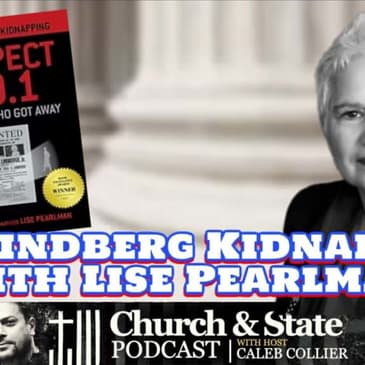
Spokane Valley could become a sanctuary city. A different housman, Caleb Collier says that this I'm proposing that the city of Spokane Valley issue a proclamation stating that our city is a Second Amendment sanctuary. Welcome to the fire today on Church and State with Justice for Some with author Lisa Pearlman. Hello Christian Patriots, and welcome to Church and State, where we drive morality and religion over tolerance and apathy. And I'm your host, Caleb Callier, once again your favorite for a right chock chock and the show that talks about politics and religion. Jesus Christ is our referee, so it's always nice and clean. Real quick point you to the website Church and State dot Media number one. Fill out this registration form. You'll get our newsletter, you'll bypass the censorship and of course personal phone call from yours truly. While you're on the site, check out our most recent episodes continuing to bring incredible guestsible and really incredible conversations and check those out, share them with friends, family, and neighbors. Of course, also check out the futured guest page. We've had some incredible people over the years. And with all of them, you can click on the name, it'll bring you right to the episode. And of course I want you to do some shopping here. I want you to check out our affiliate page. And these are companies that I believe in, that I personally support and I shop with myself. So use that promo code Church and State and of course you're going to get a discount for some but all of them you'll be helping to support us. And speaking about that support, you got to hit the donate button for us, ladies and gentlemen. We're on five days a week, Monday through Friday, bringing you incredible shows. It takes a lot to produce these, and with being part of NRBTV and Prepper Broadcasting Network and Newscasters and your News and Faith Freedom Television and now national syndication through AMFM radio, that's a lot. It takes a lot of work, takes a lot of money. And so if you can hit or throw anything at us, it will, honestly, we really appreciate it and we will put it to good use. Lastly, if you want to get a hold of us Church and State seventeen seventy six at proton dot me, we that let's go ahead and start this episode, and I'm thrilled to bring to you Lisa Pearlman. She's an acclaimed nonfiction author, filmmaker, former and trial lawyer and judge, and nationally recognized speaker on famous trials of the twentieth century. She's written a slew of different books that I look forward to reading myself. And we're going to be talking about some fascinating American history. So, Lisa, thank you so much for joining us on Church and State. Thank you for inviting me. Absolutely a real pleasure you have. Through your career, You've really covered a lot of very interesting topics, perhaps history that's unknown to a number of individuals. Can you just tease the audience with a little bit of the subjects that you've covered and reported on. Well, one of them is how Hawaii became a state which was galvanized by a cup two trials in the nineteen thirties that were the reason for the trial was alleged raped by five Pacific Islanders of the wife of a Navy lieutenant. But it turned out to have been false charges and a lot of the information was kept hidden for about twenty years. So it became the Revolution of nineteen. Fifty four when it went public, and it changed the political situation and in the territory and galvanized the statehood. Absolutely, And this is something that far too few Americans know the truth about this. And we had this, you know, sort of Monroe doctrine that we were living by, and honestly we're currently seeing it now. I mean, the audience knows this. When we went into Venezuela and kidnapped the elected president, I came out in opposition to that we should not be doing things like that as Americans. We should be mindful of our own country and not trying to press our weight or the fact that we're the biggest bully ended taking and kidnapping somebody like that. So, yes, this continues to be an issue for America. And there are other stories that people know something about, like the Scotsboro Boys, which was a trial in the thirties that ultimately led to a Supreme Court decision that said, you know, if you're faced with capital punishment, you're entitled to a lawyer, even if you have no money. The state will have to pay for it. But what people don't know about it was that there was a white sheriff who risked his life for the Gosporo Boys just before trial, and. Within a year of the trial he was murdered, and. That has recently been attributed to the KKK. It was rumored, but it may well have been revenge. So that's a different part of that story for someone who spoke up for their due process that they're entitled to a trial. So they are different parts of these different stories, And one of them, of course, is the Lindberg case, which I wrote a whole book about. Separate from with justice for some And there was just an awful lot of information that didn't go public at the time of the nineteen thirty two trial. Back then, it wasn't required by the Supreme Court that the prosecutor reveal exculpatory evidence, and this was the biggest investigation in US history, So they had over ninety thousand pages of investigatory material that was kept hidden, which included contrary statements by some of the people who testified for the state of trial and other evidence that are now in archives and now public. Because of a governor in New Jersey in nineteen eighty one who responded to the widow's Houtman's widow, he was executed for this crime, but his widow kept pursuing justice and she got the governor to force the state police to reveal all the documents from the investigative files. So that was one of the main. Sources for my book, but there were a lot of other archives also that have some amazing revelations. You know, this is a case that has fascinated the American public for a long time. This is a man who was a celebrity, you know, obviously criss crossing the world in an airplane, very brave man, and his child is kidnapped, and a lot of people know that we kidnapped and murdered. A lot of people know that part of the story. But you really dove deep into this. I'd love to explore this topic a little bit more with you. Can you walk the audience through it well. The child was reported was the firstborn son of Charles Lindberg and his wife Anne, who were considered at the time American royalty. They were in the news all the time, newsreels that the movies covered him since May of nineteen twenty seven, when he flew NonStop from New York to Paris, showing how linked we were to the rest of the world. It prompted the powers that be in Washington to use him as essentially the poster boy for getting airports built, for spending a lot of money on creating an army air force. It wasn't a separate air force at the time, but augmenting that because they could envision a time when bombs might be dropped from planes. So it really changed the culture in Washington. There wasn't even a Pentagon at that time, and so that also meant that he was featured in eighty parades across the country. A quarter of America saw him on parade, so he was this huge star. And then when his firstborn son was reported. Kidnapped on March one, nineteen thirty two, it was worldwide news. And it was at a time during the depression when there were kidnappings of middle class and wealthy people's children almost every day, So it was something that could happen that nobody could believe did happen to him. But from the beginning, the police did not do a very good job of investigating. They allowed Lindberg himself to be in charge of the investigation, even though he was one of five people on the premises when the child disappeared and evidence started disappearing, so that was one aspect of it. And then it spent. They spent a ton of money. They had police looking all over the country and some places across overseas for this child. And then ten weeks after he disappeared they found the body within five miles of home, and that it was still a mystery what happened. And then two and a half years later, after resting and letting go on a number of other people, they arrested Bruno Richard Houtman, who was an immigrant from Germany who had come as a stowaway ten years earlier. It was a carpenter and he lived in the Bronx and he had spent a ten dollars bill for gasoline for his car in a Bronx neighborhood that had was a gold certificate and all of the money that had been used for a ransom that turned out not to not to produce the child. Lindbergh had paid this ransom through a go between in April of thirty two, a month before, more than a month before the child's body was found, and so all of the serial numbers were recorded, so the bank realized it was on the list from the Lindbergh baby kidnapping. The police were able to trace the dollar the ten dollar bill that was spent because the attendant had written down the license plate number, and they found him at his home and found hidden in his garage about fourteen thousand dollars also from the mansoon. He had an explanation. They didn't believe that this was money left with him by a friend for safe keeping, that he didn't. Even know his money. He said it was left to him in a shoe box and he kept it on a shelf in his kitchen, and then his friend died, and months later he remembered the shoe box, he opened it up and it had this money. Well, in any event that was called his friend was an isidor fish, it was called his fish story. Miss Can I pause you here real quick because there's just so many interesting facts that you're dropping on the audience. Number one I wanted to ask, was he acting in his suspicious behavior? Why did the gas station attendant feel that he needed to write down his license plate number? Good question. It was September of nineteen thirty four, And the reason that's important is because a year and a half earlier, on May one of nineteen nine thirty three, FDR had outlawed gold certificates in large quantity. You were not allowed to keep a large number of them. If you had one or two, that wasn't such a big deal. And so the word had gotten out to merchants, local merchants from the police that they should be recording at gold certificates because their use was now a misdemeanor if you had a large quantity of them. And they were also still looking for most of the money. Some of the money had returned from the ransom had gotten back in circulation, and they hadn't figured out who did that, but that was how he was traced. And the reason it was recorded it was because it was now illegal. Well, there we go. That answers a lot go figure that there was about making gold illegal in this country. It was gold certificates, gold. Certificates, Yes, thank you. A dollar bill that looks just like any other ten dollars bill, but it's got gold on it and it means it was backed by gold held. By the government. Yes, and I went off the gold standard, which is why they made it illegal. Absolutely. Okay, sorry to interrupt, but keep going with the story, it's already very fascinating. He has this shoe box, his friend had given it to him, his friend dies, and that he finally ended up looking at it. And I'm assuming, like most people, you got a shoe box full of cash during the depression, you might start looking at that to use. Well, he did, and he hid it in his garage because he knew it was illegal to have such a stash. He didn't even tell his wife, and he used a little bit of it. He spent twenty dollars for his shoes for his wife and ten dollars at the station, but there's no evidence that he actually spent any of it. Until the August of thirty four. At the trial, they tried to suggest that they had a witness who said, I think I can identify him as a man who spent five dollars with that was part of the ransom a year and a half earlier at a crowded theater. And it was contrary to the statement she'd given to the police at the time that Helpmann spoke with a very heavy German accent. The man she said she's interacted with spoke English as an American, and it was that much earlier, but what was happening before the helpman's trial. He was immediately sent from New York, where he was accused of being the person who had accepted the ransom money. Okay, so he was that was a crime that they were pursuing. But that got cut short because he got transferred to New Jersey to face murder charges for the death of the child on March one. And that's so he faced a death penalty for the murder of the child when they actually had only arrested him for the. For the ransom aspect of it. So they had to find other evidence to implicate him in the child's actual murder. And what I researched is that much of that was manufactured. Sure, And I'm want to get into that. Do you believe that part of this was you know, a German that speaks, you know, with a German accent. It's you know, post World War One, we're kind of gearing up towards maybe involvement in World War Two here, you know, with the rise of Hitler, Is this like the perfect boogeyman? Is this why they singled out this guy? That was part of it? For sure? And he was actually a soldier in World War One, and his brothers died in World War One fighting for the Germans, so that made him an easy target. And the day that he was arrested, and again he was arrested for possession of some of the ransom money, there was still a lot of ransom money unaccounted for. Those fifty thousand dollars had been paid, he had fourteen thousand, and some had already been returned. In fact, there was someone who, on the last day it was legal to use those gold certificates, turned in about three thousand dollars to a bank that was part of the Lindbergh kidnap money. He was never caught, but he had signed a deposit slip, and when Helpmann went to trial, the handwriting experts for the state said, they're not the same person. That was somebody else. That person was never caught. So there are all kinds of questions about who else, if he was involved, or whether he was actually the right person. But I'm sorry, what was your last question. Well, you've answered that as far as the German being the perfect boogieman in this situation, did you want to add anything more to that? Well, yes, he lived in the Bronx which is where they were focused on, thinking that that's where the perpetrator lived. And they wound up with an expert, a wood expert who a federal government employee from Wisconsin, who went to the apartment where Helpman lived and the court and the day that Haupman was arrested, he was removed from the apartment, as was his wife and his two year old, so they never were in there again, but the police rented it, took it over, and there was a hall closet linen closet that you could climb up into the attic. It was a small attic, and in the attic they saw that there was a pine floor. A week after Houtman's arrest, according to one of the officers, the one who was in charge, Lieutenant Bornman, he saw for the first time that nobody else has seen a gap in the floor that indicated part of one of the floorboards had been removed. And he thought this was. A huge clue, and so he took that and showed that to their expert. He brought the expert in to look at the attic, and the expert would later testify at trial that the remaining portion of that floorboard matched one of the rails of the kidnap ladder, because the child was supposedly kidnapped out of a second story window from the Lindbergh Home March in March of thirty two, and that had been found in the yard, and so they had this ladder. One of the big issues that should have been a reason for the trial not to the trial to be a mistrial was that the police had asked a different expert, someone who was able to reveal latent fingerprints, back in nineteen thirty two, a week after the child disappeared, to see if he could find fingerprints on the ladder, and he did, and they had The police themselves had been unable to do so. Their expert had seen nothing on the ladder, but when he put silver nitrate on it, which was a process then used in Europe but not in the US, hundreds of prints popped up on the outside of the ladder, and they determined that the police had mishandled that the police had They were police fingerprints, they were reporters fingerprints that you couldn't tell whose they were. However, this expert was a doctor, did this as an advocation and he really thought he would be very helpful if he took the ladder apart, made a model and checked the inside. And he checked the inside, and he found one print on an inside corner of a brung against the ladder reel that he figured had to have been made by the builder of the ladder. Nobody else had touched that, and he told the police that. So fast forward two and a half years, when he's no longer working on the case, when Houtman's arrested, Doctor Hudson Erasmus Hudson calls the police and said, have you checked his fingerprints against the one I found on the inside of the ladder, and he was told they don't match, and he said, you have arrested the wrong man. And what happened after that is that the police erased all fingerprints off of the ladder before trem him. And they admitted doing that. They said they did it to put it back in its original condition, which wasn't true because originally when they found it, it had a. Print on an inside twin. He was so angry at what the police did that he wanted to testifying for the defense, not on that issue because there was nothing to point to it on that, but on a related issue. Okay, so continuing on with the case, and it seems to me that a lot of this was a lot of the evidence was manufactured or flat out removed that could have proved this man innocent. Let's continue to walk through this. Let's walk through the trial and talk a little bit more about how they really engineered this boogeyman and then threw the book at him. Right. Well, they came up with three people who said they were eyewitnesses to seeing Helpman in the area of Hope Well, which was the town where the Lindbergh's had their farmhouse, and within a week before they kidnapp it. Nobody could testify that they saw him on the estate or on the night that the child disappeared, but these three men did well. It turned out years later when the evidence was revealed, the police had interrogated all of them before a trial and they had given opposite stories, so none of that cross examination happened because the defense didn't have access to it. I've created a reenactment of this trial using original testimony from both sides, the key testimony for the defense and key testimony for the state, and then I created an invented character and the invented character as a modern lawyer with access to all of the discovery that came out later, and so he could cross examine these witnesses about the discrepancies. They don't answer. I made it into a two and a half hour play. They don't answer because they never did. But the audience gets to hear that, and then the audience at the end gets to vote on whether the case ought to be reopened. And I've done it. Three times now and every audience overwhelmingly votes to reopen the case. You know, I so appreciate that, using you know, an avenue with theater to prove that there is at least some doubt that the case should be re examined, because, you know, as this widow of this man, she wanted to pursue justice. She wanted to clear her husband's name because she didn't believe that he'd had anything to do with this, and Wall the states right with him. That time he picked her up from work, so she was a firsthand knowledge that he wasn't there. He was in the Bronx picking her up from as a waitress at eight pm from where she worked. Okay, well there we go, right there, there's more evidence to throw into this. But yeah, while the state unfortunately killed this man, murdered this man, we still could right or wrong here and at least clearing his name. Well, there's there's an effort right now, ongoing effort, a case on appeal to. Re examine some of. The evidence because DNA testing could actually shed light on this. There are two different kinds of DNA testing that are available. One is would DNA testing. The police made the Helpman trial the star exhibit of their New Jersey State Police Museum. It has the wood evidence still on display, which is a piece of floorboard that was brought into court that supposedly matched one rail of the ladder and the ladder itself, So that could be done. In last fifteen years or so, that's been the way in which experts tell whether something is from the same piece of wood is from the same source or not. But the New Jersey Police have not done that. Then they have resisted doing that. But what the case on appeal is focused on is the ransom demand letters, which are in envelopes that they kept and have stamps, and of course back then envelopes were licked and stamps were licked, so human DNA could be theoretically removed from that that is probably still popped. But they're also fighting that. And I would assume with you said he was a young son. So I'm assuming that there's still some some people that generationally they're they're they're related to the supposed killer that they could test off of. Right, his great great grand niece has has volunteered and and there's a DNA sample and his grand niece as well. His son, I understand, uh died a couple of years ago. He was in his early nineties I believe by then, and he only had one child, so there was and he had no children, so this is his sister's family. Okay, but still there should be enough to link to be able to say yes. And they have a letter that Helpman wrote that in possession of the New Jersey State Police, which he licked the envelope of. They may have other evidence from which they could do it, but they're resisting that. For now. Well, I mean, they probably don't want to admit that they got the whole thing wrong. A lot of cover up culture going on these days. Is there anything else within this case that would give an individual looking into it pause to say, hey, what about this evidence. What are the lack of evidence here? Absolutely one of the things what my book focused on was Lindberg. Lindberg himself should have been a suspect. In fact, when you have a child who is abnormal, and this child was diagnosed as abnormal, He had an oversized head, he may have been hydrosyphalic, that's not clear, but he had a rickety condition. This is all diagnosed by his own pediatrician and other overlapping toes. There were other issues about this child. And when you have a child who's abnormal, that Scotland yard has always looked to the parents as a possible suspect. And they told that to the New Jersey state police representative who came there, and they didn't do that. Instead, they put Lindbergh in charge of the investigation right near the beginning. And what happened, Well. One of the things that they noticed right away the police noticed was that the nursery where the child had supposedly been kidnapped from had no fingerprints in it whatsoever that they could find that night. And what did that mean? That was weird? Why? Because Lindbergh's wife, the nanny, and the cook had come in at ten o'clock when the nanny was checking on him to get him up again, let him go to the on his botty and put him then put him back. He was twenty months old. He wasn't really a baby, is more like a toddler. But in any event, when she found he wasn't there, then that raised the alarm in the house. The first thing that Anne, Lindberg's wife, and the nanny thought was that Lindberg had done it as a practical joke. Why because he it before. He'd hidden his son in a closet once before as a joke, making people think the child had been kidnapped. And he insisted he hadn't done anything. But then he. Showed everybody out of the room and he told them, let's keep the door closed, recalling the police. We want to preserve the evidence. Well, when the police arrived, they brought in their fingerprint man, and at midnight he's checking the room. There are no prints whatsoever. Well, the women had gone in there and searched high and low and touched the window sill, touched the crib, touched a lot of surfaces. Their prints weren't even there. So he assumed that somebody in the house had removed all prints after the child disappeared, And there's only one person in that five person household who was upstairs alone after the child disappeared, in before the police arrived, and. That was Limberg. They never pursued that there were other issues about his behavior. One of them is a very key one which I mentioned at the beginning of my book. There was an teenage neighbor who was coming home from high school driving his family car on the night of March one, at about six o'clock, and it was just dusk, and as he passed the Limbergs driveway, they had a long driveway up to their house. There he was passed by another vehicle that had a loan driver wearing a fedora that obscure. Lisa, I gotta pause here real quick. We hit that heard break and actually this is a perfect teaser for the audience if we're leaving you right on that cliff there. This is Caleb Collier with Church and State. Are you tired of your device spying on you? Ladies and gentlemen. We live in nineteen eighty four. Your phones, your tablets, your smart televisions, they all are spying on you. And this is why I heavily endorse Mark thirty seven dot com. This is everything you need for your digital privacy. Phones, tablets, laptops. All of them are ghost protocols, so that means that you are in charge of your own data. Just go go to Church and State dot media, scroll over to shop and hit Mark thirty seven dot com for all of your privacy needs. Make sure to use that promo code Church and State and we are back. Thank you for staying with us. And boy, what a teaser. That was fantastic. I couldn't have planned that better. But hey, we're gonna go right back to our guests, ladies and gentlemen, real quick. Let me plug one of our awesome affiliates, and I'm thinking coffee. Look, I love coffee. You love coffee. Chris really loves coffee. If you like coffee as much as we do, you got to check out Hunters Blend Coffee. This is delicious stuff. Chris and I are using it now. It is fantastic, It's smooth, got great, great taste, that coffee taste that you so appreciate. So check them out Hunters Blendcoffee dot com. Use that promo code Church and State. Order a bag I guarantee you you're not going to be disappointed, and of course you're going to be helping to support us at one more time, real quick, hit the donate button for us, ladies and gentlemen, keep us alive, keep conversations like this one happening. This is such an interesting story. I really hope you're enjoying it, and if you want to see more, hit the donate button. All right, with that, let's go back to our guest, Lisa Pearlman. We're talking about just a case that does not seem to die. People continue to have interest in this years and years after it has occurred. And Lisa, you were talking about a neighbor that had seen another car with a low fedora over their eyes. Please continue. Well, the neighbor, Sebastian Lapeka, was very observant. He loved cars, and this other car, he said, was a nineteen twenty nine Dodge and the driver. You couldn't see his face. He was he called. He said he was slim, and he had next to him on the passenger seat a ladder, a folded ladder. And the next day the police took Lupeka to went after Lupeka learned of the kidnapping, which didn't happen until hours later than this. This is a six PM. The kidnapping happened sometime between eight and ten, and so that the next morning Lupika heard about it. He went to the police to tell them what he had seen, and they thought this was a huge clue. They showed him the ladder they'd found in the yard. He said, yes, that looks exactly like pretty much what I saw, you know, and so they took him the next day, the police took him looking for nineteen twenty nine dodges that were local, because he said it had local plates just like his car did. That was either black or dark blue, he couldn't quite tell in the dusk. And he remembered that it had wooden spokes on the wheels, and he remembered that it had a spare tire on the rear, and he remembered. What the what the grill looked like. So he had very specific knowledge. And then he started looking at and they took him halfway through a list of local owners of such a car. There weren't a huge number of people who owned cars in that rural area at that time, and halfway through they quit, well that coincided pretty much with when Lindberg got in charge, and so they never resumed it looking for this key suspect. Uh. And he actually later on was interviewed by the FBI Sebastian Lupeka and told them a lot of these same details, and he wound up testifying for the defense that Houtman's trial that it wasn't Helpman that he saw. Uh and uh he said, to some extent he thought he might resemble him. Of course, the first time Lupeka saw Houtman was after he'd lost a lot of weight, after he'd been arrested. Helpman was a stocky guy when he was arrested. He wasn't He was very thin when he when he when he was a trial. But but then he was sure it wasn't him. This wasn't the that wasn't who he saw. What happened many years later is that there were a lawyer and a police chief who wanted to investigate the case in the late nineteen eighties and early nineties, and they wound up interviewing Lupiga in his old age, and what they agreed upon together was that the man he saw was actually Lindbergh, that that's and part of the reason they thought that is because when Lupiga was interviewed by the police on the next day, the police brought Lindberg over and said, hey, he's got this information about somebody, some stranger with a ladder just a couple hours before the kidnapping, and Lindberg said, I have to go see my wife or something to that effect and disappeared. So his attitude, his reaction was weird. And then thereafter there was no follow up on the rest of the list. Now did Lindberg have a nineteen twenty nine Dodge. No, he did not. I think it was a borrowed car. It wasn't his car, for sure, but they never found out whose car it was. I think it was a car taken from, probably from an employee at Rockefeller Institute Lab where Lindbergh worked part time as a volunteer, or actually almost full time as a volunteer, But that was never pursued, so you can't know exactly whose it was. But it wasn't Heltman's car. Heltman's car was a different year. It was a Dodge a different year, but it also was a cheaper model. It had rims and wire spokes, and the tires, and it had something very special. And what it had was that Heltman was an accomplished carpenter and he wanted to go visit his sister in California in nineteen thirty one. So what he had done is he. Built a handmade box to use as an additional trunk, and he appended it permanently to the back of his car, and his spare tire was on the driver's side, it wasn't in the back. And that had three drawers in it, and you could open it up to make a platform for dining on and they put camping gear in there, and he and his friend and his wife drove across country in thirty one with that. The police removed that box, that trunk before trial and only showed the jury and witnesses pictures of the car where you couldn't see the back and you couldn't see the driver's. Side where there was a spare tire. One of the men who they brought forward saying I recognize him as somebody I saw had earlier, said no, the man he saw was actually much smaller, about five seven instead of five nine or ten, but also resembled more like Isidoor Fish than helpman. But he also said there was a spare tire on the back of the car that he saw and he wasn't sure if it might have been a viewick. So there are things that didn't come out in the trial which undermined what they said. And Sebastian Lapika was a very incredible teenager with the details that they didn't follow up on. Sure, okay, let me ask you this. Uh, you know, obviously people are going to be wondering, who do you think did it? All right? It is going to be the big question here. But before I get to that, who was the individual who who had the shoe box full of money who later on died? Oh that was Fish? Okay, And so what's the connection there? Well? Isidore Fish was ann to known to the police as a fraudster. He was passing bad money. On other occasions, he was defrauding people with different schemes. He was a friend of Houtman's and the two of them during the depression were in business together selling seal furs. I'm not sure that they was on the black market, and. So that was their connection. And uh, they were German speaking and in a German neighborhood and they were friends. Isador Fish was one of his friends, but Isidore Fish is also implicated in other ways. There were three or four. People who were interviewed who recognized his picture as having been around Hope Well. In fact, one of the people who identified him was very strange. This was Henry Breckinridge. Henry Breckinridge was Lindberg's lawyer. He said, I recognize that picture. I think that's the I think that's the same guy who came to visit me in my office in Manhattan on March eighth, a week after the child disappeared, and seemed to be connected to the kidnap gang. And at the time that was what the police assumed, is that it was a gang. And I met with him for more. Than an hour, I think several hours, and I got the impression he was very sinister, and I got the impression the child. Might already be dead. He doesn't tell any of this to the police until Tember of nineteen thirty four, so he waits this could have been a huge clue whatever. They were researching this and investigating it thoroughly, and he says nothing until after Helpman's arrest and then he goes to the police and gives this statement, which the police never made public until much later. So that document is something that the New Jersey State Police also have in their archives, but it was I think that was the Bronx police who took that statement. In any event, so he's implicating Fish. At the trial, the state took the position that everything that Helpman was saying about Fish was untrue, that he was an innocent bystander or whatever, and they had information they were also covering up. So as we've progressed to the show, we now have two candidates as potentially suspects the father, which, by the way, can I just add your baby to make your wife think that the child has been kidnapped as a joke. Uh, that's pretty strange. That's pretty strange behavior. Well, he did that. A lot of strange practical he chokes is over the years, and I mentioned those in the book too, because he had a very weird sense of humor, if you call it. That. He almost killed one of his friends when they were pilots years earlier. They were before he became famous, and he was mad at his roommate for always making him fill the pitcher of water that they kept in their boarding house room, uh, that they drank from. So he filled it with kerosene instead of water, and the guy took two big gulps and. And was hospitalized for a week. He forgave him, but my god, Yeah, it's a pretty sick joke to be playing on somebody like that. I could certainly have killed them there, all right, So we have two people that the police most certainly should have looked at. Is there anyone else in this mix that the police were looking at or perhaps should have looked at? Definitely there are others. Is it or Fish was not the kidnapper that night? They they he wasn't placed there that evening, and that I think he. I think he was involved, as I think he was hired to be involved. But I think that the kidnapping was actually not real. It was a hoax. I think it was orchestrated by Lindberg and his lawyer. And what happened to the child is really shocking. It wasn't either one of them who killed him. I think he was brought secretly to be uh experimented upon. And there's we have a modern I have a modern pathologist who has worked with me on my book and I have his declaration attached to my book, and he's also he was a witness at my two and a half hour program, and he's otherwise gone public with what he's found. The child when when found was missing most of its internal organs. It was also missing one arm from the elbow down, the other hand and the left leg below the knee. That was attributed to wild animal attack. And or that the body deteriorated in the two months plus since the child was killed. He said no from what he's looked at, which is the medical reports at the morgue when the child was brought in, which were incomplete. There was no complete autopsy. There was a so called lookxie on the night of Mark of May twelve, nineteen thirty two, and then they intended to do more, and before that could happen, Lindberg had the body cremated so that so they weren't able to complete it. But what they did do with what they recorded included the fact that the kidneys were missing. And uh. Doctor Peter Speth, who is the a pathologist, a New Jersey pathologist that I consulted who's been in two thousand death investigations, said the kidney should. Have still been there. And they were protected by ribs. And when the body was found, it was also even though it was mostly skeletonized, it was miss It was wearing two T shirts and they were the T shirts that the nanny said, yeah, that's the ones I had put on him the night that he disappeared, so she could recognize them. But the T shirts were essentially intact. They're afraid a little bit, but they were intact. Well, they're they're over the ribcage. The kidneys are missing inside of the ribcake. Doctor Spith said the only way that happened is by operation. As far as he could tell, that's the only logical conclusion that he could reach. So the child was experimented. And this is a period of time where eugenics had gained in popularity. Obviously you know this, this celebrated celebrity, as you've pointed out, was in magazines, was in parades, did not, it appears anyway, did not love the fact that he had a disabled child, and so perhaps he was he was kidnapped to be experimented on. For what purposes? I mean, I'll leave that to you, you're the expert. Well, the reason that Lindbergh was a eugenicist and he was lauded by them. He won an award by them because of his superior genes. His Nordic genes has enabled him to do his fantastic flight. And the doctor he was volunteering for at Rockefeller Institute was one of the leading lights in the eugenics movement internationally. He co founded the first international eugenics conference in London. And then was prominent in the one they did in. The nineteen twenties in the US, so he was that was his focus as well. Lindbergh went to him originally because he was concerned about his sister in law who had a defective heart valve, and he was told that this doctor was doing experiments which might lead to bypass operations which didn't, which were not done at that point, and. So that's why he went to him. Our research, including my daughter Jamie ben Venuti, was an amazing research around the net. But one of the things she found was that doctor Carrell, Alexi Carrell had won the Nobel Prize back in nineteen twelve for his vascular surgery and was predicting that someday that they could to bypass surgery on humans. He'd already done it on dogs. And the way he did it was to take a carotid artery from a different subject a segment, and put it by the heart of a patient so that the blood would circulate while the operation occurred. And so that was what I think. That Lindbergh went to him to see if it could happen, and his son was a blood relative of his wife's sister. The operation, as far as I can tell, never happened, but she did consult with the Rockefeller Institute for Heart issues. She had a cardiologist there that well became her doctor. She died in nineteen thirty four because she did have a very weak heart. So in any event, I think that's why he went to him. There's plenty of evidence in my book. I asked people to judge for themselves based on all the evidence of the way the Heupman trial went, which was an abomination, really it was. They proceeded so fast to trial, and they had some doctor and evidence, some evidence missing that should have been there, and they had witnesses who could have been cross examined and impeached based on statements that the defense never knew about. Well, I got to tell you, I so appreciate your work on this subject because this is a conspiracy theory, right, you know, people know it was investigated. That's over, just let it, let it go. No, this is an individual who from listening to you, I believe he was innocent, and so we should clear his good name. And there's so many cases throughout American history. I just had an author on talking about the JFK assassination and Lee Harvey Oswald, who I don't believe is the trigger man there, and so we should clear his name. And so these are important conversations to have and I cannot wait to get my hands on your book. This is going to be absolutely thrilling to read through. I'm going to plug the website. We've actually gone a little bit over, but I just I couldn't stop. It was that good of an interview. So, Chris, if you can bring up the website Lisa Pearlman dot com. And by the way, audience, Lisa is l I s E. But Lisa Pearlman dot com you can see all the different books that she has written and get your hands on some of these because they look phenomenal. Lisa, anything else that you'd like to say. Well, I hope people follow what's happening now because in the Limberg case it may wind up getting reopened. It needs to. Amen to that. I will definitely echo that that we definitely need to review this and if we can, you know, find the real culprit, but at the very least clear a man's name. Lisa, it's been an absolute pleasure having you on the show. I'm going to go ahead and close this out. If you hold on one more minute post production to Sayarah goodbyes, I'd appreciate it. But again, thank you for joining us, and thank you for all your work. Well, thank you very much for having me on. Absolutely all right, audience, there you go. A fantastic story that we just cannot let die. History is so meaningful, and you know I've got my degree in it, so I love it. I'm a little bit of a nerd there. But this is a book that I want you to read. I know I'm going to, so please go check it out. Lisa Perman dot com. Church of State is brought to you in part by Colonial Life Book and Independent Agents Finders Insurance and Mark three to seven dot com. I'm Caleb Callier. I was born for a storm. Welcome to the fire. Hey, this is Caleb Callier with Church and State. I want to tell you about Patriot Pouch. Look, if you're one of these individuals that's interested in nicotine and potentially the health benefits from it, but you're concerned about some of the side effects, Patriot Pouch might be your answer. This is a company that uses nixidine instead of nicotine. It hits the same nicotine receptors in your brain well without those side effects like elevated heart rate or elevated blood pressure. So if you want the help benefits of nicotine without nicotine, Patriot Pouch maybe the company for you. I need you to go to Patriot POUCHUSA dot com, use the promo code Church and State. You'll get a great nicotine replacement and you'll be helping to support Church and State and everything that we do here. And remember when you go to Patriot POUCHUSA dot com, not only are you supporting a Christian patriot business owner, but you're helping the support Church and State. This is Caleb Calier with Church and State dot media. Last, and gentlemen, if you're not sleeping on my pillow, do you even patriot I gotta tell you, this is the most wonderful stuff from a man who's given it all for your freedoms. Whether it be the pillow, the sheets, or the slippers. I absolutely adore my pillow. My pillow has the greatest products around. I know when I want to shuffle around in my bathrobe and slippers and yell at the neighbors. Of course, I'm buying from my pillow. I need you to head on over to Church and State dot media scroll over two shop because every single time that you purchase any of these products using the promo code Church and State, you ensure that we keep our message out on the air. I thank everybody for your support in using a promo code Church and State. You guys, go to you go to my pillow at dot com forward slash Church and State two, and then you get your own known platform right there. Everybody, Hey, this is Caleb Collier with the Church and State podcast. Ladies and gentlemen, I want all of you to go to Galileo dot com. You need to stay connected no matter what comes our way, whether it's government intrusion or a meteor falling from the sky, Galileo has you connected as a marine veteran I can tell you that communications is essential. Galileo has you connected. Whether it's worldwide coverage, uncensored content, or real time alerts. Galileo is going to make sure that you're connected with your friends, family, and neighbors. Just head on over to Church and State dot Media, scroll over to shop, and hit Galileo dot com. Make sure to ask them for a free bitbystick and make sure to use that promo code Church and State