Church and State is brought to you by, YOU!
Visit us at: https://churchandstate.media where you can support us by donating directly and find links to shop with our affiliates.
Get our merch at https://standupnowapparel.com/partner-church-and-state/
Support Church and State today by shopping at www.MyPillow.com using our coupon code: “CHURCHANDSTATE”.
Our links are on link tree: https://linktr.ee/churchandstate
Subscribe to our Locals Community (churchandstate1.locals.com)
Follow us on Rumble (@ChurchandState1776) https://rumble.com/user/ChurchandState1776
X(twitter) (@1churchandstate) https://x.com/1churchandstate
facebook (churchandstate1776) https://www.facebook.com/ChurchandState1776
SubStack (churchandstate.substack.com) https://churchandstate.substack.com/
*Help fund our fight against tyranny: Buy from our affiliates and tell them Church and State sent you.
*Tune in on NRBTV Tue-Fri 1:30 PM Pacific!
Become a supporter of this podcast: https://www.spreaker.com/podcast/prepper-broadcasting-network--3295097/support.
Head to https://bepreparedsolutions.co/go/pbn, or use code PBN20 when you sign up to get 20% off their incredible preparedness tools, custom plans, and LOCAL INTELLIGENCE.
STOP THE ADS! Become a PBN Supporter for just $5 a month and get exclusive podcasts just for supporters. BECOME A SUPPORTER
The Prepper's Medical Handbook Build Your Medical Cache – Welcome PBN Family
Join the Prepper Broadcasting Network for expert insights on #Survival, #Prepping, #SelfReliance, #OffGridLiving, #Homesteading, #SelfSufficiency, #Permaculture, #OffGrid solutions, and #SHTF preparedness. With diverse hosts and shows, get practical tips to thrive independently – subscribe now!
Newsletter – Welcome PBN Family
Get Your Free Copy of 50 MUST READ BOOKS TO SURVIVE DOOMSDAY
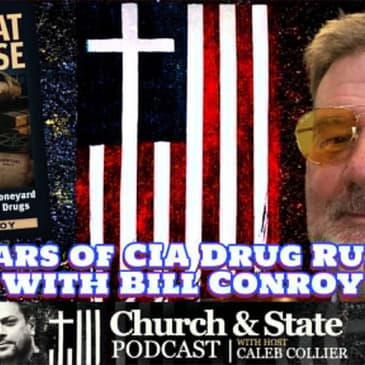
Spokane Valley could become a sanctuary city of a different kind. I'm proposing that the city of Spokane Valley issue a proclamation stating that our city is a Second Amendment sanctuary city. Welcome to the fire. Today on Church and State, The Great Pretense with Bill Conroy. Hello Christian Patriots and welcome to Church and State where we drive morality and religion over tolerance and apathy. And I'm your host, Caleb Collier, once again, your favorite far-right shock jock. And the show that talks about politics and religion, Jesus Christ is our referee, so it's always nice and clean. Real quick, let's point you to the website, churchandstate.media. Fill out our form, get our newsletter, bypass a lot of the censorship. And, of course, I personally call every single one of you who fills this out, so please do so if you want to talk with me. Also, check out our most recent episodes. We continue to bring incredible guests, just fun shows, oftentimes topics that you're not finding anywhere else, so please share them with friends, family, and neighbors. Also, check out our featured guest page. We've had some incredible people over the years that have joined us. We are updating that because we've had a lot of new guests that have appeared, and so look for those, but Click on the name. It'll take you right to the episodes. Also, do a little bit of shopping with our great affiliate program. These are companies that I personally use, that I trust, and a lot of them are just great stuff, and I'll be covering one of those after the hard break. But all of them, use the promo code CHURCHANDSTATE. Many of those, you'll get a discount. All of them, you'll be helping to support us. And speaking of support, you got to hit the donate button for us, ladies and gentlemen. I actually just looked. There were only about 390 to... 400,000 active podcasters in America today. That's actually not a lot. And you found us, you seem to like us. So keep us alive on great programs like NRB TV, Prepper Broadcasting Network, Your News, Faith and Freedom, television. And now literally starting this week, Chris, we have national syndication on AM FM radio. So please hit the donate button for us. And lastly, if you want to get a hold of us, churchandstate1776 at proton.me. With that, let's go ahead and bring on our guest. Now, I'm still, I'm absolutely thrilled to bring Bill Conroy. He's a veteran investigative journalist covering national security, the war on drugs, and intelligence agencies since 1988 in the United States and Latin America. Holds a master's degree in mass communication journalism from Marquis University. and has worked as a staff reporter for a number of great news organizations, specifically a great correspondent for Narco News. Bill, it is a pleasure to have you on Church and State. Glad to be here. Yes, sir. Absolutely. Now, that's quite a lot that you've done in your lifetime. And I want to focus right now on your latest book, The Great Pretense, a tour through the boneyard of the CIA's war for drugs. Mm-hmm. Americans tend to have a little bit of short-term memory loss. And you bring up something like the Iran-Contra scandal. And even within the conservatives, you went from the scandal to all of a sudden, Ollie North was this big celebrated guy. He had his own show and everything. But there was a lot of funny business going on with the CIA during the 80s, wasn't there? Yeah, well, I think it continues. The power dynamic with the CIA is they kind of have to change clothes every time there's a new administration because the White House sets the policy and then the CIA executes. And so, yeah, back in the 1980s, it was purging Latin America of power. You know, communists, I guess it was communists that like in Iran, Contra in the crack cocaine scandal that resulted from that with Holly North running the operation, among others, was, you know, a way to get around Congress because Congress had banned funding for that. The contrainsurgency in Nicaragua, which was trying to overthrow the Sandinistas, which were, you know, communists in outlook and in alliances, I guess. And so that's that's the history of Latin America has been us going down there and, you know, shooting people when we don't like them. And beyond that, Bill, also not just shooting these individuals, and I'm going to get into current things with Venezuela and things, but also bringing in drugs into L.A. specifically and selling those drugs and getting a whole bunch of the black community addicted to this. It was absolutely horrifying that our government had a part in this. Yeah, I mean, and that was the operation. The operation was they used assets, which, you know, CIA assets are basically like FBI informants. They're on the payroll. They get paid by the job normally, and they get called up. In this case, the assets were the Contras. They were working with the Contras, and the Contras needed money to buy guns. And so the CIA facilitated, you know, the transportation of cocaine into the country, which at the time, that was the beginning of the crack epidemic, right? They had learned how to, you know, take cocaine and make crack out of it. And it was like, you know, it was very addictive. I mean, it just spread like wildfire across the country, if people remember that era. And yeah, the CIA, you know... enabled the trafficking of cocaine. And it isn't the first time. The book discusses a number of cases where drugs are not the CIA's priority. It's carrying out the White House objectives and it's gathering intelligence, but they're not interested in busting drugs. They never have been. In fact, they'll use the drug trade to facilitate intelligence gathering or covert actions targeting, you know, the White House's objectives. And that's In Latin America, as I said, that's often been this ongoing back and forth between the left and right because the governments there switch their democracies. But there's also a lot of corruption. It just, I guess, like here now, it always has been. So, you know, so and that means the drug trade is interwoven into, you know, Latin America, you know, because there's so much demand for the product up here. It's like it's like making, you know, it rains money. And it corrupts everything. And it corrupts stuff on this side of the border. People think it doesn't or don't tend to think it's only a Latin American. It's not. It's a money problem and it's a lot of money and a lot of misery. Let me ask you this on this on this drug issue, because this is something that I've kind of rolled through my brain a number of times. You know, government obviously hates competition. Now, we have the pharmaceutical companies with the legal drugs. I'm not going to get started on all the different side effects. I don't know why anybody would take those. I'll just put it that way. But do you believe that the CIA is specifically using these illegal drugs to fund all of their clandestine activities throughout the world? Well, I think it's one stream of revenue. And because I... I don't know that anyone does because these operations are highly classified, compartmentalized, and only a few people know the picture of that particular operation, but they may not know how it relates to another side operation that has been launched. And sometimes those operations compete with each other. That's when people die. When informants get whacked, information gets leaked. And we have, I think, a case of that going on in Mexico right now with the CIA. targeting assassinations, the CIA and the U.S. military, basically a lot of time, most of the time contractors, but they're like former special ops guys, have worked closely with Mexican Marines, vetted Mexican Marines, in assisting targeting narco-trafficking organizations. Now, the level of involvement in a particular project Operation targeting, like when El Mencho, who was a cartel leader, probably the most powerful cartel in Mexico right now, was killed. I mean, the CIA was, you know, at least publicly, they admit, was involved in providing intelligence, right, to help target him. But the level of involvement, kinetic involvement, as they call it, on the ground, I mean, it varies. I mean, if you're on the scene, you're involved. And if you're getting shot at, you can shoot back. So you can't. So it's like Vietnam. We sent in advisors first, and then they had a certain level of involvement, and then later the troops came in. And so CI is like the tip of the spear. It's covert action is one step short of starting a war. But that's why you don't want to get caught or have a covert activity exposed, because the stakes are high for the people in it. And then they can blame– it's a perfect boogeyman, right? Anytime they're going into really any country in Latin America and they're doing an assassination or whatnot, they can just blame another cartel, all right? They can go in there, shoot up the place, and say, well, cartel violence, and the CIA's hands are clean. The way they work, though, not that I like it, but it is if you think about it, it's a bit brilliant. They don't it's not like a CIA employee goes out and does the hit. They have access to all kinds of contractors. And also they can play one cartel against the other, you know, because some of these guys hate each other. So you leak information to a cartel about the location and of a rival that they can take out. That's as much as putting a hit on them. And then your hands are kind of clean, you know, because you didn't have any direct involvement. You just provided the intel that allowed this other cartel to carry out the act. So there's all kinds of games like that in that world. But in Mexico, you have this— we have since, you know, going back to 2010 and 11, I was writing about, because we had leaks coming out of there about cooperation. And then it finally makes the New York Times, and it becomes a known factor. Where it's over, where we're working, cooperating, it's not— In other words, we are working with the Mexican government, you know, with their vetted units to target this problem. But then we launched, apparently, a covert unilateral, without Mexican government knowledge, CIA operation. And that means you've got an overt operation and a covert operation that's out whacking people. or whatever their charge is. In this case, it supposedly was an assassination team. Now, whether, like I said, it might have been through a contractor or it was leaking intelligence. But Francesco Beltran was assassinated outside Mexico City. And look at this timeline. El Mencho was killed in February. That was an overt cooperation, you know, with overt cooperation with our government, I guess, with the CIA. Then Francesco Beltran is assassinated in March. That was a covert operation that the Mexican government claims they knew nothing about. It was carried out unilaterally by our government, and it was running alongside the overt operation. Then in April, two CIA agents die in a mysterious car accident in the mountains of Chihuahua. while traveling with state police, who are known to be aligned with a rival cartel to the Sinaloa cartel, the Juarez cartel, which is now La Lina, which is essentially police and cops. It always has been. So we're embedded with one cartel, and our guys get whacked. We don't know. I think, I mean, at least I had a source telling me that it was a Car bomb, it wasn't an accident, right? And whether they were targeting their rivals, because these state police, were they high-level members of Ores, Cartel, La Lina? And that was their target, or did they know that CIA was there? But regardless, we have this trail here. The timeline shows that, you know, it is very possible that, you know, because the cartels were trained by us. People forget that. We were training thousands of special ops guys, you know, during the Meredith initiative at thousands. And they go back and many of them, you know, leave the military and get hired by the cartels because they have this expertise. So we're dealing with a very sophisticated, you know, The cartels are very sophisticated, both in their logistics and their intelligence gathering. And if you go down, like when I was in Juarez, I mean, they call them hawks on every street corner. A lot of times they're little kids, like 10, 9, 12, 13-year-olds, watching for anything unusual, and they report right back to the leader in that sector. So they're always aware of who's there. So that's why it's We can't win a drug war by just, you know, killing kingpins because they're as replaceable as heroin addicts in many ways. And I hate to put it that way, but there's always someone under the guy in charge who wants to be in charge. And you just open the door to them, but you also fracture the cartel cohesiveness and you get a lot of mini cartels that are extremely violent and are fighting for drug relter. That's what a lot of the murder zone is controlling people. the plazas, which are the border cities, like Nuevo Laredo, Juarez, Tijuana, and then the drug routes, which come from, if it's cocaine, come through Colombia, the Central America, and Mexico. That's how the cartels in Mexico grew to power. They ended up Really controlling that trade versus the Colombians, you know, and early on, it was the Colombians and Pablo Escobar. And later it was El Chapo and El Mayo in Mexico. So that's kind of the dynamics. It's a business. It's a huge business. And and. The guy we just pardoned, Juan Orlando Hernandez, who was the former president of Honduras, was convicted of trafficking up to, what, 400 tons of cocaine or allowing it, getting paid off to allow it to flow through Honduras along the drug routes uninhibited. And he's pardoned, and he's trying to get back into office. So what's going to happen, and what I think is happening as we, you know, do the Shield of America, which is this coalition of Latin American countries now always, you know, I don't care if it's left wing or right wing. The principle I'm trying to get across here always with this case, right wing governments, because we're comfortable working with right wing, the frankly fascist governments more so than socialist or communist governments. Right. That's just always been the mindset, which I think is insane. But that's the geopolitical map. So we have 19 countries in the Shields of America in which we can— we are already tied up in Iran, but we're going to provide troops at their request to go out and target narcos and drones or whatever. We just gave a billion dollars to Colombia, no strings attached. And the guy that just got elected president of Colombia— was a former worked as an attorney defending paramilitary narcos that that's that was where he made his money he made his money off the drugs and now he's president uh the other guy talked about hernandez who is is you know angling to get back into power in honduras is a drug trafficker so we're like exchanging one set of drug traffickers for another you know they happen to be more aligned with. Let me piece this together for the audience bill because i i mean We gave Columbia a billion dollars, right? Nobody, no banker, no private individual is going to loan somebody any amount of money without a return, right? The ROI. And so we know that the United States, that there are strings attached here. And when I'm looking at it, all these different foreign wars, I mean, we've been We've been in foreign wars for, I mean, since at least 2000, what, two, 2001? It's Vietnam. I mean, Vietnam too. It's never stopped. You're absolutely right. And so obviously we're looking to fund this. We already have been talking about this, this drug trade. We can fund a lot of our operations and our operators through these drugs. And the CIA, I mean, their hands are all over this. Let me throw this at you as well. Because I have a lot of conservatives that watch this show. Even though I'm an outspoken libertarian, they tend to like a lot of what I say. To that audience who would say, well, we have to be doing this, right? We have to go over there. We got to go into all these Latin American countries or Iran or whatnot because we want to keep America safe. And I don't necessarily care that the CIA is out there assassinating foreign individuals because it's keeping Americans safe. What would you say to these people? Well, if it was true, if it was provable that doing that made drugs less prevalent, harder to get, helped reduce the flow, helped reduce the harm to the U.S. society from narcotics. It'd be hard to not defend what they're doing. But the problem is, you know, we did this already. People, like you say, have short memories. Plan Colombia, which actually was initiated under Clinton, but then run all the way up till 2015, when, you know, and there's reasons it ended then. It had nothing to do with politics or with whether it was a Republican or Democrat in office. But it ran that long, spent $ 10 billion. A lot of people died, including some of our own contractors, right, that were down there, you know, running missions. And, you know, the results were what? You know, it didn't change anything. It didn't change. So we spent a lot of treasure and some of our blood. And we're in a worse position in many ways now than we were when we started that. And we did the same thing with Plan Mexico. And we poured all this money in, trained all these military operatives in these foreign countries. And, you know, like, corruption doesn't exist there. So yeah, what's going to happen after they leave the military, or maybe they weren't really military to begin with, because the cartel has, the cartels, you know, buy off people all over, including generals. And so there you have it. The problem isn't, you can't shoot your way out of this. You have to figure out, I'm not saying, I don't know what the exact solution is, but I do know this. I know that The cash goes south, so it's got to all be laundered. It's going through our financial system. And I've covered stories where every major bank has been hit with money laundering charges. They get a slap on the wrist. The people that charged them leave the Department of Justice and go to work under contracts, supposedly monitoring them. They all make money on it, you know, and nothing changes. Right. So that's that's the money laundering part. The other part. And, you know, I'll preface this by saying I. I grew up in Wisconsin around hunters. I am like a second. I don't, I, what I worry about with guns is that people know how to use them, right. That they use them properly, that, that they're not, you know, idiots because I grew up around hunters and that was the rule. You know, there's certain things you learn about guns when you're growing up around that environment. So I'm not like anti-gun just, obviously I'm anti-mass shooting and all that's going on, but, but who has the solution? That's, that's a conversation. What's the best solution. But, 80% of the guns that are used by the cartels in Mexico come from the United States. Another big share come from Israel. It's mostly U.S. guns. But we are not in that offload south. You can sell a gun down there. You take an AR-15, and it will sell for five times what you pay for it here. And you take a truckload of those down there, it's more profitable than drugs. Right. And, you know, there's 500,000 guns that get into Mexico every year. I mean, it's always follow the money, right? I mean, if I have no scruples about me and I'm looking at a truckload of guns and I can make five times what I could in the United States, I'm going to go down to Mexico and sell it. Yeah. Yeah, exactly. And, and so, I mean, the guns are getting in there somehow and, and, you know, arguably you could cut all the guns off from the U S which I think just out of, you know, I think that would be smart, but they would still find a way to get guns. Right. That's what people would argue. And that may be true, but it's like, You know, you can't really start fixing this problem until you take some steps, right? And, you know, maybe it leads you to a better place. You don't know until you try. You can speculate all you want. You've got to try something different. So that's the way I look at it. And those are harder cases to make, gun and money laundering cases. They're much harder than that. Busting a load of pills at the border or a load of cocaine, which is replaceable. You know, it's just, you know, yeah, maybe that particular cartel, you know, more likely the mules and the people that were in charge of that load, maybe they get whacked for it. There is a consequence. But it doesn't stop the drug trade because there's always you make more cocaine. You can, you know, make more pills. You can make this stuff is not limited anymore. I mean, it's part of their budget, right? Like every single one of these cartel leaders knows that a percentage of their product is going to get stopped. They write that in. They account for that. Exactly. They'll send three loads across. They'll buy off. And what I saw when I covered it in Juarez is they buy off inspectors at the bridge, right? And they honeypot, they trap them. A lot of them, they just draw them in. They'll send them. In one case, they will send a woman across the border to cozy up to a lonely customs inspector and slowly draw them in. And once they let one load pass or they do one illegal thing, they're trapped. And so that's how they worked on our side. And then they would send three loads across into trucks, figuring one will get busted and two will get through. I mean, you're right. And then the people involved with the low-day capacity, their lives didn't end well, usually. Because, you know, they didn't want them to talk. So there's so many of these guys that were just low-level meals. U.S. citizens, in some cases, or U.S. residents, they get drawn in a little extra money or whatever the heck they're thinking. And if it goes sideways, they they end up in a bad, bad place. Or the DEA recruits them as an informant, and they get sent back, and they end up whacked with a finger. In their mouth. Whacked anyway, yeah. Exactly. Yeah, and I saw it over and over again. And then I started looking at the drug war, and I said, what is the incentive to stop this? Everybody around it is making money. Clearly, the cartels are. And in terms of the government, all these agencies involved get bigger budgets if they get headlines showing how they're busting all these drugs. Even though they know there's another load and another load right behind it, and they get more guns and tanks and helicopters or whatever. So they don't really have an incentive to stop it. Besides, many of them are zealous about it and believe in it still. But a lot of these guys in the agencies I've talked to, have lost faith, you know, their morale sucks because they see the hypocrisy of it and how it's just, you can't, in fact, one DEA guy was, you know, supervised, you know, ran a field office and, you know, and he was, you know, very much into the drug war when he started. He says, you know, I've come to the conclusion we can't solve this with law enforcement alone. It just won't work. And so we need better thinking on this we need new ideas and you you can't just whack a kingpin and think that's going to break up a cartel it's similar to thinking like if the ceo of the one of our large corporations was suddenly killed in a car crash does it does the corporation go away Of course not. No, there's some guy under him that wants that job all along and is just going to take it. The structure remains. You can't just kill people in the structure and think the structure is going to go away, especially when there's so much profit involved. And then a lot of these folks that get involved in the drug trade in Mexico, especially at the lower level, we used to refer to them as the crash test dummies because it's They are the ones that did the dying. They're usually street gangs. But their attitude is I'd rather have five years of a glorious life, knowing at the end of it they are going to be dead or in prison, than to live, you know, 30 years of poverty, despair, and misery. I mean, that's how they, you know, and these are younger kids, you know, when their brains aren't fully developed. It tends to be 20 to early 30s. And they're, you know, they're the soldiers. The guys at the top making the money are pretty insulated from the ground wars until maybe we target them. But then what do we end up with? Three different cartels because they fracture or we get a new leader. The Jalisco cartel, we killed this leader back there. In fact, they are inking alliances with the Sinaloa cartel up in Chihuahua, which brings us back to the two CIA agents that were killed there. So it's a quagmire, just like Iran, once we get into the middle of it down there in a shooting war. Not that we couldn't take over Mexico by, you know, we've done that before and taken land from them, but there's going to be a price. This is guerrilla warfare down there at the highest level, and there's many, many competing factions, all very well armed, all with good intelligence. And if you go down there shooting up, Like, what's the what's the option there? Do we want to have a ground war in Mexico? What what is that going to do to our economy, to the rest of it? It's crazy. And, you know, it's not I don't see it as a path forward in a sane world. So but we do have to address the problem. And that's what we need. Better thinking on it, better options and try something new, because this has been going on for 50 plus years. And it's we've got more drugs, cheaper drugs coming in the country than ever. I would completely agree with this. Obviously, as a libertarian, I have some strong thoughts and some questions about prohibition and forcing morality on people through government that perhaps isn't working. And perhaps there is some free market solutions that we could attempt, at the very least attempt, because as you're pointing out, what we're doing now is not working. And if we're specifically funding– Look, I hate a lot of government agencies, Bill. I really do. And I really dislike the IRS. And I really hate the DMV when I have to deal with them. But the CIA is an organization I really don't like. And if we're funding them... And actually, we're coming up on a hard break, but I want to ask you some questions here about the CIA when we get back. But if we're funding them through the drug trades, then we need to put a stop to that. Now, Bill, I'm going to promote your website real quick, thegreatpretence.org. Chris, if you could bring that up real quick here, show the audience. I want everybody to go to this. We'll obviously be talking about this a whole lot more when we come back from the hard break. Hey, this is Caleb Collier with Church and State, and I want to tell you about a great product, Liberty Cigars. I know for myself, there's nothing grander than sitting around a campfire, having a great theology discussion with a group of men while smoking a cigar. That's why I love Liberty Cigars. Every cigar has a story to tell. Not only are you going to be smoking the finest cigars on the market, but you're also going to get a history lesson with every single one of them, from George Washington to Thomas Jefferson, the heroes of the American Revolution, generals, presidents throughout history. I'm telling you, I absolutely love Liberty Cigars. I need you to go to libertycigars.com. Use that promo code CHURCHANDSTATE. You'll get a discount, and you'll also be helping to support Church and State with everything that we do. And we are back, and thank you for staying with us. You're over at churchandstate.media, and we're going to go right back to our guests. But real quick, Let's cover one of our great affiliates. And since we're talking about the CIA and obviously one of the things that I dislike about government is constant surveillance, well, let me talk about Ghost Phones because I love this company. You also know I work for them, so I'm very open about that. But mark37. com, ladies and gentlemen, look, get a phone that doesn't spy on you. Get one that's operating under Graphene OS. That's the operating system there. It's private. It's secure. You look at your iPhone, you look at your Android, everything you're doing is being monitored, is being tracked. and literally they're doing social engineering experiments on you to get you to operate or think in a specific manner. If you're done with that, go check out mark37. com. Most of these phones are cheaper than what you can get at your local AT & T or T-Mobile store. So go check them out, mark37. com. Use the coupon code church and state. You're going to get a discount, and you'll help support us, and you'll get a great phone. All right, and one more time, hit the donate button for us as well. Once again, conversations like this, they matter. They really, really do. We need to break through the whole left-right paradigm. We're fighting the wrong people, ladies and gentlemen. Shows like this, where we're just covering the news, the heart-hating topics, asking the questions that a lot of people don't want to touch, please hit the donate button for us. All right. With that, let's go back to our guest. I'm having a great conversation. I hope the audience is as well. They're enjoying the show. But Bill, I wanted to ask you this because A lot of people would say, you know, the CIA, they don't operate in the United States. They're not allowed to operate in the United States by law. But one of the things I appreciate about your work is, yeah, they do. And you've proved it. If they're running drugs into the United States using cutouts, I get it, right? That's how they stay away. No, it wasn't us. Our hands are clean. Well, you hired this person. They are operating in the United States, aren't they? Yeah, I would say that the line between the border and, you know, let's say in Mexico and the United States is more of a zone. Yeah, when they were flying these black operations or flying drugs into these black operations, they would land them at military bases, according to the pilots I talked to. Right. So and they had, you know, routes. all across the United States where they'd fly the trucks, you know, and guns back. So this was the Iran-Contra era. But, you know, my book takes it as, you know, all these operations that I covered at Narco News because I kept running across the CIA. It shows that this pattern has continued, that, you know, one guy told me that if there's an operation that even works well, A little bit. The CIA will keep it. It's not, you know, maybe it's inactive for a while until they need to deploy it. Right. But it's they have these guys that they call up and their teams of black operators or black ops. And they they do get funded by, you know, the money thrown off from their from their black operations. That's one way they do it. because they want, in many cases, they, you know, in the past, they don't want Congress to know about it. They don't want the media to know about it. These are, like, deeply, you know, classified operations that even the courts can't touch. There was the recent case of the— speaking of CIA operations in the United States, how do they explain the guy that— the CIA guy, high-level CIA guy that was arrested by the FBI— And, you know, they found like 300 gold bars at his house. You know, I mean, why was the gold there? And the latest on the case is they've invoked national security. And now most of that evidence will never come out. They haven't charged the guy with stealing gold because they can't. Right. We'll see, you know, because it's it's there's too much intertwined that would come out. So they get they're getting them on lying on his resume, basically. But but that there's no excuse for if we got Goldbar sitting at some CIA high level CIA guy's house in the United States, it's hard to make an argument. They don't have some nexus there. to operations in the United States. I would completely agree. Yeah. I mean, that guy might have more gold than Fort Knox currently does. I don't know. But that's still playing out. And we don't know if he, you know, did it corruptly or it was part of some operation and, you know, he was skimming or whatever. But There's a lot of gold. You know, we recently decapitated, you know, Maduro with Venezuela. Venezuela has a lot of gold and oil and Colombia has a lot of emeralds and gold, too. And everyone's got their fingers in that. Right. The cartels do. We do. The government. It should belong to the governments down there. But, you know, like who owns the gold in Venezuela now if we decapitated Venezuela? the president, which we say that regime is illegal or wasn't elected legally anyway, yet we're propping it up, and the opposition is being locked out, and all the gold and oil is coming, disappearing, because there's a lot of greedy people that want that gold and oil. Bill, I'm so glad you brought up, I was actually going to transition to Venezuela. I wanted to take this conversation into the, just, I mean, honestly, the just recent past. We've been talking about the 80s and all that, but Let's bring it into Venezuela here because I loved this one. I hate being lied to personally. I mean maybe that's just me. But we were told this isn't an act of war, and I'm like– If if Canada attacked the United States, just went in and kidnapped our president, I think we'd call that an act of war. I mean, that's where I'm at. But but we were told because once again, tying this all into your work here, we were told that Venezuela, we had to take them out because they were killing so many American citizens through the transportation of drugs into our country. And I'm over here like, it was about oil. Like, a little bit louder for the people in the back. It's about oil. You know, like, come on now. This is ridiculous. But we have this perfect boogeyman that we, once again, we dust off. And that boogeyman can look like any different thing. You know, they roll it out all the time. Keep the people in fear so that they can be controlled. Yeah, I mean— In the early 2000s, with the Iraq war and everything, it was terrorism. And we had the 9-11 attack as the rallying cry. That's since disappeared, so they needed a new one, and it's now become narco-terrorist, right? And they start declaring all these groups terrorists. Venezuela doesn't produce any drugs. They were a transshipment lane. And And no doubt there were people on the take in Venezuela that, you know, for allowing it. Just like the guy we pardoned in Honduras, you know, letting drugs flow and getting paid off in exchange. I mean, that kind of corruption isn't left or right. It's just corruption. And it's everywhere, right? Especially when there's a lot of money to be made. Yeah. Yeah, so there makes no sense what we did in Venezuela unless you look at it from a perspective of, you know, getting access and control of the oil and then eventually getting U.S. corporations back into Venezuela to make a lot of money off that oil, which led in the first place to the Chavista revolution because foreigners were, you know, from their perspective, robbing all their national resources and not giving them a fair return. So, yeah, if we look at it from the perspective of capitalism— What would happen if somebody came in, took out, you know, our president and decided that, you know, they're going to control all the levers to the capital markets and all the levers to, you know, even Main Street markets, right? And extract a pound of flesh from all those places and move it to whatever country they invaded from. That's that's the history of the world, isn't it? And so and so, you know, we just got to be honest about that. If we were really down there for democracy, the current regime would be gone. You know, and they say it's a transition and takes time. Well, the truth of the matter is they took out the head of the government, Maduro. But, you know, Venezuela was not like a, you know, it wasn't a cult. I mean, there are political factions inside Venezuela to deal with. And once they removed Maduro, who was kind of mediating those factions, they all started, you know, taking care of their own. So we have a state security force in Venezuela that's as brutal as ever that we're helping to prop up. And he's not happy with the United States. He's not going to play ball with us. But he'll take our money, and they want to stay in power. So they're going to do what they need to continue oppressing people that threaten their power. So there's a, I guess, mutual interest, but they don't like each other. So we aren't ever going to change the regime to be more democratic in Venezuela on the current glide path we're on. I don't think that was the intent. I think, you know, I think Trump said as much that he he'll make them, you know, another state or essentially they're a protector. They're like, you know, a protectorate like Guam or whatever. Right. So without any Congress involved, just unilaterally. And then we've been extracting the oil and I. think we're just squeezing that country, making it worse and harder and harder for them to keep some kind of violent upheaval from happening. And when that happens, when we light that tinderbox, it spreads. What do we do? Do we just let it, you know, let it happen? Or do we have to commit U.S. troops again? All these things have a consequence if they're not thought through. And just, you know, stealing someone's oil, you can expect that's going to create some blowback. And that's always been the history of the CIA. They get their marching orders from whatever the National Security Council, the White House, they carry it out. And then the blowback comes because, and the blowback is often worse than whatever the mission accomplished. That's just been the history of it. Vietnam. It was heroin flooding the streets here because we were working with groups in, in the Vietnam era that. Plus, we had the government pushing LSD, you know, amongst the hippies. So, I mean, they've been at this. For a long time. Afghanistan, Afghanistan again, the opium trade, you know, and there's a nexus to almost every war where there's drugs. Um, because it's, it's just a cash cow and it, and there's people are people that if they see a chance to make a lot of money, they're going to, and, and with little risk, even if it's immoral or people in many cases die, they can rationalize that. Well, they're going to die anyway. You know, this is just, you know, I'm just taking mine, et cetera, you know? But it just perpetuates the corruption of it. So I don't know how you solve that. But, you know, I think, you know, I agree with your analysis. The CIA is they usually aren't working in the interests of the American people so much as the interests of a powerful elite that can capitalize on, you know, whatever resource they're targeting. You know, the oil companies are doing fine right now. You know, energy stocks are higher than ever. Yeah. And in typical fashion, you know, these bureaucrats, they don't care, you know, whether it's a Republican or a Democrat in political power. Right. They they can wait them out. Even if we got somebody like like if you want to consider the spectrums. Right. We had we had Ron Paul, which would have been, in my opinion, a phenomenal president. And then you had Bernie Sanders and a lot of people that had supported Ron Paul went over and started supporting Bernie Sanders. because they were viewed as outsiders. But even if we got somebody like that, either one of these two people into the executive office, the bureaucrats would just wait them out. And they'd still be doing all of their things, and they'd hide all of their operations from the president, and they'd keep doing their things. We'd keep sticking our noses in other countries' affairs, creating havoc, creating wars. Bill, I'm a Marine veteran, and I'm glad that I served. But I tell my two boys all the time, you will not join the military. I'm not going to have my boys die in some banker's war. That's my perspective now. Sadly enough, that's where I am at. Well, I got kids too. And frankly, I feel the same way. I don't think they, you know, what was, who wants to be the last person to die for a cause that, you know, is, is done. that never existed. It was all manufactured. But at the same time, we have real threats. That's why it's hard to navigate, right? I mean, these aren't made-up threats. There's a lot of violence in the world and a lot of people that want to take your things. It's not just us. We have our own... But we kind of threw our weight around in ways, I think, just... like especially recently where we aren't measured, we don't really have a strategy. We just kind of think might makes right. And that's going to solve it. And it doesn't, it never has. It just creates more blowback because you can't, you know, like you can even have killed thousands of people. Every one of their relatives is going to have a vengeance against you. Right. You're just creating more enemies and, And, you know, eventually you got to think of another way of doing it. And so that's my thought. But you're absolutely right about the way the CIA is used. It's a sword. And, you know, it's in many ways following orders, if you will. But the CIA and its history. It was started by elites, and it was always meant to defend the interests of the elites. It's just the way it is. You absolutely nailed it right there. It is the elites. And that's why I said we've got our eye on the wrong enemy, the common people, the masses. We're looking– honestly, it's staged. And we really need to focus on these elites that do not have the interest of Americans, really just of humanity whatsoever. Bill, we've reached the end of the show. I feel like I keep talking to you for a lot longer, but we only have about 45 minutes. Can I say one thing just for a measure of hope? Please do. me, my perspective, it's the systems we've created that allow this corruption to fester. So we got to fix the system, but it's also a human problem and people got to have some values. And if their value is just do whatever it is to make myself comfortable and rich or richer, and I'm in a bubble where there's no consequence for me doing that, which we've created, you know, in this country now, are we surprised with what we got, right? I mean, you know, integrity goes a long way, and I don't think we're ruled by people with integrity anymore. I mean, in fact, the fact that we're even ruled is the word I hate. We're supposed to be governed, and it's supposed to be a democracy, and the power is supposed to come from the people up, not from the leaders down. And we've, you know, the script's been switched. There's too much money in politics. That's part of it, as we know. But, yeah, it's just a revolving door in government. They go in and they do what they're told, hoping to come out, make money in the private sector, get hired by one of these big companies. How can they have an interest other than, you know, serving the interests of the people that are going to, you know, give them the paycheck or. Access to money? Yeah, and the cycle just keeps continuing. Yeah, that's exactly what it is. And I echo what you said, you know, if We're a constitutional republic, a very, very small, limited government, and the power was supposed to be based off the people. We should go back to that. My gosh, will we be better off as a country? I'm going to bring up your website one more time because I want everybody to go here. The great pretense.org. Chris has brought it up for us. You can see the latest book, the great pretense. That's what the website is named after, but your website has all your books, numerous interviews that you've done. Tell us a little bit more and why the audience should go here. Well, the book is basically it's, A bit of a memoir because I'm talking about how I covered the drug war and how I ran across the CIA. And it's all documented. There's pages of documentation. You can go check out everything I say. I'm not just winging it. You know, I talked to, you know, over the course of years, this was reported out, you know, dozens and dozens of people. public records, records that were leaked to me, et cetera. And it kind of traces over the years how the CIA is involved with the drug war, which I call the war for drugs, because everyone is fighting to get the drugs making money off the drugs, but the drugs aren't really stopping, right? And so, you know, it traces that history and also talks about, really, it's kind of a manual how to find and decipher and cover black covert operations, how they work, you know, how I found the trail and what I did to ferret all this out. So it's instructional that way if you're curious about how black operations work. It's instructional about kind of the hidden history of the drug war. And it also hopefully is a good read because, you know, there's a lot happening in every chapter about, you know, the dirty tricks and the fallout, the blowback is what I call it, from this drug war. I was not really serving our interests anymore. Maybe it's put to us that way, but at the end of the day, it's really not helping the guy in the street at all. Sure. And we should be doing something about that. And part of that is getting this information out there. I can't wait to read this book. It's definitely right up my alley. So I'm going to encourage the audience once again to go to thegreatpretence.org. order the book. And Bill, it has been an absolute pleasure having you on the show. We'll have to have you back probably after I read the book. We'll get you back on. But I'm going to go ahead and close this out. If you hold on one more minute post-production to say our goodbyes, I'd appreciate it. But again, thank you for joining us on Church and State. Yeah, it was good talking to you, Caleb. Thank you very much. All right, ladies and gentlemen, there you go. Exposing the truth here, which is really one of the motives that I have for doing this show on a daily basis is exposing what's going on, revealing the truth. And this book is one of those things. It should be on every bookshelf in America. Please order it, thegreatpretence.org. Church and State is brought to you in part by Colonial Life Spokane, Independent Agents, Finders Insurance, and mark37. com. I'm Caleb Collier. I was born for a storm. Welcome to the fire. Hey, this is Caleb Collier with Church and State. I'm here to tell you about Hunter's Blend Coffee. I got to tell you, I absolutely love this stuff. I'm all about the dark roast. Hunter's Blend Coffee, black powder. Doesn't that just sound like deliciousness and rebellion? I got to tell you, in America, we don't drink tea. No, we drink coffee. It's the food of the gods. and I endorse and support Hunter's Blend Coffee. I got to tell you, it tastes like freedom. So I need you to go over to churchandstate.media, scroll to Hunter's Blend Coffee, and use the promo code churchandstate to help support us. When you go to huntersblendcoffee.com, not only will you be getting a great cup of coffee, but you also, if you use the promo code CHURCHANDSTATE, be supporting Church and State in our dogged pursuit of truth. Hey, this is Caleb Collier with Church and State, and I want to tell you about Patriot Pouch. Look, if you're one of these individuals that's interested in nicotine and potentially the health benefits from it, but you're concerned about some of the side effects... Patriot Pouch might be your answer. This is a company that uses nixidine instead of nicotine. It hits the same nicotine receptors in your brain, but without those side effects like elevated heart rate or elevated blood pressure. So if you want the health benefits of nicotine without nicotine, Patriot Pouch may be the company for you. I need you to go to patriotpouchusa.com, use the promo code churchandstate, you'll get a great nicotine replacement, and you'll be helping to support church and state in everything that we do here. And remember, when you go to PatriotPouchUSA.com, not only are you supporting a Christian Patriot business owner, but you're helping to support church and state. Hey, this is Caleb Collier with Church and State, and I want to tell you about Methylene Blue. For a long time now, you've seen the Maha people using Methylene Blue. I thought I'd give it a try. You know what? It helped me considerably, not only with mental clarity, but also with insomnia. Now, you've got to be careful with Methylene Blue because the market is filled with with counterfeit products. But Best 365 Labs is the greatest methylene blue on the market. Telling you, take this stuff, enjoy the benefits, and also have a little bit of fun when going to the bathroom. I need you to go to best365labs. com and use that promo code CHURCHANDSTATE. You're going to get a discount. You'll also be helping to support Church and State and our pursuit of truth.